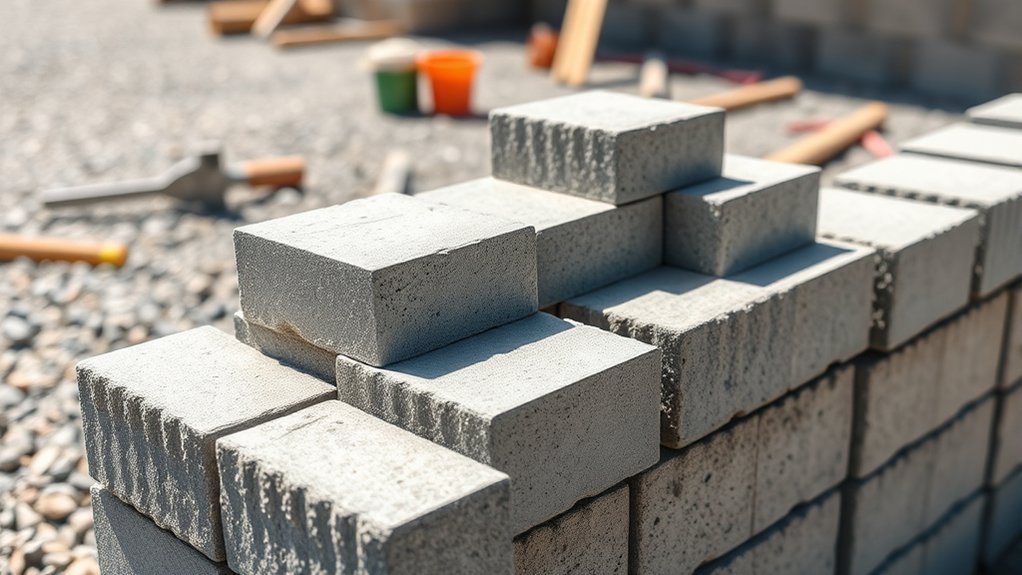
How Much Are Concrete Blocks – Quick Facts
You can expect standard 8x8x16 concrete blocks to cost between $1 and $3 each. Bulk orders can bring the price down by up to 30%. The type of material you choose, like cinder versus concrete blocks, affects both load capacity and cost.
Remember, labor, permits, delivery, and reinforcement expenses will add to your total. Planning well can really help optimize your overall costs. If you want to understand how these factors combine and impact your project budget, there’s more detail to explore.
How Much Does a Standard Concrete Block Cost in 2026?
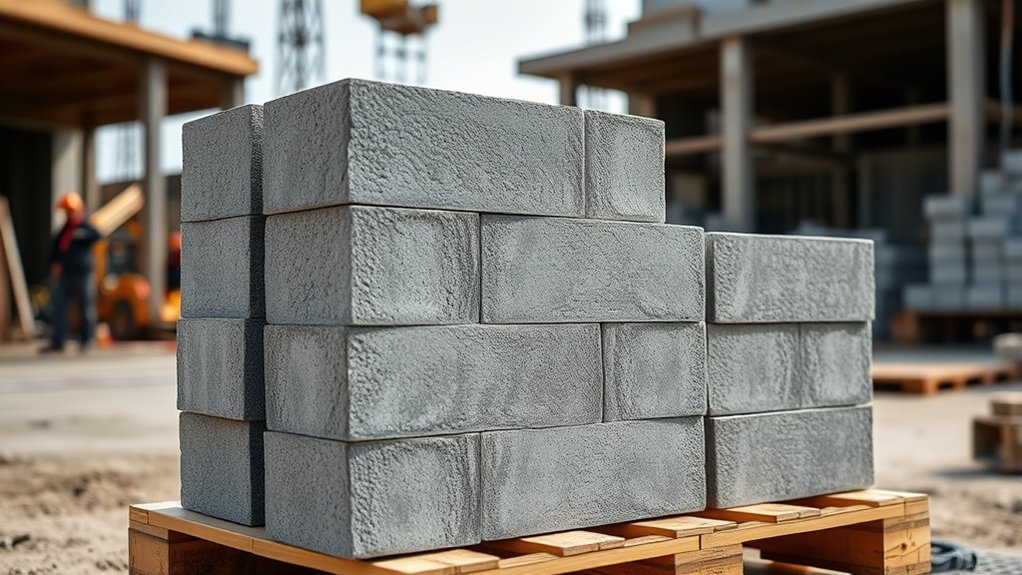
While prices can vary based on market conditions and supplier, you can generally expect to pay between $1 and $3 for a standard 8x8x16 concrete block in 2026. This price per block reflects the most common size used in wall construction.
If you buy concrete blocks in bulk, such as a full pallet, the total cost typically ranges from $150 to $260, which helps reduce the price per unit.
Plus, contractor discounts may further lower the cost.
Understanding the price per block helps you budget accurately for projects involving concrete blocks.
Keep in mind that the cost you encounter depends on your supplier’s pricing strategies, but the range between $1 and $3 remains a reliable benchmark for the standard block in 2026.
Factors That Influence Concrete Block Prices
Because several factors influence concrete block prices, understanding them helps you budget accurately. Concrete block costs depend on type, size, and design complexity. Standard blocks differ from specialized shapes or decorative finishes.
Knowing the factors affecting concrete block prices ensures accurate budgeting for your project.
Materials alone don’t tell the full story. Additional features like hollow cores or reinforcement raise costs. The regional market plays a vital role, with supply chain expenses and local labor rates causing significant price variations.
While materials and production matter, you also need to consider related costs such as drainage or foundation work. By analyzing these factors, you can anticipate variations in concrete block costs and avoid unexpected expenses.
This way, you ensure a more precise project budget tailored to your location and block specifications.
How Bulk Purchases Can Lower Concrete Block Costs
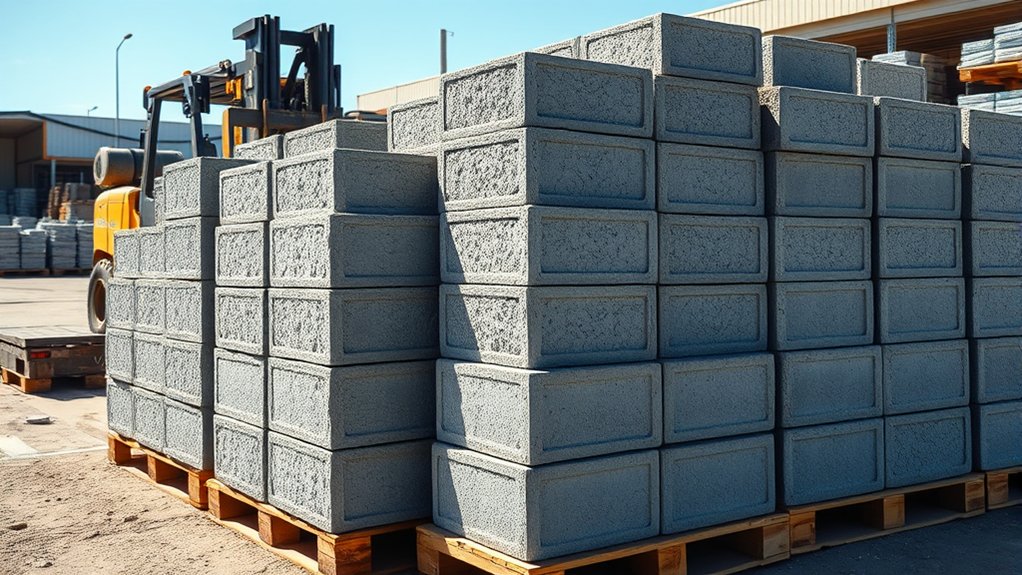
If you want to lower your concrete block expenses, buying in bulk offers considerable savings. Bulk purchasing can reduce the per-unit cost by 20-30% compared to retail prices, directly impacting your material costs.
Contractors often secure discounts when ordering pallets of 90-120 blocks, with prices typically ranging from $150 to over $500 per pallet depending on block type and quantity.
Besides lower block prices, bulk orders also minimize transportation fees per unit, amplifying overall cost savings.
To maximize these benefits, you need to plan ahead and coordinate delivery schedules carefully, avoiding project delays.
Mortar, Rebar, and Reinforcement Costs Explained
When building with concrete blocks, you need to account for mortar, rebar, and reinforcement costs to get an accurate project budget.
Mortar, typically Type S, costs $8 to $15 per 80-lb bag. You’ll need about 7 bags for every 100 blocks.
Rebar reinforcement adds between $1 and $5.25 per square foot to load-bearing or structural CMU walls, which really helps boost strength.
Grout used to fill block cores ranges from $2 to $4 per linear foot, depending on the mixture and volume.
Using rebar and grout makes your walls much more durable, especially if they’re load-bearing.
Also, keep in mind that extra reinforcement materials like drainage systems, sealants, and finishes can bump up costs even more.
Accurately estimating these elements ensures you don’t underestimate the total expense of your concrete block project.
Labor Costs: Installing Concrete Blocks Explained
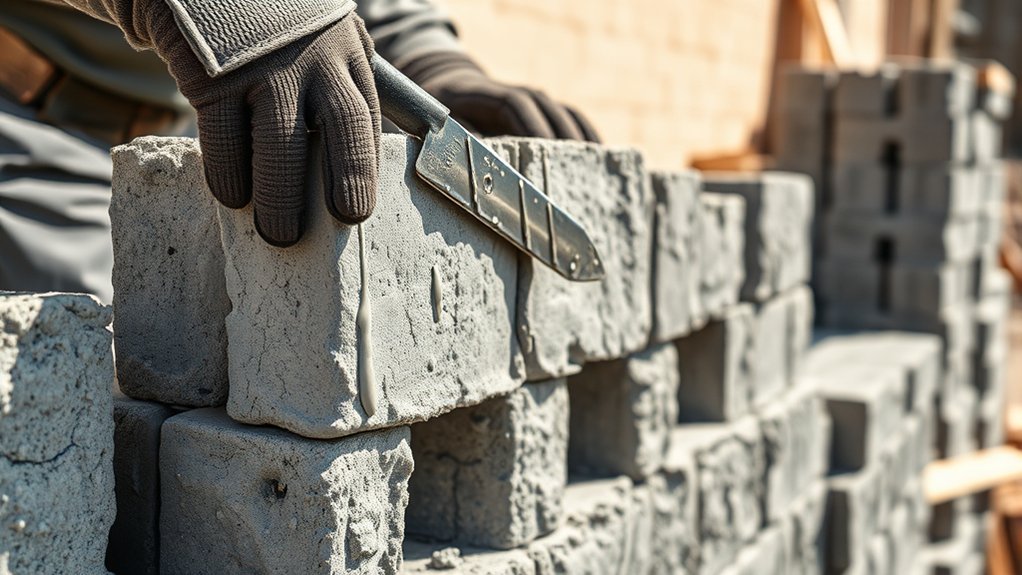
You’ll usually see labor costs for installing concrete blocks fall between $10 and $17 per linear foot. This range depends a lot on things like how complex the project is and where you’re located.
Other factors come into play too, like the design of the wall, the conditions at the site, and how efficient the crew is. All these details affect how much time and money the job will take.
Knowing about these variables upfront can really help you quote labor rates more accurately and avoid any surprises down the line.
Labor Cost Breakdown
Although labor costs can vary, installing concrete blocks typically runs between $10 and $17 per linear foot or $3 to $4 per block. These labor costs reflect the installation rates of skilled masons, who can lay 75 to 125 masonry units daily. This efficiency directly affects your overall expense.
Labor constitutes about half of the total project cost, highlighting its critical role in budgeting. Beyond laying blocks, labor costs include site preparation, mortar mixing, and finishing tasks such as sealing or pointing.
Understanding this breakdown helps you anticipate where your money goes during installation. By analyzing labor costs and installation rates, you can better manage your project’s timeline and budget.
This way, you’ll ensure a realistic financial plan without unexpected labor-related overruns.
Factors Affecting Labor
Since labor costs vary based on several factors, understanding what influences these expenses helps you plan more accurately. One key factor is wall height. Taller walls require more blocks and extended labor time, which raises costs.
The complexity of the project also affects labor costs. Curved or reinforced walls demand skilled labor, increasing both time and expense. Regional variations play a significant role too, as wages tend to be higher in urban or coastal areas. This pushes labor rates toward the upper end of the $10 to $17 per linear foot range.
Experienced crews can lay 75 to 125 blocks daily, so project size and crew efficiency directly impact overall labor costs.
Quoting Labor Rates
How do you accurately quote labor rates for installing concrete blocks? Start by evaluating labor costs, which typically range from $10 to $17 per linear foot or $3 to $4 per block.
Consider masonry crews’ productivity. They can lay 75 to 125 blocks daily, and that directly impacts costs.
Factor in regional differences. Urban areas usually demand higher wages than rural locations.
Also, think about project size, wall height, and complexity because these affect time and effort.
Labor often represents about half of the total project cost, so precise estimation is essential.
Use local wage standards as a benchmark to avoid underquoting or overpricing.
Regional Price Differences for Blocks and Installation
You’ll notice that labor costs for installing concrete blocks can really vary depending on where you are. Usually, it’s somewhere between under $10 and up to $17 per square foot.
On top of that, permit fees might add anywhere from $50 to $500 to your project, all depending on the local rules.
When you put these together, they can make a pretty big difference in your overall budget.
Labor Cost Variations
Although concrete block installation costs generally fall between $10 and $17 per linear foot, regional labor rates can substantially affect your project’s budget.
Labor costs vary considerably based on regional wage rates. Urban and coastal areas often charge 20-30% more than the national average due to higher living expenses.
Skilled masonry crews in cities may bill up to $100 per hour, whereas rural teams typically charge between $34 and $50 per hour. These differences directly influence installation costs, so if you’re working in a metropolitan area, expect a markedly higher labor expense.
Understanding these variations helps you plan your budget accurately and avoid surprises.
Keep in mind, labor costs remain one of the largest variables in concrete block installation across different regions.
Permit And Fee Impact
Where do permit fees and local regulations impact your concrete block project costs the most? Regional costs vary a lot because of different permit fees and building codes. Here’s what you should think about:
- Permit Fees Range: You can expect fees anywhere from $50 to $500. It really depends on your project’s size and the local rules.
- Regional Variations: Urban and coastal areas usually have higher labor rates and stricter building codes. This tends to push costs up.
- Additional Requirements: Sometimes inspections or special permits are needed for load-bearing walls. This can add extra expenses, especially where local codes are tough.
In rural or Midwest areas, permit fees and related costs are generally lower, which can ease your overall budget.
Also, keep in mind that excavation and drainage costs might change depending on regional permit rules.
Knowing these details helps you plan better and handle permit and fee impacts without surprises.
Delivery, Permits, and Site Preparation: Extra Costs to Expect
When planning for concrete block construction, you should factor in extra costs beyond the blocks themselves, such as delivery fees, permits, and site preparation. Delivery typically costs $50 to $200, depending on distance and order size.
Permits vary widely, from $50 to $500, based on local regulations and project scope. Site preparation, including excavation, generally runs $1 to $12 per square or linear foot. This cost can increase by 15-30% for slopes or poor soil.
Additional prep like removing old walls or addressing soil issues adds 5-10% to the overall cost. It’s good to keep these extras in mind when budgeting for your project.
| Cost Factor | Typical Range | Notes |
|---|---|---|
| Delivery | $50 – $200 | Depends on distance and order size |
| Permits | $50 – $500 | Varies by location and project scope |
| Site Preparation | $1 – $12 per sq/lin ft | Increases 15-30% for difficult terrain |
Should You DIY or Hire a Pro? Costs and Risks Compared
You can save a good chunk of money by installing concrete blocks yourself. Just keep in mind, it takes time and some skill, and you might have to keep the project pretty simple.
On the other hand, hiring a pro will cost more upfront, but they’ll make sure everything is reinforced correctly, follows building codes, and stands the test of time.
DIY Cost Savings
How much can you really save by tackling a concrete block project yourself? DIY block costs for 120 sq ft range from $360 to $720, which is far less than professional installation at $1,800 to $3,600.
However, your savings depend on the project scope and your skills. So, keep these points in mind:
DIY suits low, non-load-bearing walls under 3 feet, which helps keep costs and risks manageable. But mistakes in footing, mortar, or reinforcement can cause structural issues and lead to expensive repairs. That’s why you want to be careful.
Professional installation, while pricier, guarantees compliance with building codes and long-term durability.
If you’re confident in your skills and the wall is simple, DIY offers significant savings. Otherwise, it’s critical to weigh potential rework costs against upfront labor savings.
Professional Expertise Benefits
Why choose professional installation over DIY for your concrete block project? While DIY cuts material costs to $3–$6 per square foot, professional expertise guarantees structural integrity, code compliance, and faster completion.
Professionals usually charge $15–$30 per linear foot.
They help reduce risks like improper reinforcement, uneven installation, and moisture issues. These problems can lead to expensive repairs or penalties down the line.
Their skill lets them finish a 120 sq ft wall in a day, while DIY might take weeks.
Although the upfront costs are higher, hiring licensed experts protects your investment by preventing costly mistakes and ensuring durability.
When you weigh initial savings against potential risks and long-term costs, professional installation is the safer bet for a reliable, code-compliant concrete block project.
Comparing Cinder Blocks vs. Concrete Blocks: Price and Use
Although cinder blocks and concrete blocks share a similar price range, typically between $1 and $3 per unit, their cost differences are minimal because of how suppliers price them.
Cinder and concrete blocks generally cost between $1 and $3, with minimal price differences due to supplier pricing.
When deciding between the two, it helps to keep a few key factors in mind.
First, block costs: cinder blocks usually range from $1.50 to $2.50, which is about the same as concrete blocks in terms of affordability.
Next, think about material and strength. Concrete blocks often support higher loads, making them a better choice for structural projects.
On the other hand, cinder blocks are great for lighter, non-load-bearing walls.
Finally, consider the application. You might go with cinder blocks for cost-effective, lighter construction. But if durability and load capacity matter most, concrete blocks are the way to go.
Long-Term Maintenance and Durability Costs
When you maintain concrete block walls properly, they can last over 50 years with minimal repairs. To ensure durability and extend lifespan, you should reseal or apply waterproof coatings every 2-5 years to prevent moisture damage.
Expect occasional crack repairs, which typically cost between $100 and $500, due to natural settling or shifting.
Furthermore, repointing mortar joints at $3 to $25 per square foot is necessary to maintain structural integrity and appearance.
Compared to wood fences, concrete block walls demand considerably less maintenance and incur lower long-term replacement costs.
Frequently asked questions
What Are the Environmental Impacts of Concrete Block Production?
You should know concrete block production considerably raises your carbon footprint due to cement’s energy-intensive process and raw material extraction.
To reduce these environmental impacts, you can opt for sustainable alternatives like geopolymer concrete or incorporate eco-friendly materials such as recycled aggregates. These choices lower emissions and habitat damage, making your construction projects greener and more responsible.
This aligns with modern sustainability goals without compromising strength or durability.
How Do Concrete Blocks Affect Home Insulation and Energy Efficiency?
You’ll find that properly insulated concrete blocks can improve building efficiency by up to 30%, thanks to their excellent thermal insulation properties. Their high thermal mass absorbs and slowly releases heat, helping with energy conservation year-round.
Without insulation, though, they allow heat transfer, which can raise energy costs.
Adding foam or rigid board insulation boosts R-values, making your home more comfortable. It also cuts heating and cooling expenses significantly.
Can Concrete Blocks Be Recycled or Reused in Construction?
Yes, you can recycle and reuse concrete blocks effectively. Concrete recycling involves crushing old blocks into aggregate for new concrete or road bases. This offers eco-friendly alternatives to landfill disposal.
You can also reuse intact blocks by incorporating them into retaining walls or garden beds. This helps reduce waste and lowers environmental impact.
Just make sure the blocks are in good condition. Damaged ones might need processing before reuse.
This approach really supports sustainable construction practices. It’s a smart way to give old materials a new life and keep things green.
What Are the Common Sizes and Dimensions of Concrete Blocks?
You’ll find common concrete block sizes mainly at 8x8x16 inches, with options like 4x8x16 and 12x8x16 inches too.
Half blocks often measure 8x8x8 inches for corners or edges.
Manufacturers offer various color options and texture varieties, achieved through different manufacturing processes. This lets you customize your project’s look.
These modular sizes simplify stacking and reduce waste, making construction more efficient and visually versatile.
Are There Any Safety Concerns When Handling Concrete Blocks?
Imagine gripping a heavy, rough concrete block. Without personal protective equipment, your hands could easily get scraped. You need gloves, steel-toed boots, and eye protection.
Master proper lifting techniques to avoid back strain or dropping blocks that could crush your toes.
Dust control is essential too because concrete dust irritates your lungs.
Stay sharp, use your gear, and lift smart to handle concrete blocks safely every time.
Final Thought
When budgeting for concrete blocks, think of costs like layers of a cake. Each ingredient adds up. You’ll want to factor in block prices, reinforcements, labor, and extra fees like delivery or permits.
Buying in bulk can slice costs, but don’t overlook long-term maintenance. Whether you DIY or hire pros, understanding these elements guarantees you get the best value without surprises. Stay precise, weigh options, and build smart from the ground up.
More Concrete Cost & Pricing Guides
- How Much Does a Concrete Driveway Cost
- How Much Does a Concrete Patio Cost
- How Much Does a Concrete Slab Cost
- How Much Does a Concrete Truck Cost
See all Concrete Cost & Pricing guides · All concrete resources
Need Concrete in Greater Cleveland?Tri County Concrete delivers ready mix from plants in North Royalton and Twinsburg, Ohio. Request a quote or call 440-582-1100.