Is Asphalt Cheaper Than Concrete – The Truth
You’ll find asphalt is generally cheaper than concrete upfront, costing about a third to a fifth less per square foot. This difference comes from asphalt’s faster installation, simpler site preparation, and lower labor demands.
While asphalt’s lifespan is shorter and it needs more frequent maintenance, its initial savings often justify the choice, especially in colder climates. Concrete’s higher durability and customizable finishes boost long-term value.
If you dig a little deeper, you’ll see how these factors balance out for your project. It’s all about what fits your budget and needs best.
Why Is Asphalt Cheaper Than Concrete to Install?
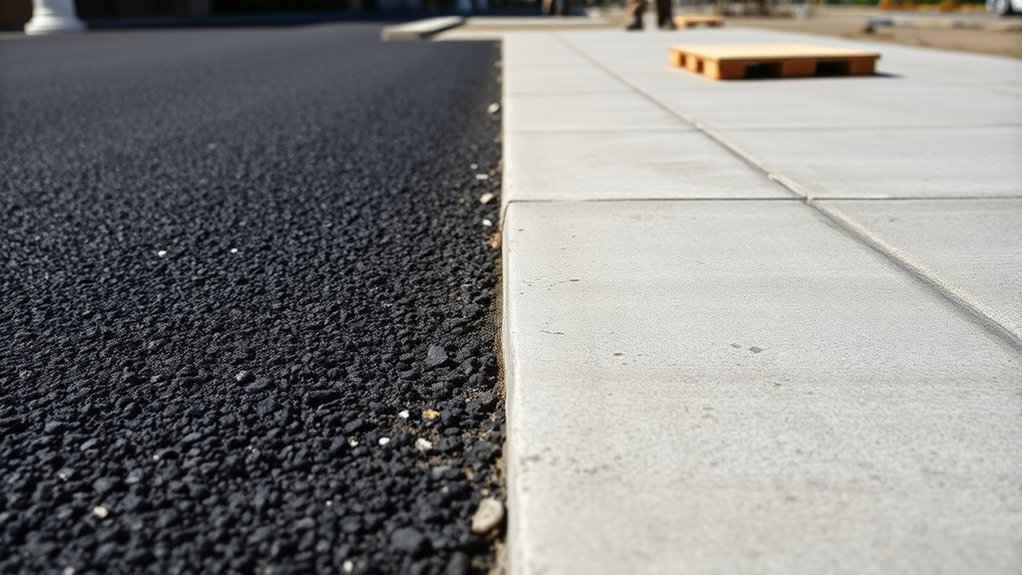
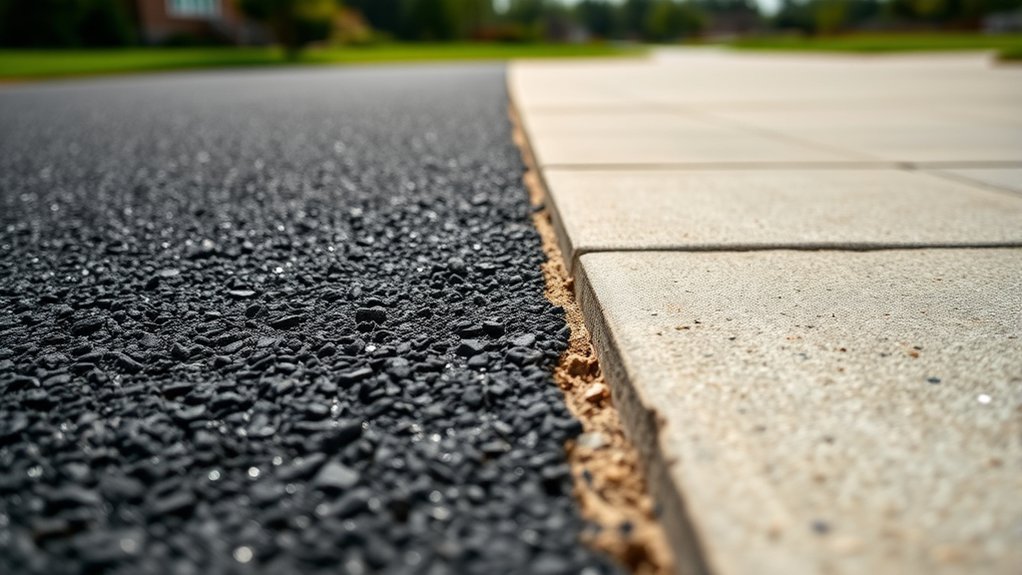
Although both materials serve similar purposes, asphalt is cheaper to install than concrete primarily due to lower material costs and reduced labor requirements.
Asphalt installation typically costs $3 to $4 per square foot, which is considerably less than concrete’s $10 to $20 range. The raw materials for asphalt, like aggregate and asphalt cement, are less expensive than concrete’s cement, sand, and gravel mix.
Plus, asphalt requires less labor-intensive site preparation, which helps cut down labor hours. The equipment used for asphalt installation, such as rollers and spreaders, is more efficient and less costly to operate.
Asphalt’s faster curing time also reduces labor and equipment rental expenses.
All these factors add up to make asphalt installation more cost-effective. So, if you want to minimize upfront paving expenses without compromising functionality, asphalt is a practical choice.
Installation Time and Labor Costs for Asphalt and Concrete
You’ll find that asphalt installs much faster—usually within just 1 to 3 days.
On the other hand, concrete needs a longer curing period, sometimes stretching up to a month.
When it comes to labor, concrete is more intensive. It requires detailed formwork, reinforcement, and careful finishing, which naturally pushes costs higher.
All of these factors play a big role in your total installation expenses and how long your project will take to complete.
Installation Speed Comparison
Since time is a critical factor in many paving projects, understanding the installation speed differences between asphalt and concrete is essential. Asphalt typically installs within 1 to 3 days, while concrete takes 1 week to 1 month due to curing requirements.
This shorter installation time for asphalt reduces labor hours and overall costs, making it more cost-effective in time-sensitive projects.
| Aspect | Asphalt |
|---|---|
| Installation Time | 1-3 days |
| Labor Hours | Reduced |
| Preparation | Rapid base paving |
| Curing Time | Minimal |
| Cost Impact | Lower labor costs |
In contrast, concrete’s extensive formwork and curing extend project duration and increase labor costs. This affects your cost comparison analysis and makes concrete a longer commitment overall.
Labor Intensity Factors
When you compare labor intensity between asphalt and concrete installation, asphalt clearly requires less time and fewer labor hours, which directly reduces overall labor costs. Asphalt’s quicker installation process minimizes labor involvement, making it especially advantageous for large-scale projects or regions with short construction seasons.
In contrast, concrete installation demands extensive formwork, reinforcement, and curing, all of which increase labor intensity and extend project duration. Plus, concrete requires precise leveling and finishing, which means you need skilled labor and that drives labor costs even higher.
These multiple, labor-intensive steps contribute to longer timelines and higher expenses. So, from a labor intensity perspective, asphalt offers a more streamlined installation process that efficiently lowers labor costs without compromising project scope or quality.
It’s a practical choice if you want to save time and money on labor without cutting corners.
Cost Impact Analysis
How do installation time and labor costs truly affect the overall expense of asphalt versus concrete? Asphalt installation is particularly faster, often completed within days, while concrete driveways require one to several weeks for curing. This speed directly lowers labor costs since asphalt demands less complex base preparation and quicker application.
Though concrete typically costs around $2.60 per square foot for a 4-inch slab, its extended labor time and intricate groundwork can increase expenses. Asphalt, priced between $3 to $4 per square foot, offsets its higher material cost with reduced labor and faster project completion.
When analyzing cost impact, asphalt’s shorter installation time and lower labor intensity often translate to a more economical choice. This is especially true for large-scale driveway projects where initial cost and time efficiency are critical.
Does Asphalt’s Shorter Lifespan Increase Costs?
You’ll find that asphalt doesn’t last quite as long—usually around 15 to 30 years—which can mean you’ll have to spend more on repairs and replacements over time.
That said, asphalt tends to come with a lower upfront cost, and keeping up with maintenance like regular resealing is pretty manageable.
So, when you weigh those factors, the extra expenses can often balance out.
It’s really all about understanding this trade-off to get a clear picture of asphalt’s true long-term cost compared to concrete.
Lifespan Versus Cost
Although asphalt typically lasts only 15 to 30 years compared to concrete’s 30 to 50-plus years, its lower initial cost can make it more cost-effective over time. When evaluating lifespan versus cost, you need to contemplate a few things.
Asphalt’s shorter lifespan often means more frequent replacements, which can increase total expenses. But with proper maintenance, you can extend asphalt’s life and potentially delay those costly replacements.
Concrete has a higher upfront cost, but it balances out with longer durability and fewer repairs. This can reduce lifetime costs in the long run.
Keep in mind, the cumulative cost of asphalt repairs and resurfacing might offset those initial savings. So, while asphalt’s initial price tag looks good, its shorter lifespan can actually bump up your long-term costs.
You should really analyze your project’s expected lifespan and budget to figure out which material will give you the best value over time.
Maintenance Impact
Why does asphalt’s shorter lifespan often translate into higher costs? Asphalt demands ongoing maintenance, including resealing every 2-3 years to preserve durability and appearance. This frequent upkeep accumulates expenses that can erode initial savings from its lower installation cost.
Over time, frequent repairs and resurfacing become necessary. These directly increase the total long-term cost of asphalt compared to concrete.
While proper maintenance can extend asphalt’s usability, neglect speeds up deterioration, leading to more costly interventions.
How Maintenance Costs Add Up for Asphalt and Concrete
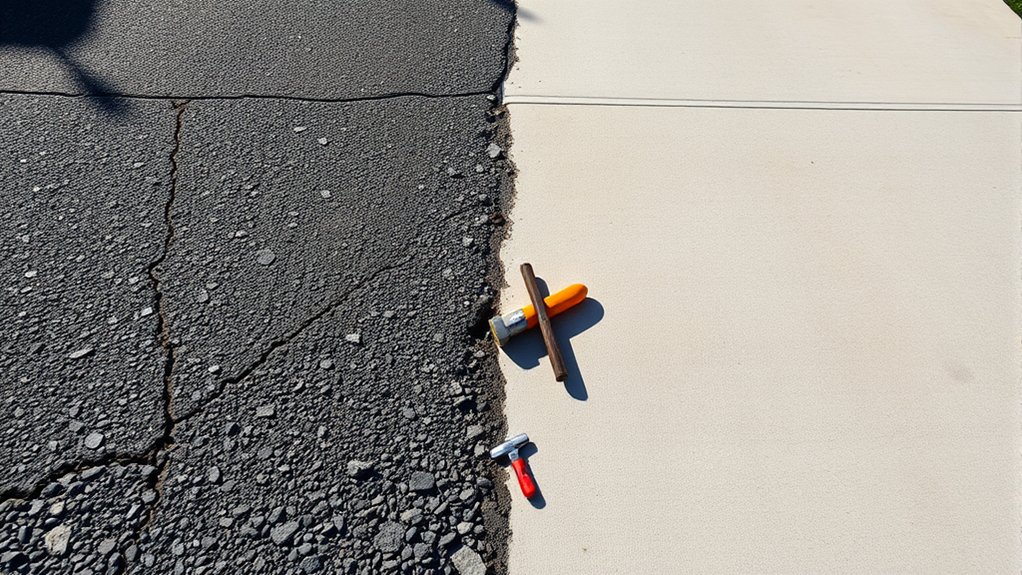
When comparing asphalt and concrete, understanding how maintenance costs accumulate over time is essential for accurate budgeting.
Asphalt demands resealing every 2-3 years, with costs around $0.15 to $0.25 per square foot. This can really add up and makes a big difference in ongoing maintenance expenses.
Frequent repairs for asphalt, like crack filling and pothole patching, can get expensive if you don’t stay on top of them.
On the other hand, concrete needs fewer repairs overall. But when it does require major replacements, those tend to be pretty costly.
Here are some key things to keep in mind:
- Asphalt sealing frequency and cumulative costs
- Asphalt repair costs due to surface degradation
- Less frequent but potentially expensive concrete repairs
- Long-term maintenance costs that might outweigh initial asphalt savings
You’ll find that these maintenance costs can really tip the scales, often making concrete more cost-effective over the long run.
How Climate Affects Asphalt and Concrete Costs
Maintenance costs for asphalt and concrete don’t occur in a vacuum. They vary quite a bit depending on the climate where you install them.
Maintenance costs for asphalt and concrete fluctuate significantly with the climate of the installation area.
In colder climates, asphalt usually costs less because it handles freeze-thaw cycles better. This means fewer cracks, which can drive up concrete costs because of sealing and reinforcement needs.
On the flip side, concrete tends to get more expensive in harsh winter areas since it’s more prone to damage from freezing conditions.
In hot, sunny climates, asphalt costs can go up because it might soften and deform. That leads to more frequent maintenance.
Climate affects both the initial installation and ongoing upkeep. This shapes the long-term affordability of these materials.
Knowing how climate influences costs can help you make a smarter choice between asphalt and concrete based on your specific environment.
Repair and Replacement Costs: Asphalt vs Concrete
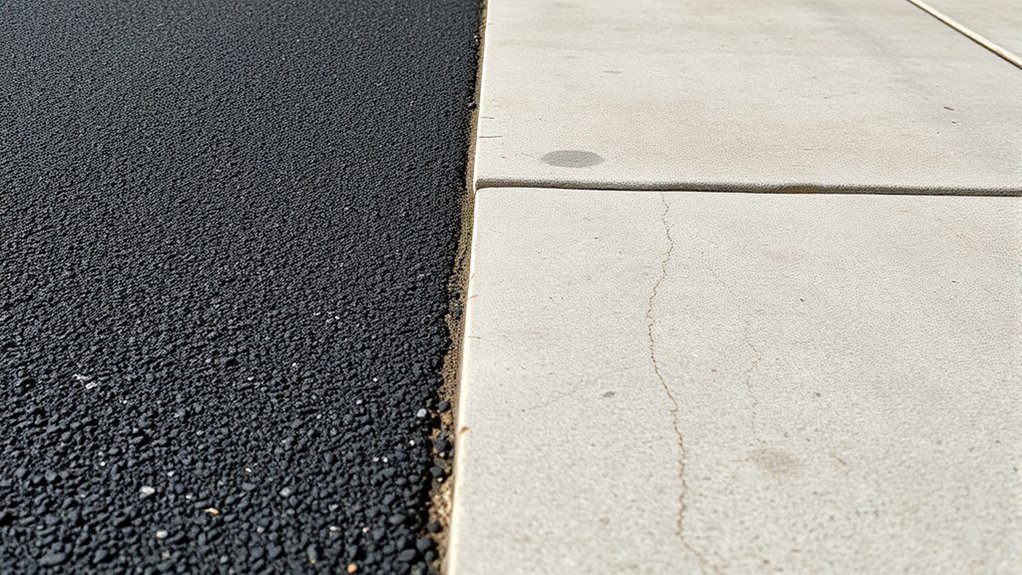
How do repair and replacement costs influence the overall value of asphalt versus concrete? When you look at repair costs and maintenance demands, asphalt usually has lower immediate expenses because filling cracks and resurfacing is pretty straightforward.
But keep in mind, asphalt needs resealing every 2-3 years, which adds up over time. Concrete, on the other hand, costs more upfront but doesn’t need repairs or maintenance as often. That can make it more cost-effective in the long run.
Here are some things to consider:
- Asphalt repair costs are generally lower but happen more often because of weathering.
- When concrete repairs are needed, they tend to be more extensive and expensive.
- Asphalt maintenance includes regular resealing to keep it in good shape.
- Concrete’s durability means you don’t have to replace it as frequently.
Choosing between the two really comes down to weighing initial costs against what you expect for repair and maintenance over time.
How Aesthetic Choices Impact Asphalt and Concrete Prices
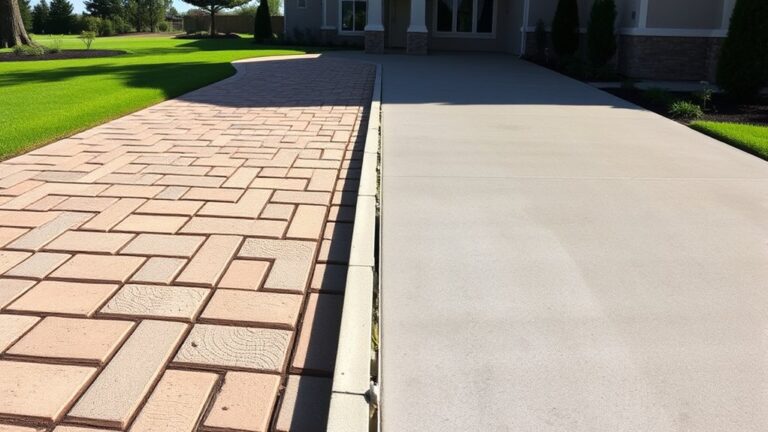
Why do aesthetic choices considerably affect the cost difference between asphalt and concrete? Concrete offers extensive decorative finishes, including colors, stamped patterns, and textured surfaces. These options provide significant customization but also increase initial costs.
When you select custom colors or integrate landscaping elements, expect a 20-50% rise over concrete’s base price. In contrast, asphalt presents a uniform, monochromatic surface with limited design flexibility. This keeps its cost lower but makes it less visually adaptable.
This cost comparison highlights that while asphalt remains functionally efficient and economical, concrete’s aesthetic versatility comes at a premium. Your decision on decorative finishes directly impacts the budget.
Concrete’s enhanced visual appeal typically demands higher upfront investment compared to asphalt’s simpler, more utilitarian appearance.
Which Material Offers Better Long-Term Value?
Although asphalt costs less initially, concrete offers superior long-term value due to its extended lifespan and lower maintenance requirements.
When you consider proper installation, concrete typically lasts 30-50 years with minimal repairs. Asphalt, on the other hand, endures 15-30 years and demands frequent sealing and patching. This difference really affects your long-term value calculation.
Key factors influencing long-term value include:
- Concrete’s durability reduces repair frequency and overall maintenance costs.
- Asphalt’s maintenance needs can escalate expenses despite a lower upfront cost.
- Climate and usage impact material performance and longevity.
- Proper installation is critical for maximizing lifespan and cost-effectiveness.
When Is Asphalt the Best Cost-Effective Choice?
When budget constraints dominate your project planning, asphalt stands out as the most cost-effective paving option. This is mainly because its initial price ranges from $3 to $4 per square foot, which is much lower compared to concrete’s $10 to $20+ per square foot.
Asphalt driveways are especially economical for large surfaces and colder climates where freeze-thaw cycles demand flexibility. Even though asphalt has a shorter lifespan of about 15 to 30 years, its upfront affordability and ease of maintenance keep it cost-effective over time.
| Factor | Asphalt | Concrete |
|---|---|---|
| Initial Cost | $3 – $4 / sq ft | $10 – $20+ / sq ft |
| Lifespan | 15 – 30 years | 30 – 50 years |
| Climate Suitability | Flexible in cold climates | Prone to cracking |
| Maintenance | Regular sealing required | Minimal maintenance |
| Ideal Use | Large driveways, parking | Smaller, decorative areas |
Frequently asked questions
Can Asphalt Be Recycled for New Pavement Projects?
Yes, you can recycle asphalt for new pavement projects. The process involves milling the existing surface, crushing it, and mixing it with new binders and aggregates to create recycled asphalt pavement (RAP).
This method preserves material quality and durability while reducing costs and environmental impact. Typically, RAP constitutes 20% to 80% of the new mix.
Using recycled asphalt offers great sustainability benefits without compromising performance in your pavement construction. It’s a smart choice that helps both your budget and the planet.
How Do Environmental Regulations Affect Asphalt and Concrete Pricing?
Environmental regulations increase both asphalt and concrete costs by imposing stricter standards on emissions and material sourcing.
You’ll find asphalt pricing affected by limits on petroleum-based inputs and recycled content requirements. Meanwhile, concrete faces higher costs due to cement-related CO2 emission caps and energy restrictions.
On top of that, transportation, waste disposal, and project delays caused by local laws add indirect expenses. These factors really add up, so you need to keep them in mind when evaluating the overall pricing for pavement materials.
It’s not just about the raw materials; the regulations impact the whole process.
What Are the Noise Reduction Properties of Asphalt Versus Concrete?
Think of asphalt as a sponge that soaks up sound, while concrete acts like a mirror reflecting noise back. You’ll notice asphalt absorbs more sound energy, reducing traffic noise by up to 5 decibels compared to concrete.
Its porous structure dampens vibrations, making it quieter for footsteps and vehicles.
In contrast, concrete reflects sound waves, increasing noise levels. So, for better noise reduction, asphalt outperforms concrete in most residential and road applications.
Are There Differences in Skid Resistance Between Asphalt and Concrete?
Yes, you’ll notice asphalt generally offers better skid resistance than concrete due to its naturally textured surface and aggregate mix. Asphalt’s roughness provides superior grip, especially when modified with rubberized or polymer additives.
Concrete surfaces tend to be smoother and can become slippery when wet unless treated with anti-slip coatings or textured finishes.
How Do Asphalt and Concrete Compare in Terms of Heat Absorption?
Asphalt absorbs considerably more heat than concrete, often reaching temperatures 20-40°F higher under direct sunlight.
You’ll find concrete stays cooler because of its lighter colors and higher albedo, reflecting more sunlight.
In hot climates, asphalt’s heat retention can make surfaces uncomfortable and even damage tires or shoes.
If managing surface temperature matters to you, concrete or lighter-colored asphalt will improve usability and comfort outdoors.
Final Thought
You might think asphalt is always cheaper, but the real cost depends on more than just installation. Consider lifespan, maintenance, climate effects, and repair expenses before deciding.
Concrete may have a higher upfront price but often offers better long-term value. So, when is asphalt truly the most cost-effective? Dive deeper into your specific needs and environment.
You might discover surprising insights that could shift your choice entirely. The answer isn’t as clear-cut as it seems.
More Concrete Cost & Pricing Guides
- Why Is Concrete So Expensive
- Are Concrete Countertops Expensive
- Are Pavers Cheaper Than Concrete
- How Much Are Concrete Blocks
See all Concrete Cost & Pricing guides · All concrete resources
Need Concrete in Greater Cleveland?Tri County Concrete delivers ready mix from plants in North Royalton and Twinsburg, Ohio. Request a quote or call 440-582-1100.