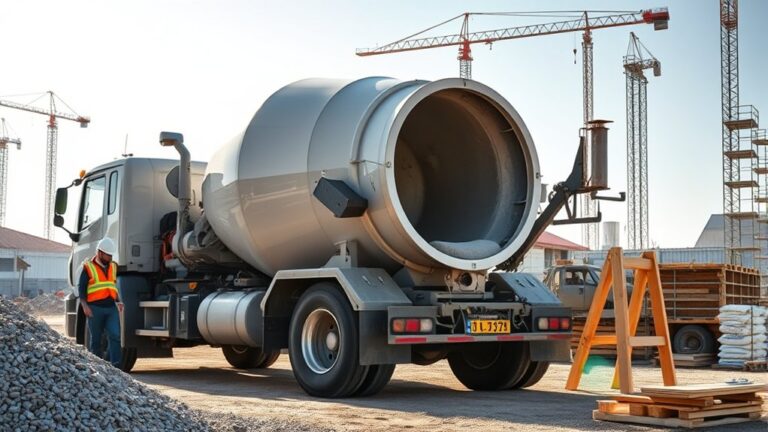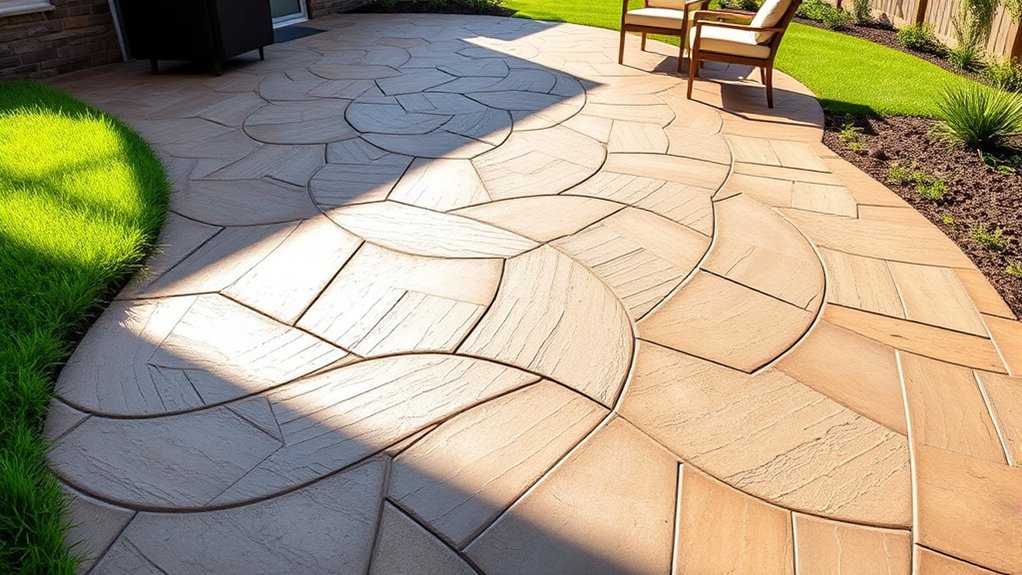
How Much Does Stamped Concrete Cost – Quick Answer
You’ll typically pay between $8 and $15 per square foot for stamped concrete, depending on design complexity, concrete grade, thickness, and site conditions. Basic patterns cost less, while intricate designs and higher-grade, stronger concrete raise expenses.
Thicker slabs and challenging terrain also increase pricing due to extra materials and labor. Removal and site prep fees add to costs if needed. Exploring these factors further can help you budget precisely and avoid surprises.
What Is Stamped Concrete and Why Use It
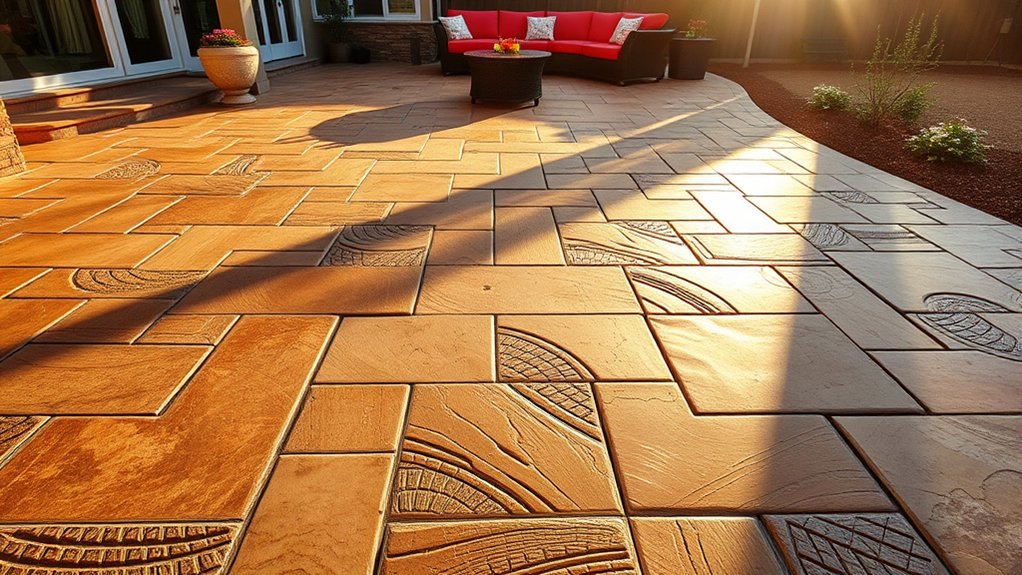
Although stamped concrete looks like natural stone, brick, or slate, it’s actually a poured concrete surface impressed with patterns and textures. You’ll find stamped concrete commonly used for patios, driveways, and walkways because it combines aesthetic appeal with durability.
Its versatility allows you to customize patterns, colors, and textures to suit your design needs precisely.
When you consider stamped concrete costs, you’re investing in a surface that requires low maintenance and withstands high traffic without significant wear. This makes it a cost-effective option over time compared to natural materials, which often need frequent upkeep or replacement.
How Stamped Concrete Pricing Breaks Down
You’ll find that stamped concrete pricing depends on both material and labor costs. This includes everything from prepping and pouring to stamping and sealing.
The complexity of the design plays a big role here, too. More intricate patterns take more time and often need specialized tools.
Knowing all this helps you budget your project more accurately.
Material And Labor
How do material and labor costs shape the price of stamped concrete? Material costs cover essential elements like the concrete mix, stamps, colors, and sealants to achieve your desired finish. These typically range from $30 to $40 per square foot.
Labor, on the other hand, includes site preparation, pouring, stamping, finishing, and sealing. Labor rates vary depending on the project’s scope but generally add $10 to $20 per square foot.
Both material costs and labor substantially impact the total price, so understanding each helps you budget effectively. When planning your stamped concrete project, separating these expenses gives you a clearer picture of where your money goes.
This way, you can make better financial decisions and avoid surprises during installation.
Design And Complexity
Because design and complexity directly affect both material needs and labor intensity, they play a crucial role in shaping stamped concrete costs. The more intricate your stamped concrete design, the more labor and materials you’ll need, which drives up expenses.
Multiple colors or detailed textures require specialized tools and skilled craftsmanship, increasing costs substantially. Simpler designs with fewer colors remain budget-friendly.
| Design Complexity | Impact on Cost |
|---|---|
| Basic single-color | Lower material & labor |
| Multiple colors | +20-30% material cost |
| Simple stamped patterns | Moderate labor |
| Intricate textures | High labor & tools |
Understanding these factors helps you balance aesthetics and budget effectively. It’s all about finding the right mix that works for you.
Average Stamped Concrete Cost Per Square Foot
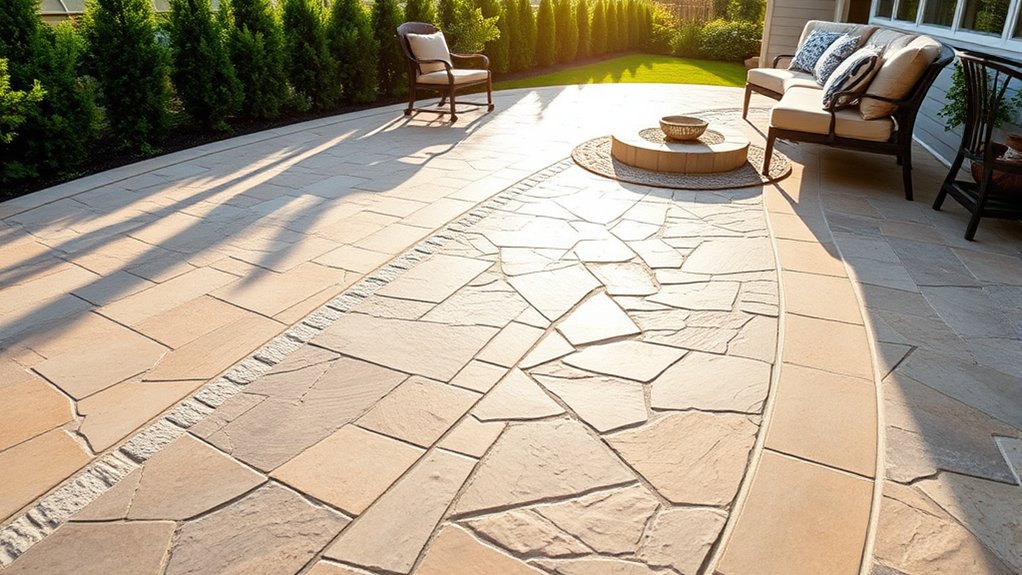
What determines the average cost of stamped concrete per square foot? Primarily, it ranges from $8 to $15 depending on the installation type.
Basic stamped concrete, which mimics natural materials, usually costs between $8 and $10 per square foot.
If you’re aiming for a mid-range option, expect to pay around $8 to $12, balancing design quality and affordability.
High-end stamped concrete with intricate patterns and multiple colors can push the price to $15 or more per square foot.
While design complexity plays a role, the average cost of stamped concrete also depends on color choices and project size.
Understanding these factors helps you anticipate expenses and select the right option for your budget without surprises.
How Design Complexity Affects Stamped Concrete Cost
When you choose more intricate patterns or multiple colors for your stamped concrete, expect the cost to rise noticeably. Design complexity directly impacts the costs associated with your project.
Opting for intricate patterns or multiple colors significantly increases the cost of your stamped concrete project.
Detailed and elaborate designs demand extra labor, specialized tools, and additional materials.
Here’s how design complexity affects your expenses:
- Intricate patterns require precise craftsmanship. This increases labor hours and skill levels.
- Multiple colors involve extra steps for layering and blending. That raises both material and labor costs.
- Special finishes and secondary colors add to the time and resources needed. So, the more complex the design, the higher the cost.
How Concrete Thickness Influences Stamped Concrete Pricing
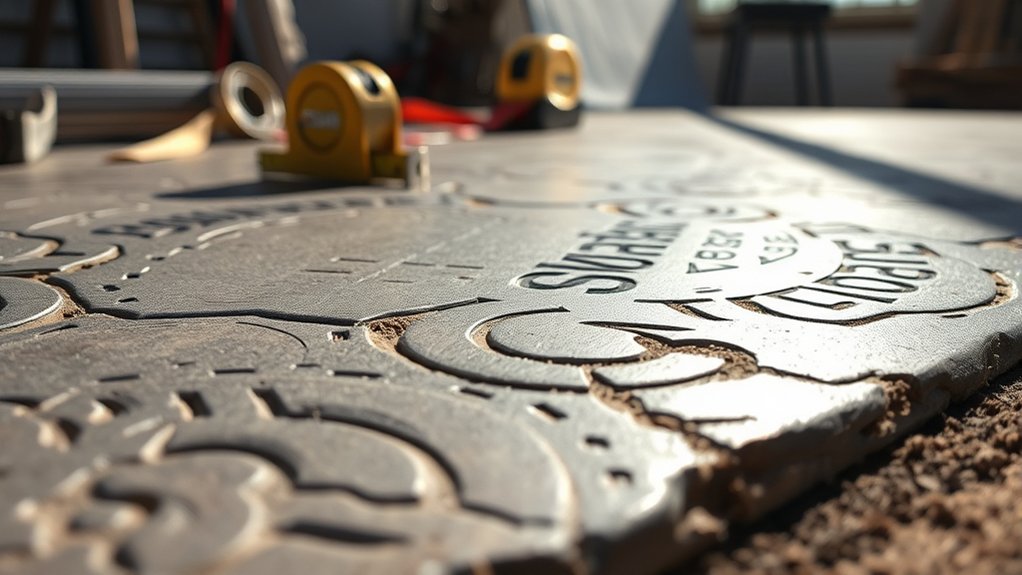
When you increase the thickness of stamped concrete, you’ll notice the material costs go up quite a bit. That’s because you’re using more concrete and often adding extra reinforcement, like rebar.
Plus, thicker slabs usually need stronger structural support.
All of this means the labor and overall pricing will be higher too. So, it’s a good idea to understand these factors so you can find the right balance between durability and your budget.
Thickness Impact On Cost
Any increase in stamped concrete thickness, from the typical 4 inches to 5 or even 8 inches, directly drives up costs because of higher material usage and added reinforcement requirements. When you choose thicker concrete, expect the following impacts on cost:
- Material expenses rise considerably since more concrete is needed per square foot.
- Labor costs go up because thicker slabs often require additional reinforcement and more complex handling.
- Commercial or heavy-load applications demand greater thickness, which pushes overall project pricing higher than standard residential jobs.
Thickness plays an essential role in stamped concrete pricing. While thicker slabs provide enhanced durability and load-bearing capacity, they come with proportional cost increases.
Knowing this relationship helps you budget accurately and pick the right thickness for your project’s needs without any unexpected expenses.
Structural Requirements And Pricing
Although standard residential stamped concrete typically measures 4 inches thick, projects requiring greater structural strength, such as commercial installations, demand slabs between 5 and 8 inches. This increased thickness directly influences stamped concrete pricing because it requires more concrete and reinforcement materials, pushing up concrete costs considerably.
You’ll also face higher labor expenses since thicker slabs need additional effort during pouring, finishing, and curing stages. The thicker concrete is essential for supporting heavy machinery or vehicle traffic, making it structurally vital but more expensive.
When planning your project, keep in mind that these structural requirements elevate overall costs compared to standard residential stamped concrete.
Understanding how thickness affects pricing helps you budget accurately and guarantees your stamped concrete meets the necessary strength and durability standards. So, it’s definitely worth considering these factors early on to avoid surprises later.
Stamped Concrete Shapes and Reinforcements Cost Impact
Because complex shapes and curves demand more skill and time to install, they raise your stamped concrete labor costs noticeably. Reinforcements like rebar or wire mesh further impact costs, especially for large or heavy-duty projects requiring extra support.
When planning your stamped concrete, consider these factors:
- Intricate shapes need more formwork and preparation, increasing both labor and material expenses.
- Reinforcements add to material costs but are essential for durability in heavy-use areas.
- Custom designs generally cost more than simple rectangular patterns due to added complexity and reinforcement needs.
How Concrete Grade Affects Stamped Concrete Cost
You’ll notice that higher concrete grades, like 5000 or 6000 PSI, tend to push up the material costs by about 10-20% per cubic yard compared to the standard 3000 PSI.
On top of that, these stronger mixes usually require more specialized labor and equipment, which adds to the overall expense.
Concrete Strength Variations
How does the strength of concrete influence the cost of stamped concrete projects? The concrete grade you choose directly affects the price per square foot. Higher grades, like 6000 PSI, cost 10-15% more than the standard 4000 PSI, which raises material expenses.
Also, stronger concrete needs more complex mixing and curing, so labor costs go up too.
Consider these key points:
- Higher concrete grades boost both material and labor costs because of their premium quality and handling requirements.
- Durability and load capacity improve with strength, which might lower long-term maintenance expenses.
- For most residential projects, 4000 PSI offers good cost efficiency. Commercial jobs, on the other hand, may justify higher grades even with the price increase.
Choosing the right concrete grade is all about balancing upfront costs with durability and the specific needs of your project.
Pricing Differences By PSI
Understanding how concrete strength impacts your project’s cost leads directly to examining price variations by PSI. Higher PSI concrete, like 6000 PSI, typically costs more than standard 3000 PSI mixes because it uses stronger materials and involves specialized mixing and curing processes.
This quality boost can increase your stamped concrete cost by 10-20%. For residential projects, 3000-4000 PSI is common and more cost-effective. Commercial or heavy-duty jobs often require 6000 PSI, which drives up expenses.
Although higher PSI improves durability and lifespan, it adds to material costs. When selecting your concrete grade, weigh the incremental cost against the long-term benefits.
That way, you can figure out what PSI fits your budget and project needs best.
Impact On Labor Costs
Choosing a higher concrete grade, like 6000 PSI, doesn’t just raise material costs by 20-30%. It also impacts labor expenses. Higher-strength concrete demands specialized mixing and handling, which increases labor complexity and time.
Plus, the stamping process becomes more labor-intensive because of longer curing periods and the need for precise finishing. All these labor factors ultimately raise the overall stamped concrete costs.
Key labor cost impacts include:
- Specialized handling and mixing increase labor skill requirements and time.
- Extended curing times delay finishing, requiring more labor hours.
- Precise stamping and finishing demand higher labor expertise and attention.
Knowing these labor factors helps you see how concrete grade choices affect your stamped concrete budget beyond just material costs.
Location and Site Conditions Affecting Stamped Concrete Pricing
Because site conditions vary widely, they play a crucial role in determining stamped concrete costs. Difficult terrain or uneven surfaces increase installation costs due to extensive site preparation.
If your site has restricted access or tight spaces, expect higher expenses from specialized equipment or extra labor.
Poor drainage or unstable soil conditions often require additional grading or reinforcement, further raising your budget.
When site conditions demand concrete removal or significant excavation, costs can jump by $2 to $6 per square foot.
Conversely, flat, accessible terrain reduces labor time and installation costs, making your project more affordable.
Understanding how site conditions impact pricing helps you anticipate expenses and make informed decisions about your stamped concrete installation.
Stamped Concrete Removal Fees: What You Need to Know
When you need to remove stamped concrete, expect costs typically ranging from $2 to $6 per square foot. The price depends on factors like project complexity and location.
Removal costs vary based on several key elements. First, the size of the area and the thickness of the concrete matter. Larger, thicker slabs need more labor and time.
Removal costs depend on area size and concrete thickness—larger, thicker slabs require more labor and time.
Also, if there’s reinforcement like rebar or wire mesh, it makes the job harder and more expensive. Plus, site preparation such as extra grading or debris cleanup after demolition adds to the overall cost.
Removing stamped concrete involves skilled labor using jackhammers and excavators to break up and take out the slab efficiently.
Knowing these factors helps you estimate the cost better and plan your budget accordingly.
Tips to Get an Accurate Stamped Concrete Quote
To get an accurate stamped concrete quote, you should request multiple detailed estimates from reputable contractors. Each quote must include all costs—materials, labor, site prep, finishing—to prevent hidden fees.
Ask for a cost breakdown by design choices, colors, patterns, and thickness so you can understand price differences. Verify that the quote covers permits, inspections, and site-specific challenges.
Also, clarify the timeline and payment schedule to ensure you have realistic expectations.
| Cost Element | Description | Impact on Cost to Install Stamped Concrete |
|---|---|---|
| Materials | Concrete, stamps, sealers | Major variable based on design and quality |
| Labor | Installation and finishing | Varies with complexity and contractor rates |
| Site Preparation | Excavation, grading | Affects foundation stability and price |
| Permits & Inspections | Local regulations compliance | Required, adds to overall cost |
| Timeline & Payments | Project duration and installments | Influences contractor availability and costs |
Frequently asked questions
How Long Does Stamped Concrete Typically Last?
Stamped concrete typically lasts between 20 to 50 years. You’ll get the most durability if you guarantee proper installation, including adequate curing and reinforcement.
Regular maintenance, especially sealing and repairing cracks, will extend its life by preventing surface damage. Keep in mind, factors like climate, usage, and installation quality directly impact how long your stamped concrete will last.
With good care, it can rival the lifespan of pavers or natural stone. So, taking the time to maintain it really pays off in the long run.
Can Stamped Concrete Be Repaired if It Cracks?
Think of your stamped concrete like a favorite book’s worn pages. Cracks don’t mean it’s lost its story. Yes, you can repair stamped concrete cracks.
Small ones get sealed with patching products to prevent further damage. Bigger cracks might need partial replacement. You’ll want to match colors and patterns carefully to keep its charm.
Regular maintenance and sealing act like protective covers. They help your concrete look great and last longer.
Is Stamped Concrete Slip-Resistant When Wet?
Stamped concrete isn’t naturally slip-resistant when wet, but you can make it safer. You’ll need a proper textured finish, like a broom finish, or apply non-slip sealers after installation.
These treatments add traction and reduce slip risks.
Without them, wet stamped concrete can be slippery. Regular maintenance and resealing with anti-slip products will keep the surface secure.
How Soon Can You Walk on Newly Stamped Concrete?
You can walk on newly stamped concrete after it cures for at least 24 hours. This helps prevent damaging the surface. If the concrete is sealed or will face heavy foot traffic, waiting 48 hours is better to guarantee durability.
Avoid stepping on it too soon because the pattern might shift or get impressions. Always follow your contractor’s specific instructions since drying times can vary with different mixes and weather conditions.
Taking these precautions will help keep your stamped concrete looking great!
What Maintenance Does Stamped Concrete Require?
You’ll need to seal stamped concrete every 2 to 3 years to preserve its color and prevent stains. Cleaning it regularly with mild detergent and water helps get rid of dirt and keeps it looking fresh.
Once a year, power washing is a good idea to maintain the texture and keep grime away.
If you spot any minor cracks, it’s best to fix them quickly with patching compounds. This way, you avoid bigger problems down the road.
Over time, re-sealing and touch-up staining will keep the surface vibrant and help it last longer.
With consistent care, your stamped concrete will stay durable and look great for years to come. It’s really about staying on top of these simple maintenance steps.
Final Thought
Stamped concrete costs vary based on design complexity, thickness, grade, and site conditions. You’ll pay more for intricate patterns, thicker slabs, and higher-quality materials. Location impacts labor and removal fees, too.
To get an accurate quote, consider all these factors carefully. Compare prices and ask for detailed estimates. By understanding what influences pricing, you can plan your project confidently.
This way, you can control your budget and achieve the look you want without surprises.
More Concrete Cost & Pricing Guides
- How Much Is a 10 Yard Truck of Concrete
- How Much Is a Bag of Concrete
- How Much Is a Pallet of Concrete at Home Depot
- How Much Is a Yard of Concrete
See all Concrete Cost & Pricing guides · All concrete resources
Need Concrete in Greater Cleveland?Tri County Concrete delivers ready mix from plants in North Royalton and Twinsburg, Ohio. Request a quote or call 440-582-1100.