How Much Is A Yard Of Concrete – Full Breakdown
You’ll pay between $100 and $200 for a yard of concrete, depending on mix type, region, and additional features like fiber or decorative finishes. Delivery fees often add $100 to $200. Plus, there might be extra costs for permits, site prep, and reinforcement.
Specialty concrete costs more but offers durability and aesthetic benefits that may boost property value. Understanding these variables helps you choose the right option for your project’s budget and goals.
Explore further to see detailed cost factors and savings. It’s worth knowing what goes into the price before you decide.
What Is a Yard of Concrete?
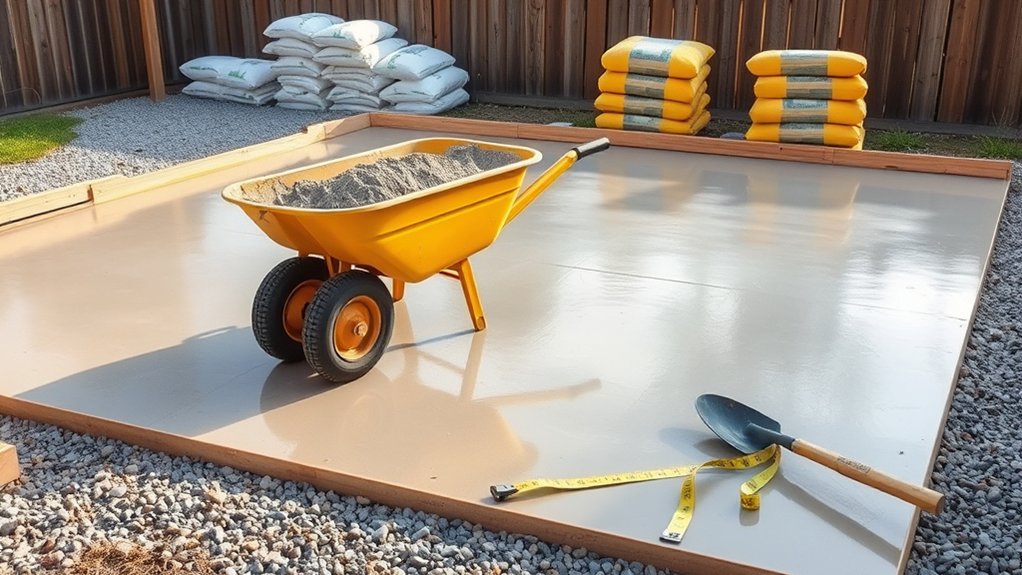
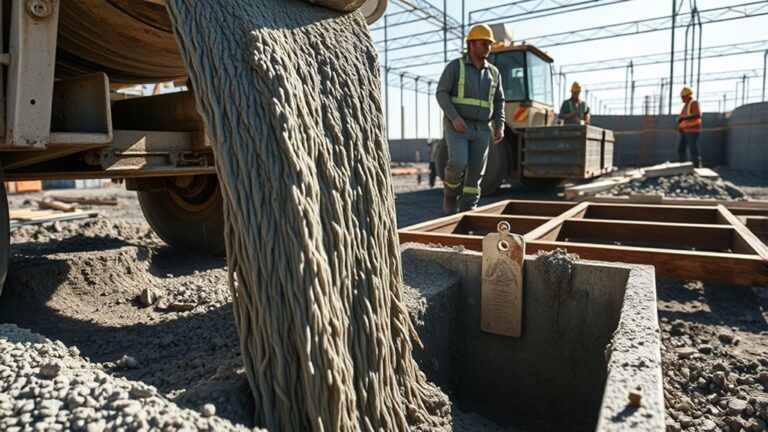
What exactly is a yard of concrete? A yard of concrete refers to one cubic yard, which equals 27 cubic feet. It’s the volume of a cube measuring 3 feet in length, width, and height.
This measurement is essential when calculating material costs and estimating concrete cost for construction projects. You’ll find that one cubic yard typically weighs around 2,400 pounds, depending on the mix design.
Contractors rely on this standard unit to determine the amount of concrete required, ensuring accurate ordering and minimizing waste.
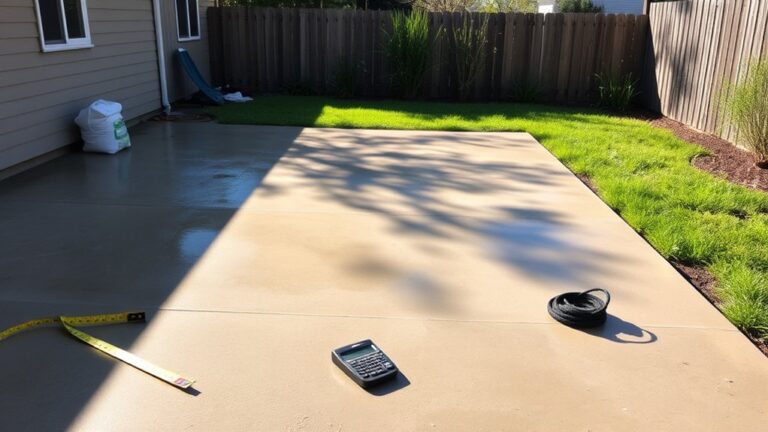
For example, a standard driveway might need 1 to 2 yards of concrete based on its size and thickness. Understanding the yard of concrete lets you precisely assess material costs and manage your project budget effectively.
How Much Does a Yard of Concrete Cost on Average?
How much you pay for a yard of concrete depends heavily on several key factors such as location, mix type, and delivery fees.
On average, the cost per yard ranges between $100 and $200, with regional variations driving this spread.
For instance, in areas like Fox Valley and Wisconsin, the price per yard typically falls between $120 and $150 for standard mixes.
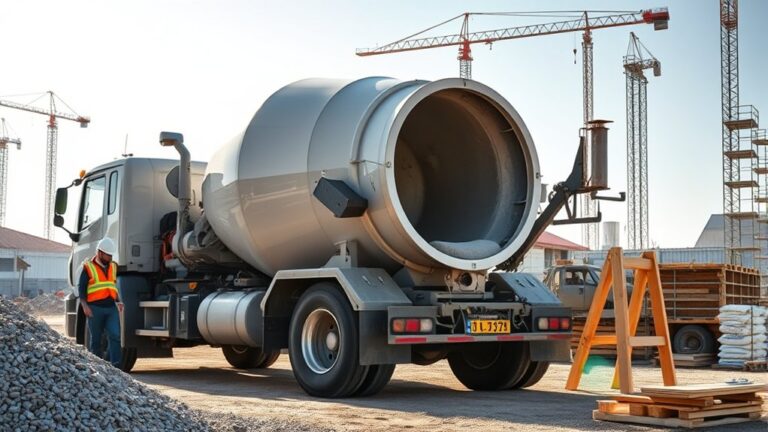
Delivery fees are often incorporated into the per-yard price, fluctuating based on project size and distance from the supplier.
The final price can increase if you require specialty features like color additives, stamping, or fiber reinforcement.
Furthermore, local market conditions and climate influence the cost.
Key Factors Affecting Concrete Cost Per Yard
Although the average cost of concrete per yard ranges between $100 and $200, several key factors directly influence the final price you’ll pay.
First, project complexity plays a critical role. Specialized mixes like fiber-reinforced concrete or decorative finishes increase expenses due to material and labor demands.
Delivery fees also impact costs notably, often adding $100 to $200 per yard depending on distance and supplier logistics.
Regional market conditions further affect the cost of concrete. Prices fluctuate based on local demand, labor rates, and material availability.
Understanding these variables helps you anticipate cost variations accurately. This way, your budget aligns with the specific requirements and location of your project without surprises.
What Extra Costs Should You Budget For?
When budgeting for a concrete project, you’ll need to account for several extra costs beyond the base material price. Permits typically range from $50 to $400 and cover legal compliance.
Site preparation, including soil stabilization, excavation, and debris disposal, can add $400 to $800, depending on conditions.
Delivery fees often fall between $100 and $200 per cubic yard, with surcharges for short loads or peak demand.
Reinforcement materials like rebar or wire mesh increase costs by $0.50 to $1.00 per square foot, which is essential for structural integrity.
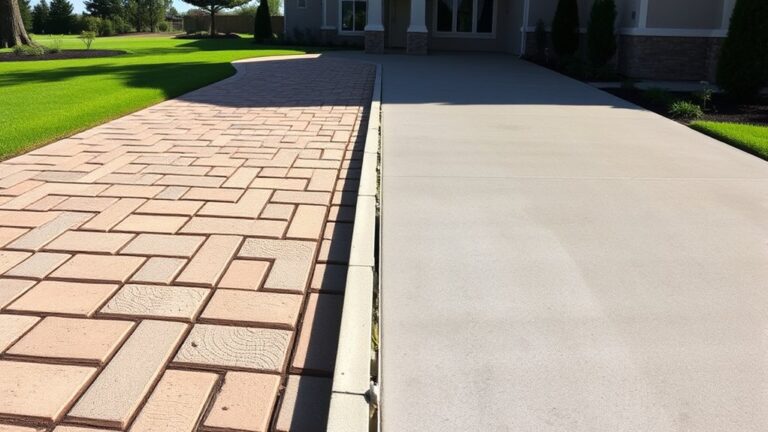
If you opt for decorative finishes such as stamping, staining, or exposed aggregate, expect to add $8 to $12 per square foot.
Factoring these extras ensures accurate budgeting and project feasibility. So, it’s a good idea to keep these costs in mind from the start.
How Location Affects Concrete Prices

Because regional market conditions and environmental factors vary widely, the cost of a yard of concrete can differ markedly depending on your location. You’ll find that local demand and competition heavily influence the price per yard, with higher demand areas typically seeing increased costs.
Transportation costs also play a critical role. If you’re far from suppliers, expect added expenses due to longer haul distances.
Climate challenges further affect pricing, as regions with freeze-thaw cycles or extreme temperature variations require specialized concrete mixes that elevate costs.
Furthermore, local building codes and permitting rules can impose extra fees, varying by area.
Finally, availability of skilled contractors and construction activity levels in your region impact labor costs, collectively shaping the overall concrete price per yard.
How to Get Accurate Concrete Quotes
You’ll want to get detailed quotes that clearly specify the concrete PSI, the types of reinforcement, and the finish options. This way, you can easily compare estimates from different contractors.
Also, make sure each quote covers all project costs—from site preparation to permits and delivery fees—so you don’t run into any hidden expenses later on.
It’s a good idea to check the contractor’s experience and ask for a written breakdown of the estimate. Doing this helps you avoid surprises down the line and makes it easier to choose the best value for your project.
Detailed Quote Components
Although obtaining a concrete quote might seem straightforward, ensuring accuracy requires scrutinizing specific components such as the concrete’s PSI rating, reinforcement details, finish specifications, and site preparation scope.
When reviewing detailed quote components, demand contractor estimates that clearly outline concrete costs, including materials, labor, delivery, permits, and any additives or special finishes.
A precise breakdown of expenses should specify base depth, grading requirements, and charges for reinforcement or decorative elements.
Avoid vague or incomplete quotes lacking these specifics, as they often conceal hidden fees or substandard materials.
Comparing Contractor Estimates
How do you guarantee the concrete quotes you receive truly reflect your project’s needs? Start by obtaining multiple detailed estimates from licensed contractors to compare costs and work scope consistently.
Make sure each estimate specifies the concrete type, PSI, reinforcement, finishing techniques, and site preparation. Ask for itemized breakdowns that highlight materials, labor, permits, and any extra services like decorative finishes or reinforcement.
Be careful with bids that are way below the market average. They often leave out essential tasks or use low-quality materials. Also, double-check that contractors include necessary permits, scheduling, and warranty details to ensure the estimate is complete.
Taking this approach helps you spot differences, understand fair market costs, and pick contractors who offer clear, accurate concrete quotes that match your project needs.
Avoiding Hidden Costs
To guarantee your concrete quotes reflect the full scope of work, always request a detailed, written estimate breaking down materials, labor, delivery, and additional fees. This approach helps you identify hidden costs and assess the total cost accurately. Confirm that the contractor price includes permit fees, site prep, disposal, and soil stabilization.
Be wary of bids far below regional averages, as they may exclude essential components or use subpar materials. Obtain multiple quotes from licensed, insured contractors to compare and ensure all aspects are covered.
| Component | Verify Inclusion |
|---|---|
| Materials & Labor | Strength, reinforcement, finishing |
| Additional Fees | Permits, site prep, disposal |
| Pricing Analysis | Compare multiple contractor prices |
This structured review prevents unexpected expenses and ensures precise budgeting. It’s a smart way to avoid surprises and keep your project on track.
Is Specialty Concrete Worth the Extra Cost?
Why might you choose specialty concrete despite its higher cost? Specialty concrete, including stamped or stained finishes, typically adds $8–$12 per square foot. High-performance mixes like fiber-reinforced or high-early-strength concrete raise material costs by 20–30%.
Specialty concrete costs more—$8–$12 per square foot or 20–30% higher for high-performance mixes.
However, these options offer enhanced durability, especially in regions prone to freeze-thaw cycles. This means you’ll spend less on long-term maintenance. The improved resistance to environmental stressors justifies the upfront investment when longevity is important.
Plus, specialty concrete’s decorative qualities can increase property value and curb appeal. This makes it a smart choice for projects focused on aesthetics.
Ultimately, whether specialty concrete is worth the extra cost depends on your project’s purpose, desired lifespan, and local climate. You’ll want to weigh the upfront expense against the performance benefits carefully.
Frequently asked questions
How Long Does Concrete Take to Cure Fully?
Concrete takes about 28 days to cure fully, reaching maximum strength through ongoing chemical hydration. You’ll notice it gains roughly 70% of its strength within the first week.
But it’s essential to maintain proper moisture and temperature throughout the curing period.
Environmental factors like humidity and heat can speed up or slow down the curing process. If you don’t control these conditions, you risk reduced durability, cracking, and compromised structural integrity.
Can I Pour Concrete Myself to Save Money?
Yes, you can pour concrete yourself to save money, but success depends on your technical skills. You’ll need to understand mixing ratios, site prep, formwork, and curing processes to avoid structural issues.
Be aware of local permit requirements and invest in quality materials and tools.
Mistakes like poor reinforcement or inadequate curing can compromise durability, so careful planning and execution are essential to achieve a professional, long-lasting result.
What Is the Environmental Impact of Concrete Production?
Concrete production accounts for about 8% of global CO2 emissions, so its environmental impact is pretty significant. When you produce concrete, cement manufacturing releases large amounts of carbon dioxide due to calcination and fossil fuel use.
You should also think about resource depletion and habitat disruption from raw material extraction.
But there’s some good news. Innovations like supplementary cementitious materials and recycled aggregates can help you reduce this footprint while still keeping the structural performance you need.
How Do Weather Conditions Affect Concrete Pouring?
Weather conditions directly affect your concrete pouring by influencing curing time and structural integrity. Cold slows curing, which risks freeze damage.
Heat speeds up evaporation and can cause cracks if you don’t keep an eye on it.
Rain dilutes the mix and delays work.
Plus, wind speeds over 15 mph increase moisture loss, which leads to uneven surfaces.
You’ll need to adjust the mix design, use admixtures, and apply protective measures like tarps or controlled curing.
This way, you can make sure your concrete gains proper strength and durability.
Are There Eco-Friendly Alternatives to Traditional Concrete?
Yes, you can use eco-friendly alternatives to traditional concrete. Options like fly ash, slag cement, and recycled aggregates help reduce carbon emissions during production. These materials are a great way to make your building projects greener.
You’ll also find bio-based additives and geopolymers that lower energy use and greenhouse gases.
Natural materials such as hempcrete and rammed earth offer renewable, low-embodied energy solutions. They’re becoming popular choices for sustainable construction.
Furthermore, incorporating carbon capture technology during manufacturing helps sequester CO2. This makes your concrete choice even more sustainable.
Final Thought
Now that you know a yard of concrete typically costs between $100 and $150, it’s clear that location, mix type, and project size heavily influence the final price.
While specialty concrete might seem pricey, its durability often justifies the investment. Don’t assume all quotes are equal. Always verify what’s included to avoid surprises.
By understanding these variables, you can make more informed, cost-effective decisions for your concrete needs.
More Concrete Cost & Pricing Guides
- How Much Is a Yard of Concrete Delivered
- How Much Is Concrete per Square Foot
- Is Asphalt Cheaper Than Concrete
- Why Is Concrete So Expensive
See all Concrete Cost & Pricing guides · All concrete resources
Need Concrete in Greater Cleveland?Tri County Concrete delivers ready mix from plants in North Royalton and Twinsburg, Ohio. Request a quote or call 440-582-1100.