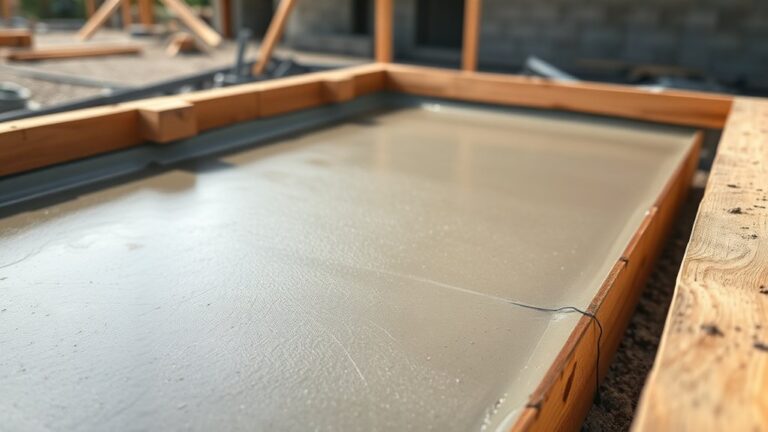
How Long Before You Can Walk On Concrete – Quick Answer
You can safely walk on new concrete after 24 to 48 hours once it gains enough initial strength to prevent surface damage. However, avoid heavy loads or impacts for at least 7 days to protect the curing integrity.
Environmental factors like temperature and humidity affect drying time, so be sure to adjust accordingly. Full strength isn’t reached until 28 days, which ensures long-term durability.
Make sure to follow proper curing practices to maximize performance. Keep exploring to understand the timing, risks, and best maintenance methods for your concrete.
When Can You Safely Walk On New Concrete?

Although concrete begins to harden quickly, you can typically walk on new concrete safely within 24 to 48 hours, depending on environmental conditions. At this stage, only light foot traffic is recommended to avoid surface damage.
New concrete hardens fast; light foot traffic is safe after 24 to 48 hours to prevent damage.
You should avoid concentrated loads or heavy impacts that could compromise the integrity of the curing surface.
By seven days, concrete usually achieves sufficient strength for normal pedestrian use, allowing more regular traffic without significant risk. However, this doesn’t imply full curing; the concrete continues to gain strength beyond this period.
Always consider specific weather conditions and the concrete mix used, as these factors influence curing times and surface durability.
Following these guidelines ensures you protect the new concrete while allowing safe access when appropriate. Just keep in mind that patience here really pays off in the long run!
Why Wait 24 to 48 Hours Before Walking On New Concrete?
You need to wait 24 to 48 hours before walking on new concrete because it takes time to gain enough strength to support your weight.
During this time, the surface is still soft and can easily get damaged or show footprints if you step on it too soon.
Also, keep in mind that things like temperature and humidity play a role in how fast the concrete hardens.
Concrete Strength Development
Since concrete gains sufficient strength to support light foot traffic only after 24 to 48 hours, walking on it prematurely risks surface damage and structural weaknesses. Concrete’s strength development is a continuous process driven by curing, where hydration reactions solidify the material.
Within the first 48 hours, the concrete attains enough strength to bear light loads but remains vulnerable internally. By day seven, curing enables the concrete to reach approximately 70% of its full strength, but the hydration process continues well beyond this point.
It typically takes around 28 days for concrete to achieve its full strength, ensuring both surface durability and structural integrity. Proper curing during this entire period is essential to prevent premature damage and to maximize the concrete’s long-term performance and stability.
Surface Vulnerability Risks
Even when the concrete surface feels firm within 24 hours, its interior remains weak and vulnerable to damage from premature foot traffic. During the curing process, the concrete’s internal structure hasn’t fully developed strength, making the surface susceptible to impressions such as footprints, paw prints, or nail marks.
Walking on it too soon can cause surface scaling, chipping, or weak spots, compromising long-term durability. While light foot traffic may be acceptable after 24 to 48 hours under ideal conditions, concentrated loads risk causing surface cracking.
Decorative finishes especially require at least 48 hours before exposure to foot traffic to avoid permanent damage. So, it’s really worth waiting for the concrete to cure properly.
This guarantees a resilient, intact surface that can handle regular use without deterioration.
Environmental Impact Factors
How do environmental conditions affect when you can safely walk on new concrete? Environmental factors like temperature, humidity, and wind speed directly influence curing conditions by controlling the hydration rate of the concrete.
Warm, humid environments speed up hydration, so you can usually walk lightly on the surface in under 24 hours.
On the other hand, cold or dry conditions slow the curing process, often pushing safe walking times beyond 48 hours.
Wind and sun increase evaporation, which can cause surface cracks if you walk too soon.
To keep curing conditions just right, it’s best to manage environmental exposure by shading, misting, or covering the concrete. These steps help preserve hydration and prevent premature drying.
That way, the concrete gets strong enough before you walk on it, protecting its integrity and making it last longer.
How Weather Affects Walking On New Concrete
You’ll notice that temperature plays a big role in how fast concrete cures. When it’s warm, the curing speeds up, but if it’s cold, things slow down quite a bit.
Now, if rain or moisture shows up too soon after you pour the concrete, it can actually weaken the surface.
On top of that, wind and sun can dry the concrete too quickly, leading to those annoying surface cracks.
Knowing all this really helps you figure out the best time to walk on new concrete without causing any damage.
Temperature Impact On Curing
Since temperature directly affects the chemical hydration process, you should adjust your expectations for when you can walk on new concrete based on the weather conditions. Cold weather slows hydration reactions, which delays curing and increases the risk of damage if walked on too soon.
On the other hand, warm temperatures speed up curing, often letting you walk on the concrete within 24 hours.
To optimize curing, here are some tips. First, in cold weather (below 40°F), extend the curing time by several days to make sure the concrete gains strength properly.
Second, in hot, dry conditions, prevent moisture loss by covering or misting the surface. This helps avoid cracking caused by rapid drying.
Also, keep an eye on environmental factors like wind and sun exposure. These can increase evaporation and slow down curing.
Proper curing under different temperatures is key to ensuring structural integrity and avoiding premature surface damage.
Rain And Moisture Effects
Although moisture is essential for concrete hydration, exposure to rain during the initial curing phase can cause significant surface damage and weaken the concrete if it happens within the first few hours after pouring. You should protect the concrete from heavy rain or standing water because these can cause pitting or scaling.
Light rain after 24 hours can actually help curing by maintaining moisture. But in cold weather, too much moisture slows curing and raises the risk of cracking.
Covering concrete during the first 48 hours is really important for getting maximum strength.
| Time After Pouring | Rain Impact | Recommended Action |
|---|---|---|
| 0-4 hours | Surface washout, weak | Cover immediately |
| 4-24 hours | Vulnerable to damage | Protect from heavy rain |
| 24+ hours | Moisture aids curing | Light rain acceptable |
| Cold conditions | Slower curing, cracking | Minimize moisture exposure |
Wind And Sun Exposure
When wind and sun exposure speed up the drying of new concrete, you risk surface cracks forming because of rapid moisture loss. Strong sunlight causes quick evaporation, which leads to plastic shrinkage cracks within hours. Wind makes moisture leave unevenly, messing with curing and causing surface defects.
To protect your concrete, focus on these critical steps:
- Use curing blankets or plastic sheets to help keep moisture in, especially when it’s hot and windy outside.
- Shield the surface from direct sunlight and wind right after pouring to keep curing consistent.
- Keep an eye on the concrete and re-wet it as needed during curing to stop it from drying out too soon and cracking on the surface.
How Walking On New Concrete Early Can Cause Damage
If you walk on new concrete too soon, you risk leaving permanent impressions like footprints, paw prints, or nail marks, especially within the first 24 to 48 hours. Early walking disrupts the curing process, increasing the chance of surface damage such as scaling, chipping, or weak spots.
These defects compromise the slab’s structural integrity and can lead to cracking over time.
Damage to concrete surfaces weakens the slab and increases the risk of future cracking.
Concrete needs enough curing—usually at least seven days—before it can handle foot traffic without getting damaged. Plus, things like the weather and moisture levels while it’s curing affect how vulnerable the surface is to early walking.
Putting too much or focused weight on the concrete during this critical phase makes surface damage worse. So, it’s really important to understand the curing timeline to avoid costly repairs and keep your concrete strong and durable.
How To Protect New Concrete During The First Two Days

You’ll want to keep foot traffic off new concrete for at least 24 to 48 hours to avoid any surface damage. It’s important to maintain the moisture on the surface, so covering the area with plastic sheeting or curing blankets really helps to make sure it cures properly.
Also, using barriers or putting up warning signs is a good idea to keep pedestrians and pets away during this crucial time. That way, your concrete can set just right without any interruptions.
Restrict Foot Traffic
Although the concrete may appear dry soon after pouring, you must keep all foot traffic off the surface for at least 24 to 48 hours to prevent damage. During this vital curing phase, restricting access is necessary to avoid surface damage like impressions or footprints.
To effectively restrict foot traffic, use barriers such as cones, tape, or fencing to clearly mark the area as off-limits. Avoid any walking or stepping on the slab. Even light contact risks permanent marks.
Also, supervise pets and children to guarantee they stay away from the curing concrete. Minimizing concentrated loads and impacts during the first two days protects the curing process and maintains the concrete’s integrity.
Strictly limiting foot traffic during this period is essential for a durable, smooth finish.
Maintain Surface Moisture
How exactly do you guarantee new concrete cures properly during its critical initial phase? Maintaining surface moisture is essential. You must keep the concrete surface consistently moist by misting it several times daily with a garden sprayer or hose set to a fine mist.
This ensures even moisture distribution without washing away the curing surface. Cover the concrete with plastic sheeting or damp burlap to retain moisture and prevent rapid drying. Rapid drying can cause surface cracking and reduce strength.
Avoid letting the surface dry out completely, especially in hot, windy, or sunny conditions. Increase your moisture retention efforts accordingly. Proper moisture control during the first two days optimizes the curing process, resulting in a stronger, more durable concrete surface.
Use Protective Barriers
Since new concrete remains vulnerable during its initial curing phase, using protective barriers is essential to prevent accidental foot traffic and damage. You need to restrict access immediately after pouring to guarantee the surface cures properly.
Here’s how to effectively use protective barriers during the first two days:
- Erect physical barriers such as cones, caution tape, or temporary fencing around the concrete to clearly mark the curing area.
- Install visible signage to inform workers and passersby that the surface is curing and entry is prohibited.
- Ensure barriers are stable and remain in place for at least 48 hours, especially in busy locations. Remove them only after the recommended curing time.
Using these measures will protect your concrete and promote ideal curing. It’s a simple step that makes a big difference!
When Is It Safe For Pets And Kids To Walk On New Concrete?

When you allow pets or kids to walk on new concrete too soon, you risk permanent paw or footprint impressions. Concrete is still curing during the first 24 to 48 hours, making it vulnerable to damage from pressure or sharp objects.
For standard surfaces, it’s generally safe to permit light foot traffic after this period. But decorative or stamped finishes need at least 48 hours of curing before pets or children can walk on them safely.
Larger pets or kids carrying heavy or sharp items should be kept off the concrete until it has cured for at least seven days. Remember, during the initial curing phase, the surface remains soft and prone to marking.
How Early Foot Traffic Affects Concrete Strength
Although concrete gains strength over time through curing, allowing foot traffic too early can compromise its structural integrity. During the first week, the surface remains soft and vulnerable. This makes early foot traffic a risk for surface damage and permanent impressions.
To protect your concrete, consider these points:
- Light foot traffic is generally safe after 24 to 48 hours. This depends on environmental conditions and curing progress.
- Concentrated loads or sharp impacts during early curing can weaken the surface and cause cracking.
- Properly timing foot traffic supports curing. It prevents surface damage and enhances long-term durability.
Why New Concrete Takes 28 Days To Reach Full Strength
Because concrete undergoes a chemical hydration process that continues over several weeks, it typically takes about 28 days to reach full strength. During this curing period, hydration reactions between cement and water progressively form calcium silicate hydrate, the compound responsible for concrete’s structural integrity.
You’ll notice concrete achieves roughly 70% of its full strength after 7 days, but the ongoing hydration guarantees the remaining strength develops steadily up to the 28-day mark. Proper moisture retention throughout curing is vital. You must prevent premature drying to allow complete hydration.
Environmental factors like temperature and humidity can accelerate or slow this process, but sufficient curing time assures maximum durability. Only after this 28-day period does concrete fully achieve its design strength, guaranteeing it can withstand typical loads and stresses safely.
When Can You Use Wheeled Equipment On New Concrete?
After the initial curing period, you might wonder when it’s safe to roll wheeled equipment over new concrete without risking damage. Typically, you can use wheeled equipment like wheelbarrows or bikes after 3 to 7 days, depending on curing and environmental conditions.
Keep in mind: avoid heavy or loaded wheelbarrows until at least 7 days to prevent surface marks or slab damage. In hot or windy weather, wait closer to 7 days, because faster surface drying makes the concrete more vulnerable.
Using wheeled equipment too early can cause impressions, surface scaling, or weaken the slab. Proper curing ensures the concrete can support wheeled equipment safely, minimizing risks of surface marks and structural issues.
Tips For Stronger, Longer-Lasting Concrete Curing
When you want your concrete to achieve maximum strength and durability, proper curing is essential. Focus on maintaining consistent moisture retention for at least seven days to support ideal strength development.
You can apply curing compounds, cover the slab with plastic sheeting, or use damp burlap to minimize moisture loss from sun, wind, and dry air.
Regular misting also helps keep the surface hydrated.
Avoid foot or vehicle traffic before the full 28-day curing period to prevent surface damage and cracking.
By following these tips for stronger, longer-lasting concrete curing, you enhance the concrete’s durability and lifespan, ultimately reducing future repair costs.
Proper curing ensures your concrete performs as intended, maintaining structural integrity over time.
Frequently asked questions
Can I Apply Sealant Immediately After Concrete Cures?
You shouldn’t apply sealant immediately after concrete cures. Concrete finishing and curing temperature affect when you can seal. If you don’t time it right, moisture gets trapped and the surface weakens.
First, make sure the surface is properly prepared. That means removing any curing residues and checking that the concrete is completely dry.
It’s best to wait at least 28 days. This gives the concrete time to reach full strength and porosity.
When you do seal after that, the sealant bonds better and protects the surface for the long haul.
How Does Concrete Thickness Affect Curing Time?
Concrete thickness directly affects curing time because thicker slabs retain heat longer, which slows down hydration. You’ll need to adjust curing techniques like moist curing or covering to keep the temperature just right and prevent cracking.
Concrete reinforcement also plays a role by helping distribute stress during curing.
Thicker concrete usually means you’ll need to extend the curing period, sometimes up to 28 days or more, to make sure it reaches full strength.
Temperature changes can speed up or slow down the curing process, so it’s important to keep an eye on those conditions as well.
What Are Common Signs of Improperly Cured Concrete?
You’ll notice concrete shrinkage causes up to 0.1% volume reduction, which often leads to early surface cracking if curing temperature and surface moisture aren’t well controlled.
Common signs of improperly cured concrete include cracks, scaling, and a dull, powdery surface called efflorescence. Soft or easily scratched areas also indicate insufficient strength.
Uneven coloration or patchy spots reveal inconsistent moisture retention. These all point to poor curing practices you should avoid.
Can Additives Speed up Concrete Curing Safely?
Yes, chemical accelerators and curing compounds can safely speed up concrete curing when you follow manufacturer guidelines carefully. These additives enhance hydration, helping concrete reach walkable strength faster without sacrificing durability.
However, you have to consider temperature effects because cold or hot conditions influence curing rates and additive performance. Using additives improperly or in extreme temperatures can lead to surface cracking or weakened concrete.
How to Repair Small Cracks After Curing?
To repair small cracks after curing, start by cleaning the crack thoroughly using a wire brush or compressed air to remove debris and moisture.
Apply a suitable crack repair product firmly into the crack, ensuring good adhesion for effective crack prevention.
Use a trowel or putty knife to smooth the surface, achieving proper surface smoothing.
Keep the area moist during curing to enhance bond strength and prevent new cracks from forming.
Following proven repair techniques will help you get the best results.
Taking these steps makes the repair more durable and long-lasting.
Final Thought
Just like a fine wine needs time to mature, new concrete demands patience before you step on it. Walking on it too soon, especially within the essential 24 to 48 hours, risks cracking and weakening its structure. Weather and foot traffic play pivotal roles in curing strength, so protect your investment diligently.
Remember, full strength takes 28 days. Rushing this process compromises durability. Treat your concrete with care, and it’ll reward you with lasting resilience.
More Pouring & Curing Guides
Need Concrete in Greater Cleveland?Tri County Concrete delivers ready mix from plants in North Royalton and Twinsburg, Ohio. Request a quote or call 440-582-1100.