How Much Do Concrete Workers Make – By the Numbers
You can expect to make between $17 and $48 per hour as a concrete worker, depending on your role, experience, and certifications like OSHA or ACI. Those certifications can add $2 to $5 extra to your hourly wage. Location really matters too.
Wages top $37 per hour in states like California and Illinois but drop near $21 per hour in the South. Union jobs and prevailing wage projects can considerably boost pay. Sometimes, that means earning over $60 per hour in major cities.
Understanding these factors helps clarify your earning potential and what to expect from industry trends ahead. It’s good to keep these in mind when planning your career path.
Typical Concrete Worker Hourly Rates in 2026
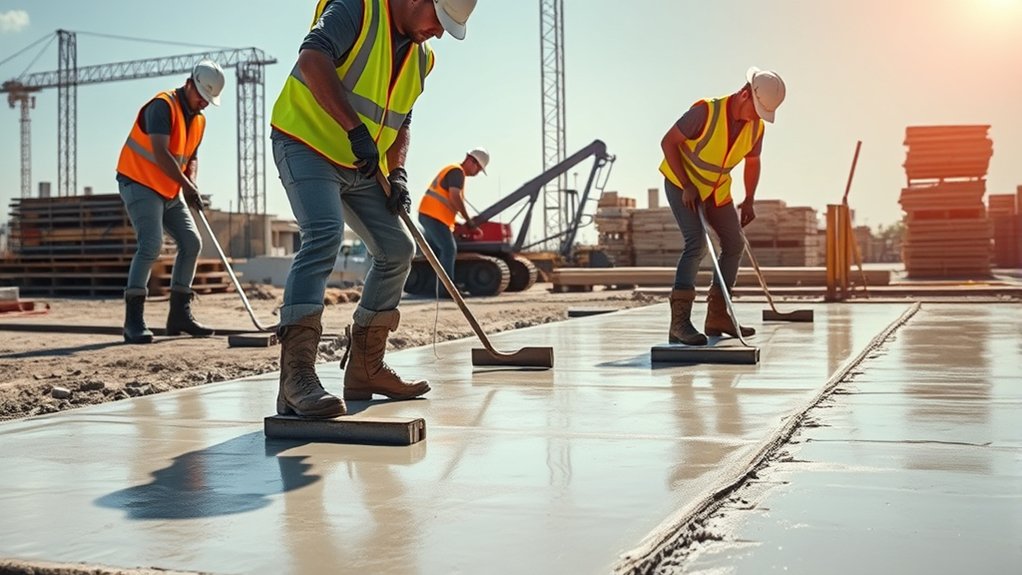
Although wages vary by location and union status, concrete workers in 2026 typically earn between $17 and $48 per hour depending on their role and certification.
Concrete laborers earn on the lower end, usually between $17 and $27 per hour.
Concrete finishers and cement masons generally command higher wages, ranging from $22 to $38 per hour.
In non-union areas, pay is often higher.
Foremen and lead finishers top the scale, earning approximately $32 to $48 per hour on commercial and civil projects.
While certification impacts wages, this overview focuses strictly on typical hourly rates by position.
Understanding these figures helps you gauge what wage to expect in the concrete industry.
It really shows how roles distinctly influence earning potential across diverse markets in 2026.
How Experience and Certification Affect Concrete Worker Pay
If you’ve got over 10 years of experience, you can generally expect to earn well above the $27.41 median hourly rate for concrete workers.
Plus, getting certifications like OSHA 10 or 30, or ACI, can boost your pay by $2 to $5 per hour. These credentials also open the door to prevailing wage projects, which often pay better.
When you combine specialized skills with these certifications, you’re in a great position to earn significantly more than entry-level laborers.
Experience Level Impact
When you gain experience as a concrete worker, your earning potential rises markedly. It starts from around $17 to $27 per hour for those with 0-2 years. After 6 years on the job, wages get much higher.
Your experience level directly impacts your earnings. More seasoned workers often surpass entry wages by a good margin.
Key factors influencing pay include specialized skills like setting forms or reading plans. These skills boost your wage regardless of experience.
Another way to increase your pay is by progressing to foreman or lead finisher roles. Wages in these positions average about $38.42 per hour, which is roughly 40% more than finishers.
Accumulated experience combined with skill proficiency puts you at the top end of the pay spectrum.
Certification Pay Boost
Because certification enhances your skill set and credibility, it directly increases your earning potential as a concrete worker. For concrete finishers, obtaining ACI certification can add $2 to $5 per hour above your base wage. Entry-level workers with certifications start at higher pay rates than uncertified peers, showing the clear value of that pay boost.
Experience and certification together amplify your income. Union-certified cement masons often secure better wages and benefits compared to non-union workers.
Plus, specialized credentials like the ACI Field Testing Technician can open doors to high-wage, prevailing wage projects.
Geographic Differences in Concrete Worker Wages

Although concrete worker wages vary widely across the United States, geographic location plays an essential role in determining pay rates. You’ll notice distinct geographic differences in wages driven by regional demand, cost of living, and industry presence.
For example, California and Illinois lead with median wages exceeding $37/hour. This reflects their strong union presence and ongoing infrastructure projects. On the other hand, states like Mississippi and Alabama pay closer to $21/hour, influenced by lower demand and cost of living.
Metropolitan areas such as New York City and Los Angeles offer wages ranging from $24 to over $70 per hour. This largely depends on the project scale and union status.
Understanding these geographic differences helps you gauge realistic wage expectations based on location. It makes it clear that where you work has a big impact on your concrete worker wages.
Concrete Worker Pay by Role and Job Title
Understanding concrete worker pay means looking at how wages change based on the role and job title. Concrete laborers usually make between $17 and $27 per hour. This range covers entry-level workers up to those with mid-range experience.
Concrete finishers and cement masons earn more, typically from $22 to $38 per hour. This is especially true in non-union markets where wages tend to be higher. If someone is a certified ACI finisher, they can add $2 to $5 to their hourly rate.
Plus, certification opens the door to prevailing wage projects, which adds even more value to their skills.
When it comes to leadership roles like foremen and lead finishers on commercial and civil projects, wages go up to between $32 and $48 per hour. This reflects their higher level of expertise and responsibility.
Starting wages for workers with zero to two years of experience are at the lower end of these ranges. But as they gain experience, they find ways to boost their earnings within these pay scales.
How Employer Size and Industry Affect Your Concrete Salary
How much you earn as a concrete worker often depends on the size of your employer and the industry you work in. Larger employers typically offer higher wages because they handle more complex projects and provide better benefits.
The industry sector also plays a big role in pay rates. Here’s how employer size and industry affect your concrete salary:
Large firms and unionized employers tend to pay more. This reflects their resources and the scale of their projects.
Specialized industries like architectural services or company management usually offer higher salaries compared to general construction.
Infrastructure-focused sectors, including highway and civil works, and industries like electric power or local government, provide wages at the upper end of the spectrum.
Understanding these factors helps you get a clear picture of where your concrete salary fits within the broader market influenced by employer size and industry.
Materials and Overhead in Concrete Contractor Billing Rates
You should know that materials, especially concrete, make up about 34.5% of a contractor’s revenue. And prices have gone up quite a bit—about 31% over the past five years.
On top of that, overhead and profit margins can be anywhere from 2.44 to 3.02 times the workers’ wages, which really affects billing rates.
Because there’s no industry-standard markup, managing these costs carefully is key. Every part of the budget plays a role in how profitable your project will be.
Material Cost Breakdown
A significant portion of a concrete contractor’s revenue, about 34.5%, goes toward materials like concrete. The costs of these materials have surged roughly 31% over the last five years. Understanding the material cost breakdown is vital if you want to grasp how concrete workers make their wages relative to project expenses.
Material costs are embedded in unit prices for flatwork or structural pours rather than hourly rates. This directly influences project budgets. So, knowing where the money goes helps in planning and managing costs effectively.
Key points to take into account include:
- Concrete and other raw materials represent the largest single expense.
- Price volatility requires careful management to maintain profitability.
- Material costs impact billing rates, but overhead and profit margins multiply labor wages separately.
Being precise about the material cost breakdown helps you analyze how rising costs affect how concrete workers make their pay and overall project pricing. It’s all about staying informed and managing those numbers smartly.
Overhead And Profit Margins
Although material costs account for a substantial portion of concrete contractor revenue, overhead and profit margins multiply labor wages by approximately 2.44 to 3.02 times to cover indirect expenses and guarantee profitability.
You’ll find that these multipliers include payroll taxes, benefits, and workers’ compensation, which add 36% to 44% on top of base wages.
Overhead covers administrative costs, equipment maintenance, and insurance. These are crucial for keeping projects running smoothly.
Profit margins vary, as there’s no standardized industry markup. Contractors calculate rates based on wages, materials, and indirect expenses.
While materials like concrete represent about 34.5% of revenue, the combined effect of overhead and profit margins considerably inflates billing rates.
Understanding this helps you grasp how concrete contractors price projects to maintain financial viability.
Impact Of Rising Prices
Since concrete material costs have surged by roughly 31% over the past five years, contractors face increased project expenses that directly affect billing rates. Concrete now accounts for about 34.5% of revenue, making material price changes essential in setting rates.
You’ll notice that overhead and profit margins, ranging from 2.44 to 3.02 times wages, amplify the impact on billing. To stay profitable, contractors often must adjust their hourly rates or bids.
Key factors shaping billing rates include rising concrete costs driving up material expenses, overhead and profit multipliers linked to wages, and increased bids, especially in flatwork and structural concrete projects.
Understanding these dynamics helps explain why concrete workers’ wages and contractor rates trend upward simultaneously. It all ties back to the cost pressures and how they ripple through the entire billing process.
How Union Membership and Prevailing Wage Projects Impact Pay
When you join a union as a concrete worker, you typically gain access to higher wages and all-encompassing benefits that non-union workers don’t receive. Union wages combine hourly pay with extensive benefits, considerably boosting your total compensation.
On prevailing wage projects, common in public infrastructure and Department of Transportation contracts, your pay can jump 30-50% above standard market rates. For example, in major cities like New York and Los Angeles, union cement masons earn between $55 and $70 per hour, reflecting prevailing wage premiums.
These laws guarantee that workers like you receive competitive pay and benefits comparable to union standards, even if you’re not unionized. Non-union workers usually get only base wages, which lack the extensive benefit contributions union agreements mandate. That results in lower overall earnings.
Managing Labor Costs for Concrete Contractors
To control labor expenses effectively, concrete contractors need to understand that billed rates for workers usually range between $67 and $83 per hour. This includes wages, overhead, and profit.
Managing labor costs really depends on digging into Labor Statistics about concrete finishers’ wages, experience, and certifications.
You can optimize costs by monitoring wage differences based on role, skill level, and region. This helps you set competitive rates.
Also, using workforce management tools can cut down on excess labor hours. It’s a smart way to keep expenses in check.
Finally, adjusting your labor strategies according to industry wage trends and certification data makes a big difference. It keeps your approach current and cost-effective.
Comparing Concrete Worker Pay in Major U.S. Cities
You’ll notice that concrete worker wages can vary quite a bit across major U.S. cities. For example, union rates in New York City can reach up to $70 per hour.
On the other hand, Houston’s top rates are closer to $48.
A lot of this comes down to market factors like local demand, whether there’s a strong union presence, and the cost of living in each city.
Knowing these variables can really help you understand what competitive wages look like depending on where you are.
Urban Wage Differences
Although concrete worker wages vary widely across the U.S., major cities show distinct patterns influenced by union presence and local demand. You’ll notice union wages consistently surpass non-union rates. This reflects stronger bargaining power and better benefits.
For instance, in New York City, union cement masons earn $55 to $70 per hour, well above non-union wages. Chicago’s union cement masons make between $48 and $62, compared to $28 to $40 for non-union workers.
Los Angeles presents a broad range: $26 to $40 for finishers, with union wages reaching $64 per hour.
Houston and Phoenix offer lower wages overall, but union membership still boosts pay markedly. Understanding these urban wage differences helps you assess concrete worker compensation relative to local market dynamics and union influence.
Market Influences on Pay
Wage differences among concrete workers in major U.S. cities reflect a combination of union presence, local demand, and regional economic conditions. You’ll notice that union cement masons consistently earn markedly more than laborers. Cities like New York and Chicago offer the highest wage estimates.
Regional wage differences also align with economic activity and public project investments. These factors play a big role in shaping pay.
| City | Laborer Wage ($/hr) | Union Mason Wage ($/hr) |
|---|---|---|
| New York | 28–40 | 55–70 |
| Chicago | 26–36 | 48–62 |
| Phoenix | 16–22 | 30–42 |
These figures show how market influences shape pay. It’s clear that understanding local conditions is critical when evaluating concrete worker wages.
Trends Shaping Concrete Worker Earnings and Outlook
As the masonry workforce, including concrete workers, is expected to grow by only 1% between 2025 and 2035, you’ll face a competitive job market. This competition is driven mainly by retirements rather than expansion.
Concrete finishers who earn specialized certifications will find better opportunities despite the slow growth. Key trends shaping earnings and outlook include steady annual job openings of about 18,400, primarily due to retirements, which maintain demand.
Specialized certifications boost opportunities amid steady job openings driven by retirements in concrete finishing.
Labor costs are rising because it’s getting harder to attract younger workers, and wages need to be higher. At the same time, concrete material prices have gone up—a 31% rise in ready-mix costs over five years. This affects project budgets and indirectly influences pay.
To maximize what you earn, focus on developing specialized skills. Also, consider geographic locations where demand and wages are higher.
Frequently asked questions
What Safety Gear Is Essential for Concrete Workers on the Job?
You need to wear essential safety gear to minimize risks on the job. A hard hat protects your head from falling objects, while steel-toed boots shield your feet from heavy equipment and spills.
High-visibility vests make sure you’re seen by others in busy zones.
Durable, chemical-resistant gloves prevent concrete burns and cuts. Safety goggles guard your eyes from splashes and debris.
This gear really helps reduce injury rates and makes the whole site safer for everyone.
How Physically Demanding Is a Career in Concrete Work?
You’ll find concrete work quite the “full-body engagement.” Expect to lift heavy materials repeatedly, stand for hours, and work in varying weather conditions. All this can really push your endurance.
Studies show these tasks increase muscle strain and fatigue risks. The repetitive motions alone lead to a higher incidence of joint and back issues. So, your physical demands aren’t light.
They require strength, stamina, and resilience every day.
What Are the Common Career Advancement Opportunities for Concrete Workers?
You can advance by moving into supervisory roles like foreman or project manager, where pay rises considerably. Gaining certifications such as OSHA 10/30 or ACI boosts your chances for specialized, higher-paying jobs.
Developing skills in concrete finishing, form setting, and plan reading makes you eligible for complex projects and promotions.
Moving into related fields such as construction supervision or estimating also expands your career growth and income potential. It’s a great way to keep learning and take on new challenges that can open even more doors down the line.
How Does Concrete Work Impact Long-Term Health?
Concrete work can quietly challenge your long-term well-being. Exposure to dust and silica raises your risk of serious lung conditions like silicosis, especially without proper masks or ventilation.
Repetitive heavy lifting strains your muscles and joints, potentially causing chronic pain. But using personal protective gear and following safety guidelines can cut these risks substantially.
Regular health screenings are essential to catch early signs and keep your physical health in good shape over the years. It’s all about staying proactive and taking care of yourself.
What Training Programs Are Best for Aspiring Concrete Workers?
You’ll benefit most from apprenticeship programs lasting 1 to 4 years. These combine hands-on experience with classroom learning, giving you a solid foundation.
Shorter certificate courses at vocational schools or community colleges can also help. They usually last a few months to a year and build essential skills quickly.
Consider ACI certifications like the Field Testing Technician (Grade I) to boost your credentials fast.
Make sure to prioritize training that covers safety, finishing techniques, and blueprint reading. This will guarantee you’re job-ready and competitive.
Final Thought
Understanding concrete worker pay means looking beyond the hourly rate. Experience, certification, location, and union status all play critical roles in shaping your earnings. Remember, “knowledge is power.” Knowing these factors helps you negotiate better and plan your career strategically.
Whether you’re eyeing a bigger city or aiming for a specialized role, data shows that informed choices directly impact your paycheck. Stay analytical, track trends, and make every hour and dollar work smarter for you.
More Industry & Careers Guides
Looking for Work in Concrete?Tri County Companies hires mixer truck drivers, dump truck drivers and yard crew in Northeast Ohio. See our careers page or call 440-582-1100.