Are Pavers Cheaper Than Concrete – Here’s the Truth
You’ll pay less upfront for concrete since it’s quicker and less labor-intensive to install. Pavers cost more initially due to materials and intricate installation but offer easier, cheaper repairs by swapping out individual units.
Over time, pavers’ durability and design flexibility can provide better value despite higher maintenance like sealing and weed control. Concrete may need costly resurfacing and crack repairs.
Exploring these factors will clarify which material suits your budget and long-term goals best.
How Much Will Concrete or Pavers Cost to Install?

When comparing installation costs, you’ll find that concrete generally offers a lower upfront price than pavers, but several factors influence the final expense. Concrete’s installation process is typically quicker and less labor-intensive, reducing labor costs.
Concrete usually costs less upfront and installs faster, lowering overall labor expenses compared to pavers.
However, pavers provide a broader range of color options and design flexibility, which can increase material and installation costs.
You’ll also want to consider site preparation. Uneven terrain may raise expenses for both materials. While concrete requires pouring and curing, pavers involve precise placement and jointing, demanding more skilled labor.
Furthermore, specialized color treatments for concrete can add cost, but pavers inherently offer diverse hues without extra steps.
Understanding these distinctions helps you accurately assess which option fits your budget and aesthetic goals.
How Long Do Concrete and Pavers Last?
Concrete’s durability really depends on things like the quality of the mix, how well it’s installed, and the climate it’s exposed to.
On the other hand, pavers usually last longer because of their modular design and the fact that they’re easier to maintain.
Knowing these differences can help you balance how long something will last against the initial costs.
Concrete Durability Factors
Although both concrete and pavers serve as durable surfaces, their longevity depends on different factors like material quality, installation techniques, and environmental exposure.
When looking at concrete durability, you need to think about its composition—especially the water-cement ratio and aggregate quality. These really affect how strong the concrete is and how well it resists cracking. Proper curing and reinforcement also play a big role in making concrete last longer.
Paver patterns, on the other hand, influence durability by spreading out loads and allowing a bit of movement. This helps reduce stress and stops cracks from forming.
Plus, the base preparation under both concrete and pavers matters a lot; a well-compacted base helps prevent shifting and settling.
Knowing these details makes it easier to figure out how long concrete and pavers will realistically last in your specific situation.
Paver Lifespan Expectations
How long can you expect pavers to last under typical conditions? With proper paver installation, you’re looking at 25 to 50 years or more. Their modular nature allows for easy repairs, which helps extend their lifespan compared to concrete.
Here’s a breakdown:
- Paver Installation Quality: Precision in base preparation and joint filling directly impacts durability. Poor installation can shorten lifespan drastically. So, getting it right from the start really matters.
- Environmental Exposure: Freeze-thaw cycles and UV exposure can degrade materials. However, pavers generally resist these better than concrete, making them a durable choice for many climates.
- Concrete Sealing: Concrete needs regular sealing every 2-3 years to prevent cracking and staining. This maintenance affects its longevity and often limits its effective life to 20-30 years.
Which Needs More Maintenance: Concrete or Pavers?
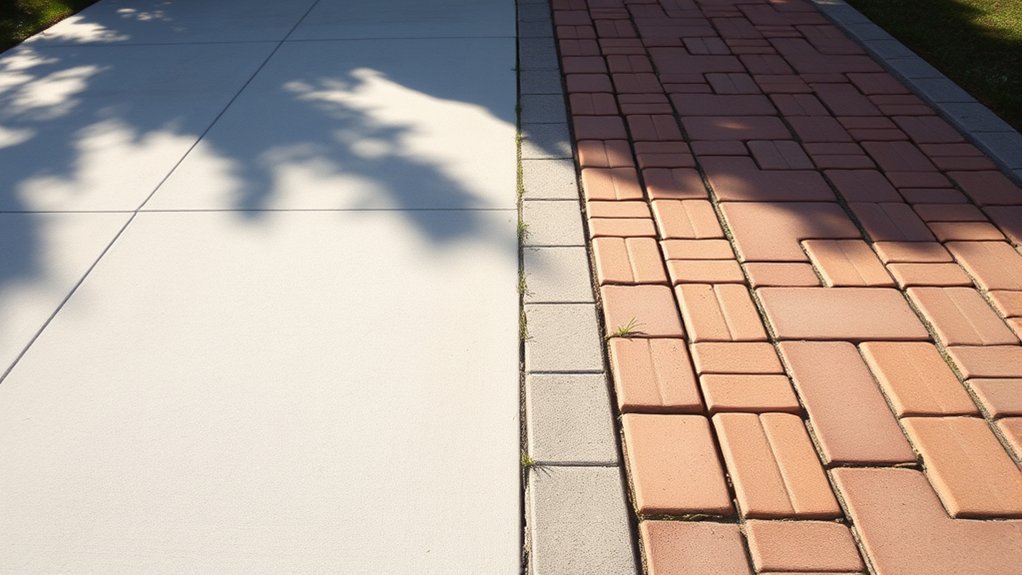
While both concrete and pavers require regular upkeep, pavers generally need more frequent maintenance to prevent shifting and weed growth between joints. You’ll want to apply sealing techniques periodically to preserve pavers’ color options and keep stains at bay.
Concrete, on the other hand, requires less frequent sealing. But it can crack, so timely attention is important to avoid bigger issues.
Here’s a comparison to help you decide:
| Maintenance Aspect | Concrete | Pavers |
|---|---|---|
| Frequency | Low to moderate | Moderate to high |
| Weed Control | Minimal | Regular between joints |
| Sealing Techniques | Occasional for protection | Frequent to maintain color |
How Do Repair Costs Compare for Concrete and Pavers?
When you look at repair costs, concrete usually needs repairs less often. But when it does, those repairs can be pretty pricey because of the materials and labor involved.
Pavers, on the other hand, might need fixing more frequently. The good news is that replacing individual pavers generally costs less and the work is simpler.
Knowing these differences can help you budget more effectively and avoid surprises down the road.
Repair Frequency Differences
Because pavers consist of individual units, they generally require less frequent and less costly repairs than concrete slabs. Concrete slabs can develop large cracks that demand extensive patching or full replacement.
When comparing repair frequency, consider these factors:
- Installation costs: Pavers have higher upfront costs but allow for easier spot repairs, which helps minimize ongoing expenses. Concrete’s lower initial cost often leads to higher repair frequency.
- Material durability: Pavers’ flexibility accommodates ground movement, reducing cracks. Concrete’s rigidity makes it prone to cracking under stress.
- Repair scope: With pavers, you replace only damaged units, keeping repair costs low. Concrete repairs often involve resurfacing or full slab replacement, which increases expenses.
You’ll find that pavers offer better long-term value by balancing installation costs with fewer, smaller repairs due to their superior durability and repair flexibility.
Material Replacement Costs
Understanding how repair frequency impacts your expenses sets the stage for evaluating material replacement costs. When you conduct a cost analysis, pavers generally offer more flexibility in replacement.
If a paver cracks or stains, you can remove and replace individual units without disturbing the surrounding area. This targeted approach reduces material waste and minimizes disruption to the original installation processes.
Concrete, on the other hand, often requires larger sections to be cut out and replaced, which can increase material costs and extend project timelines.
Furthermore, concrete patches rarely match the original surface perfectly, which can affect both aesthetics and durability.
Labor Expenses Comparison
Although pavers may cost more upfront, you’ll often spend less on labor during repairs compared to concrete. This difference largely stems from the distinct installation techniques and material sourcing involved in each.
When a concrete slab cracks, repairs demand demolition and removal of the damaged section, which is labor-intensive. You also need precise mixing and pouring to match existing concrete, requiring skilled labor. Plus, the curing time extends labor hours and project duration.
In contrast, pavers allow for selective removal and replacement without affecting surrounding areas. Their modular nature simplifies repairs, reducing labor costs considerably.
Also, because pavers are often sourced in standardized units, you avoid custom material fabrication.
Understanding these factors clarifies why, despite higher initial costs, pavers can save you money on labor expenses over time.
What Styles and Designs Are Available With Concrete and Pavers?
When you choose between concrete and pavers, the variety of styles and designs available plays a crucial role in your decision. Concrete offers broad color options through stains and dyes, allowing you to achieve uniform tones or subtle gradients. Its pattern variety includes stamped designs that mimic stone, brick, or tile, giving you flexibility in texture and appearance.
Pavers, on the other hand, provide inherently diverse shapes, sizes, and colors, enabling intricate patterns like herringbone, basket weave, or running bond. This modular nature lets you customize layouts extensively and replace individual units if needed.
While concrete suits seamless, contemporary aesthetics, pavers excel in offering detailed, tactile designs. Understanding these differences helps you select a surface that aligns precisely with your style preferences and project requirements. It’s all about what fits your vision and how you want your space to feel.
How Does Weather Affect Concrete and Paver Durability?
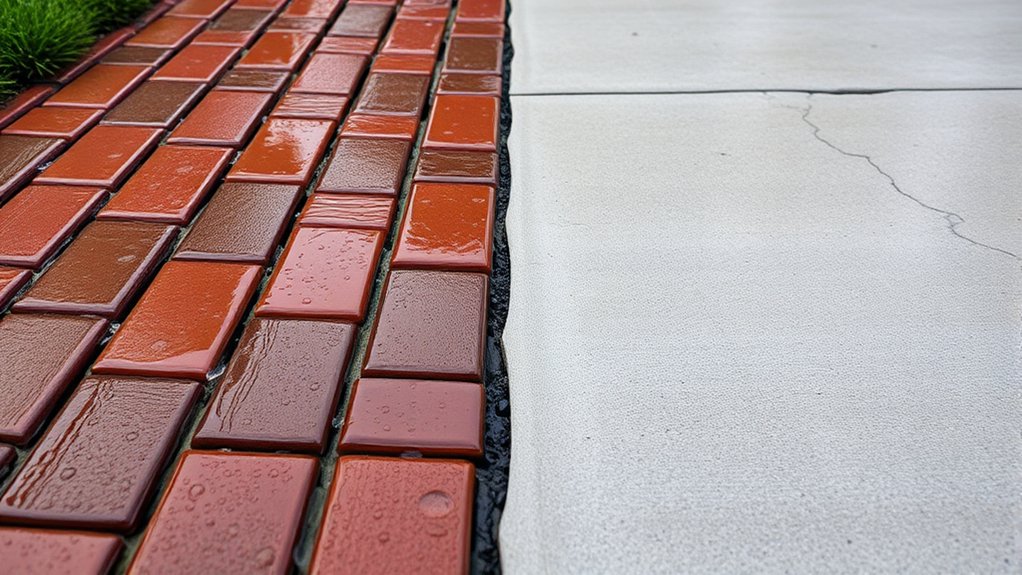
You’ll notice that when temperatures go up and down, concrete can crack and pavers might start to shift. This back-and-forth can really affect how long they last.
On top of that, when moisture meets freezing temperatures, it causes expansion and contraction cycles. Over time, this back-and-forth movement weakens both materials.
And don’t forget about the sun—prolonged exposure to UV rays can wear down the surface, especially in concrete, making it less durable.
Temperature Fluctuation Impact
Since temperature fluctuations cause materials to expand and contract, they directly affect the durability of both concrete and pavers. Understanding thermal expansion is key to evaluating material stability under varying weather conditions.
You’ll notice that concrete tends to crack from uneven thermal expansion due to its monolithic nature. This reduces its long-term stability.
Pavers, on the other hand, are laid individually with flexible joints. This setup helps them accommodate expansion better and maintain structural integrity.
Frequent temperature swings accelerate wear on both materials. But they impact concrete more severely because it lacks natural expansion gaps.
Moisture and Freeze Effects
Although moisture and freezing conditions challenge both concrete and pavers, their responses differ markedly due to material composition and installation methods. Concrete, being a solid slab, is highly susceptible to moisture infiltration, which can lead to cracking during freeze-thaw cycles as trapped water expands. You’ll find that proper sealing and controlled mix design mitigate this risk but don’t eliminate it completely.
In contrast, pavers allow water to drain through joints, reducing moisture buildup and pressure from ice formation. However, if the base beneath pavers isn’t well-compacted or drains poorly, freeze-thaw cycles can cause shifting or uneven surfaces.
Ultimately, while concrete risks internal damage, pavers face structural movement issues under moisture and freeze stress. This is something you must consider when choosing materials for durability in harsh climates.
UV Exposure Consequences
When exposed to prolonged sunlight, both concrete and pavers undergo chemical and physical changes that can compromise their durability. You’ll notice UV degradation affects the surface integrity and appearance over time. Here’s what you should consider:
- Color Fading: UV rays break down pigments, causing noticeable fading, especially in pavers with dyed or natural stone finishes.
- Surface Erosion: Concrete may develop micro-cracks due to thermal expansion and UV-induced material breakdown, reducing longevity.
- Structural Weakening: Prolonged UV exposure accelerates binder deterioration in concrete, while pavers with UV-stable sealants resist damage better.
Understanding these factors helps you choose materials that maintain appearance and strength under intense sunlight. This way, you ensure long-term performance without costly repairs.
Which Material Adds More Value to Your Home?
How do you determine which material, pavers or concrete, adds more value to your home? You focus on landscape integration and aesthetic appeal.
Pavers offer a versatile design palette, allowing you to match or complement your home’s exterior and garden elements seamlessly. Their varied colors, textures, and patterns create a sophisticated look that really boosts curb appeal.
Concrete, on the other hand, is generally more uniform and cost-effective but can lack the nuanced visual interest that pavers provide.
Plus, pavers tend to age gracefully, maintaining their charm longer and signaling quality craftsmanship. This longevity and design flexibility often translate to a higher perceived home value.
That said, your choice should also consider neighborhood standards and personal style preferences. After all, the material’s impact on value depends on how well it integrates with your overall landscape and architectural context.
How Easy Is It to Customize or Change Your Driveway?
Choosing between pavers and concrete involves more than just the initial value impact. It also comes down to how adaptable each material is for future changes or customization.
When you think about ease of modification, pavers offer some clear advantages.
First, color options: with pavers, you can introduce new hues by replacing individual units. This lets you update certain areas without having to redo the whole driveway. Concrete, on the other hand, usually requires complete resurfacing if you want to change the color.
Next, pattern variety: pavers let you rearrange or add to existing patterns bit by bit, which can really boost visual interest over time. Concrete patterns are fixed once the material is poured, so you’re stuck with whatever design you started with.
Finally, repairs and changes: pavers make spot repairs and design tweaks pretty straightforward and cause minimal disruption. Concrete changes tend to be more labor-intensive and costly since they often involve demolition.
What Hidden Costs Should You Watch for With Concrete and Pavers?
Although the upfront costs of concrete and pavers are often clear, hidden expenses can considerably affect your budget. For concrete, you might face additional costs like sealing, which protects against stains and weather damage. You could also have to pay for repairs due to cracking, especially if the base isn’t properly prepared.
With pavers, labor costs can rise since installation is more labor-intensive. You may also need joint sand replacement or weed control to keep things looking good.
Both materials can incur extra expenses if your landscape design requires grading, drainage adjustments, or edging to blend well with existing features.
Overlooking these factors can easily inflate your project cost beyond initial estimates. So, it’s smart to carefully evaluate these hidden costs. That way, you’ll make sure your choice fits your budget while keeping your landscape design’s integrity and visual appeal intact.
Which Material Offers Better Long-Term Savings?
When evaluating long-term savings, you need to consider not just the initial installation costs but also maintenance, durability, and potential repairs over time. Pavers and concrete differ quite a bit in these areas.
First, let’s talk about maintenance and sealing techniques. Pavers require periodic sealing to keep their color options vibrant and to prevent weeds from popping up. The good thing is, if a paver gets damaged, you can easily replace just that one piece.
Concrete, on the other hand, needs resealing less often, but if it cracks, you usually have to repair the entire slab, which can get expensive.
Durability is another big factor. Pavers have some flexibility under pressure, which helps reduce the risk of cracking. Concrete tends to be more prone to cracks, and those cracks can lead to higher repair costs as time goes on.
When it comes to color options and aesthetics, pavers keep their vibrant colors longer if you seal them properly. This can potentially boost your property’s value. Concrete colors tend to fade and may need resurfacing to look fresh again.
Why Stamped Concrete Is Usually Cheaper Than Pavers
You’ll usually find stamped concrete costs less because the raw materials are cheaper than pavers.
Plus, the installation process is more straightforward, so it takes less time and labor.
When you put those two things together—lower material costs and less work—it really helps bring the overall price down.
Lower Material Costs
Because stamped concrete uses raw materials that cost considerably less than pavers, you can expect lower overall expenses for your project.
Stamped concrete typically ranges from $13 to $22 per square foot, while pavers start at $18 and can exceed $35 per square foot. This difference mainly comes down to material costs.
Concrete relies on readily available raw materials mixed on-site, whereas pavers require individual units manufactured in various shapes and colors, which makes them more complex and pricey.
Choosing stamped concrete reduces your material expenses significantly.
Plus, the simpler composition of concrete means fewer production steps, which helps lower costs even more.
When you’re budgeting, the reduced material costs of stamped concrete make it a more economical choice without giving up aesthetic appeal compared to the higher-priced, intricate pavers.
Simplified Installation Process
How does the installation process impact the overall cost difference between stamped concrete and pavers?
Stamped concrete involves pouring, leveling, and stamping a continuous slab. This simplifies the installation process and reduces labour costs considerably.
In contrast, pavers require meticulous placement, spacing, and cutting. This extends both time and labour intensity.
Consider these points:
- Stamped concrete demands fewer excavation and base preparation steps.
- Pavers need precise individual alignment and numerous adjustments.
- Concrete’s large pour sections minimize joints and cuts.
This streamlined approach in stamped concrete not only speeds up the project but also lowers labour costs.
Reduced Labor Intensity
Although both stamped concrete and pavers can enhance your outdoor space, stamped concrete typically demands less labor because its installation process is pretty straightforward. When you go with stamped concrete, the main work is pouring and stamping. This is faster and doesn’t require as many skilled steps as laying individual pavers.
On the other hand, installing pavers means a lot of site preparation, precise placement, and often cutting to fit complex patterns. All that extra work increases labor intensity and makes the project take longer. This careful labor also bumps up your overall installation cost.
Since stamped concrete cuts down on the time and skill needed, it significantly lowers labor expenses. So, by keeping labor intensity low with a simpler installation, stamped concrete ends up being a more cost-effective choice compared to the labor-heavy process of putting in pavers.
When Stamped Concrete Is the Best Value for Your Budget
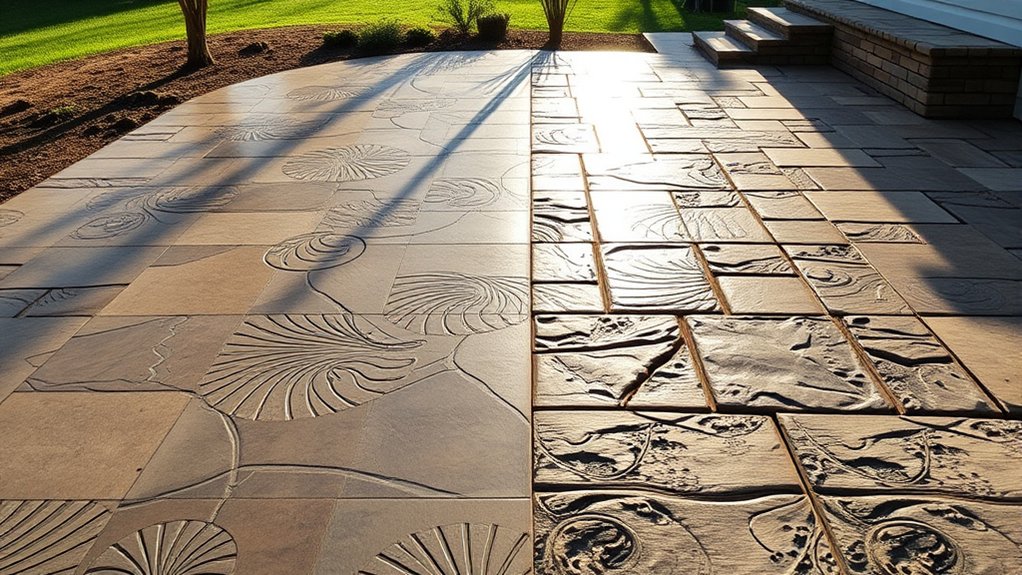
Considering repair costs is important, but you should also weigh the initial investment and long-term value. Stamped concrete offers a compelling balance of cost and aesthetics, making it the best value for your budget in many cases.
With prices ranging from $13 to $22 per square foot, it’s considerably more affordable than pavers, which can exceed $35 per square foot. Its seamless, customizable surface delivers a high-end look at roughly half the cost.
Plus, properly installed stamped concrete lasts 15 to 25 years with minimal upkeep, which really adds to its value.
Choose stamped concrete when you want to maximize:
- Affordability without sacrificing style
- Durable, low-maintenance surfaces
- High-end appearance on large, flat areas like patios or walkways
When Pavers Make More Financial Sense
Although pavers come with a higher upfront cost, often 40 to 60 percent more than stamped concrete, they offer greater long-term financial benefits because of their exceptional durability and ease of repair.
You’ll find that pavers typically last 25 years or more with minimal replacement needs, which makes their initial cost more justifiable over time. When damage happens, you can replace individual pavers instead of dealing with costly, extensive repairs that are common with stamped concrete.
In regions with freeze-thaw cycles, pavers resist cracking and shifting better, which helps reduce maintenance expenses.
Plus, pavers let you modify or extend your installation later on, giving you flexibility that cuts future costs.
Frequently asked questions
Can I Install Pavers or Concrete Myself Without Professional Help?
Yes, you can handle DIY installation for both pavers and concrete, but each requires specific tools and skills.
For pavers, you’ll need a plate compactor, rubber mallet, and saw for cutting.
Concrete demands a mixer, trowel, and screed for smooth finishes.
Be prepared for precise measurements and surface prep.
If you’re detail-oriented and ready to invest time, DIY is doable.
Just keep in mind that improper technique can lead to costly fixes later.
Are There Environmental Benefits to Choosing Pavers Over Concrete?
You want eco-friendly alternatives, reduced water runoff, and a smaller carbon footprint. Pavers offer all three by allowing water to permeate the ground, reducing erosion and recharging groundwater.
Unlike concrete, which traps heat and requires more energy to produce, pavers use less energy and can be replaced individually, minimizing waste.
How Do Pavers and Concrete Affect Drainage in My Yard?
Pavers improve drainage in your yard by allowing water to seep through joints, reducing runoff and promoting soil absorption.
Concrete, being impermeable, directs water away, which can cause pooling or erosion if not properly sloped.
While concrete offers superior material durability, it compromises drainage and landscape aesthetics.
Pavers balance durability with enhanced water management, supporting healthier plants and preventing erosion.
That’s why they’re a smart choice if drainage is a priority in your yard design.
What Is the Typical Installation Time for Pavers Versus Concrete?
Installing pavers typically takes longer than pouring concrete because you need to lay each unit carefully, especially with intricate paver patterns. You might spend several days, depending on area size and design complexity.
Concrete, on the other hand, usually requires one to two days to pour and finish, including creating concrete textures for grip or aesthetics. However, concrete needs curing time, so you’ll wait longer before using the surface safely.
Are There Any Safety Concerns With Using Pavers or Concrete?
Imagine you’ve installed pavers around a pool; slippery surfaces when wet can pose safety risks.
While concrete durability generally reduces cracking hazards, concrete can become slick too.
With paver maintenance, you must regularly clean to prevent moss buildup that causes slipping.
Both materials require attention, but concrete’s solid surface often offers better traction.
Ultimately, you should consider how each material’s texture and upkeep impact safety in your specific environment.
Final Thought
Choosing between pavers and concrete is like picking between a versatile canvas and a sturdy foundation. Pavers may cost more upfront but offer customization and easier repairs. Concrete’s low initial price hides potential maintenance waves.
Think long-term: pavers often save you from costly fixes down the road. So, weigh your style, budget, and patience carefully. Your driveway’s future depends on the balance you strike today.
More Concrete Cost & Pricing Guides
- How Much Are Concrete Blocks
- How Much Does a Concrete Driveway Cost
- How Much Does a Concrete Patio Cost
- How Much Does a Concrete Slab Cost
See all Concrete Cost & Pricing guides · All concrete resources
Need Concrete in Greater Cleveland?Tri County Concrete delivers ready mix from plants in North Royalton and Twinsburg, Ohio. Request a quote or call 440-582-1100.