Who Owns Cemex Philippines – Company Facts
You own Cemex Philippines through DMCI Holdings, a major Filipino conglomerate that acquired an 89% stake from Cemex Asia BV in a US$660 million deal finalized in 2025. This changeover shifted control from foreign to Filipino hands, rebranding the company as Concreat Holdings Philippines.
Despite prior financial losses and market challenges, local management now leads operations at key plants in Antipolo and Cebu. Understanding this shift reveals the strategic growth plans shaping the Philippine cement industry’s future.
Who Owns Cemex Philippines Today?

Who currently owns Cemex Philippines?
Cemex Philippines is primarily owned by Cemex Asia BV, with potential acquisition by DMCI Holdings underway.
As of now, Cemex Philippines is primarily owned by Cemex Asia BV, a subsidiary of the Mexican multinational Cemex. Cemex Asia BV holds approximately 89% of the shares in Cemex Holdings Philippines Inc., the parent company of Cemex Philippines.
However, the ownership landscape is shifting. DMCI Holdings, a prominent Philippine conglomerate, is actively negotiating to acquire Cemex Philippines.
This acquisition would transfer significant shares from Cemex Asia BV to DMCI Holdings, marking a strategic shift in ownership from foreign to local hands.
You can track these developments through ongoing market discussions and regulatory processes. These will ultimately determine the final ownership structure of Cemex Philippines.
Why Was Cemex Philippines Put Up for Sale?
You’re looking at a company that saw its losses jump by 46%, reaching P1.2 billion in just nine months. This was mainly because cement prices and sales have been going down.
In response, Cemex’s parent company decided to refocus on its core markets and rebalance its portfolio. This strategic move is meant to tackle the financial challenges head-on and boost overall operational efficiency.
Financial Challenges Faced
Although Cemex Philippines has been a notable player in the local cement industry, it faced significant financial challenges that led its parent company in Mexico to put it up for sale.
From January to September 2023, Cemex Philippines reported a 46% increase in losses, reaching P1.2 billion.
This sharp rise was driven by falling cement prices and a marked sales decline amid increased competition from cheaper imports. These factors intensified the company’s financial difficulties, eroding profitability and market share.
As a result, the parent company viewed Cemex Philippines as a non-core asset, prompting considerations for divestment.
The combination of sustained losses, challenging market conditions, and competitive pressures made the sale a strategic response to mitigate ongoing financial strain.
Strategic Portfolio Rebalancing
Cemex Philippines’ mounting losses and shrinking market share triggered a strategic reassessment by its parent company, Cemex in Mexico. Facing a 46% increase in losses, reaching P1.2 billion in the first nine months of 2023, Cemex initiated a strategic review focusing on portfolio rebalancing.
You’ll see that divestment of Cemex Philippines aligns with Cemex’s goal to concentrate on core markets and improve financial stability. This move helps reduce debt and frees up capital for more profitable investments.
In Southeast Asia’s evolving market, Cemex aims to streamline operations, responding proactively to industry pressures and financial struggles.
Ultimately, selling Cemex Philippines is a calculated step in Cemex’s broader strategy to optimize its portfolio and strengthen its global position.
How Consunji Group Acquired Cemex Philippines
You’ll see that the Consunji Group, through DMCI Holdings, kicked off the acquisition of Cemex Philippines with a deal valued at about US$660 million. The focus was mainly on transferring key assets.
Now, this process really depends on getting the green light from regulators, especially the Philippine Competition Commission. They’re aiming to wrap everything up by late 2024.
Acquisition Timeline Overview
How did the Consunji group secure its foothold in the Philippine cement industry? The acquisition timeline began in late 2024, when DMCI Holdings, the group’s investment arm, entered negotiations to purchase Cemex Philippines.
Financial struggles at Cemex Philippines and its parent company Cemex Mexico’s intent to divest accelerated the deal timeline.
The acquisition included cement plants and a majority ownership stake. This was solidified after the SEC approved rebranding Cemex Holdings Philippines to Concreat Holdings Philippines in April 2025.
Throughout the process, regulatory approvals played a critical role, ensuring compliance and a smooth transfer of assets.
Market speculation and share price fluctuations reflected investor anticipation. These company facts reveal a strategic, data-driven acquisition by the Consunji group.
It clearly reinforced their position in the industry through DMCI Holdings’ calculated move.
Transaction Details and Approvals
Building on the acquisition timeline, the Consunji group secured Cemex Philippines through a strategic purchase of assets from CEMEX Asia BV. The transaction involved acquiring a 100% stake in CEMEX Asian South East Corp., owner of APO Cement and Solid Cement, plus roughly 89% of CEMEX Holdings Philippines Inc.
Valued at an enterprise value of US$660 million, the deal required regulatory approvals, specifically from the Philippine Competition Commission and other authorities. You should note that finalizing the acquisition depends on satisfying contractual conditions and addressing third-party minority interests.
This transaction supports CEMEX’s portfolio rebalancing strategy while enabling the Consunji group to control Cemex Philippines’ operations and assets.
The acquisition showcases a data-driven, methodical approach to asset transfer within the Philippine cement industry.
What the Concreat Name Change Means
Since the DMCI-led Consunji group’s acquisition, Cemex Holdings Philippines has rebranded to Concreat Holdings Philippines. This signals a strategic shift focused on resilience and nation-building. The company name change reflects a deliberate rebranding effort to emphasize strength and innovation while continuing Cemex Philippines’ legacy.
The new name, Concreat, merges “concrete” and “create,” highlighting durable construction and growth. It was approved by the SEC on April 25, 2025. This rebranding marks a clear repositioning under DMCI’s leadership.
| Aspect | Details |
|---|---|
| Acquisition Date | December 2, 2024 |
| Rebranding Focus | Resilience, innovation, nation-building |
| Regulatory Approval | SEC-approved April 25, 2025 |
You’ll see Concreat maintaining existing operations, signaling continuity amid change in the Philippines market. It’s a move that shows they’re building on the past while looking ahead.
Which Cement Plants Operate Under Concreat Holdings
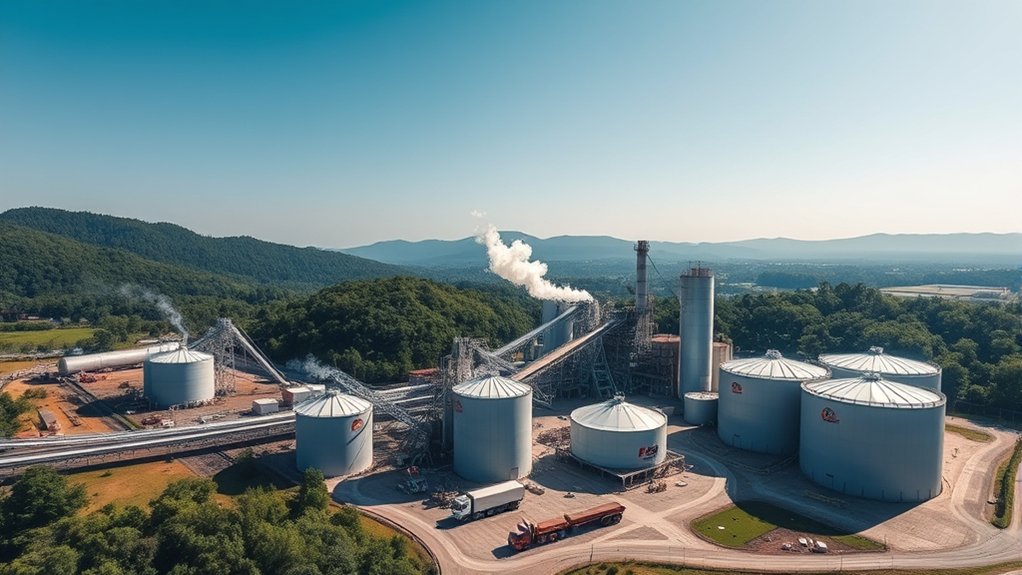
Although the rebranding to Concreat Holdings marks a new chapter, the company continues to operate critical cement plants that anchor its market position. Under Concreat Holdings, the Solid Cement Plant in Antipolo and the Apo Cement Plant in Naga, Cebu remain operational. These facilities, formerly part of Cemex Philippines, continue cement production without interruption, supporting local demand.
Concreat Holdings retains full ownership and operational control of these plants, ensuring stability and consistency in supply. This strategic retention of the Solid Cement Plant and Apo Cement Plant highlights Concreat Holdings’ commitment to maintaining a strong foothold in the Philippines’ cement industry.
Cemex Philippines Brands Retained by Concreat Holdings
When you look at Concreat Holdings’ portfolio, you’ll see that it continues to own and operate well-established cement brands like Rizal, Island, and APO. These brands, previously under Cemex Philippines, retain their strong market presence due to proven durability and performance.
Concreat Holdings prioritizes sustaining the brand recognition these cement brands have built over years in the Philippine construction sector.
The rebranding to Concreat doesn’t disrupt the existing product lineup, ensuring continuity for customers and partners.
Strategically, Concreat leverages Rizal, Island, and APO to reinforce its competitive edge and support long-term growth goals.
This approach highlights Concreat Holdings’ commitment to preserving the legacy and value of Cemex Philippines’ trusted cement brands. It ensures their relevance in ongoing nation-building efforts.
How DMCI Manages Cemex Philippines’ Cement Business
You’re looking at Cemex Philippines’ cement business still being led by its existing Filipino management. This helps ensure operational continuity, even though there’s some uncertainty around ownership.
At the same time, DMCI Holdings is carefully evaluating acquisition opportunities. They haven’t taken control just yet, so the current leadership structure remains in place.
This approach allows for steady growth while also positioning Cemex Philippines for a potential integration into DMCI’s infrastructure portfolio down the line.
Filipino Ownership And Leadership
Since DMCI Holdings, a prominent Filipino conglomerate, owns and manages Cemex Philippines, the company benefits from leadership deeply rooted in local expertise and national priorities. You’ll find that Filipino ownership under DMCI Holdings guarantees strategic decisions align with domestic economic goals.
Cemex Philippines operates under an all-Filipino management team, leveraging local insights to navigate market challenges effectively.
The Consunji group’s acquisition and rebranding to Concreat Holdings Philippines, Inc. reaffirm Filipino leadership’s commitment to sustainable growth. This structure prioritizes national interests and values, strengthening the company’s competitive edge.
- Filipino ownership centralizes decision-making within DMCI Holdings
- Cemex Philippines is guided by all-Filipino management with strong local insights
- Consunji group’s role ensures continuity of Filipino leadership
- National priorities influence strategic direction and operational policies
- DMCI emphasizes long-term stewardship fostering stability and growth
Operational Continuity And Growth
Although DMCI Holdings has yet to formalize the acquisition of Cemex Philippines, it actively manages the company’s cement operations through Concreat Holdings Philippines, Inc. This ensures seamless continuity.
You’ll see that Cemex Philippines maintains its key assets, like the Solid Cement Plant in Antipolo and Apo Cement Plant in Naga, Cebu, while preserving established brands like Rizal, Island, and APO.
Despite 2023’s financial losses driven by falling cement prices, operational continuity remains intact under DMCI’s all-Filipino leadership. This strategic management supports stability amid market challenges and positions the company for sustainable growth.
How Financial Challenges Affected Cemex Philippines’ Value
When falling cement prices and declining sales hit Cemex Philippines, the company reported a 46% increase in losses, amounting to P1.2 billion from January to September 2023. These financial challenges directly lowered its profitability and pressured its market value.
You can see how losses and sales decline tightened the company’s financial struggles, prompting its parent firm to contemplate a sale.
This downturn also attracted potential buyers like DMCI Holdings, reflecting shifting market dynamics.
Key impacts include:
- Significant revenue drop due to falling cement prices
- 46% rise in losses, signaling financial fragility
- Decline in sales volume affecting cash flow
- Market value fluctuated, surging nearly 80% amid buyout rumors
- Parent company’s decision to put Cemex Philippines up for sale
These factors show how financial challenges eroded Cemex’s value in the Philippine cement industry. It’s clear that the tough market conditions really took a toll on the company’s standing.
Why the Acquisition Matters for Philippine Cement
Because Cemex Philippines faces mounting financial challenges, the potential acquisition by DMCI Holdings carries significant implications for the local cement industry. Cemex’s 46% loss increase to P1.2 billion signals operational stress, making the acquisition timely for industry consolidation.
You’ll see that shifting ownership to DMCI, a Filipino firm, strengthens local ownership and reduces dependence on foreign-controlled companies. This changeover aligns with the strategic goal of bolstering Philippine infrastructure by ensuring a more resilient and locally anchored cement supply chain.
Additionally, the nearly 80% surge in Cemex’s market value amid buyout rumors reflects investor confidence in this consolidation.
Ultimately, the acquisition could reshape the cement industry landscape by enhancing competitiveness and supporting national development projects with stable, locally managed cement production.
How Concreat Holdings Plans to Grow Under DMCI
The acquisition by DMCI Holdings sets the stage for Concreat Holdings, formerly Cemex Philippines, to capitalize on its strong operational base. You can expect Concreat to drive strategic growth by optimizing its cement plants, including Solid Cement Plant in Antipolo and Apo Cement Plant in Naga, Cebu.
The company will leverage trusted Cemex Philippines brands, Rizal, Island, and APO, to enhance resilience and reliability. DMCI Holdings’ extensive resources across construction, real estate, energy, mining, and water services will fuel Concreat’s expansion and boost its market share.
This integration aligns with a long-term vision focused on nation-building and steering through cyclical industry challenges with local expertise.
- Optimize existing cement plants for steady production
- Leverage Cemex Philippines’ brand equity
- Utilize DMCI Holdings’ diversified resources
- Expand market share through strategic growth
- Emphasize resilience and local market insights
Frequently asked questions
What Environmental Policies Does Cemex Philippines Follow?
Cemex Philippines follows strict environmental policies focused on reducing carbon emissions and promoting responsible quarrying. You’ll see they enforce waste management and water conservation measures rigorously.
They comply with Philippine laws like the Clean Air Act and Clean Water Act to minimize ecological damage. They also invest in eco-friendly technologies and conduct regular environmental impact assessments.
This way, they ensure permits and sustainability are prioritized throughout their cement production processes. It’s all about balancing productivity with care for the environment.
How Does Cemex Philippines Contribute to Corporate Social Responsibility?
You’ll see Cemex Philippines contributes to corporate social responsibility by implementing infrastructure and environmental projects, supporting disaster relief, and promoting sustainability. They actively reduce carbon emissions, conserve resources, and partner with local groups for education, health, and livelihood programs.
Their long-term focus on reforestation and waste management shows a data-driven commitment to environmental stewardship and community development. This approach aligns their business operations with social and ecological impact goals.
It’s clear they’re serious about making a positive difference.
What Technological Innovations Does Cemex Philippines Use in Production?
Just like Da Vinci revolutionized art, Cemex Philippines transforms cement production with cutting-edge technology. You’ll find advanced pyroprocessing boosting kiln efficiency and slashing emissions.
Automated batching guarantees consistent quality, while real-time sensors offer precise operational control.
The company also uses energy-efficient equipment and alternative fuels, plus state-of-the-art grinding tech for exact particle size. These innovations make your cement reliable, eco-friendly, and high-performance every time.
Who Are the Key Executives Managing Cemex Philippines?
You’ll find Cemex Philippines managed by a team of key executives including regional managers who handle operations, sales, and marketing. These leaders coordinate closely with Cemex Asia BV and the global corporate governance.
Their focus is on market-specific strategies, customer relations, product quality, and operational efficiency.
This structure guarantees Cemex Philippines stays competitive and responsive in its market while aligning with global standards and corporate goals. It’s a setup that helps them stay on top of things locally but also keeps them connected to the bigger picture.
What Are Cemex Philippines’ Plans for Sustainability and Green Initiatives?
You might think a cement company can’t go green, but Cemex Philippines is proving otherwise. They’re cutting carbon emissions and aiming for carbon neutrality by 2050 through renewable energy investments and sustainable tech.
They recycle waste, manage water efficiently, and back reforestation projects. Plus, they’re chasing ISO 14001 certification to guarantee high environmental standards.
Their approach combines data-driven strategies with real-world impact, showing sustainability isn’t just a buzzword. It’s a real commitment they’re making for the future.
Final Thought
You now know that Concreat Holdings, under DMCI, owns Cemex Philippines. This move is reshaping the local cement industry.
Consider this: Cemex Philippines once operated multiple plants producing millions of tons annually before financial challenges lowered its value. This acquisition isn’t just a takeover. It’s a strategic pivot.
With Concreat’s focused management, expect stronger growth and efficiency. This will make the cement sector more competitive and resilient in the Philippines’ evolving construction landscape.
More Cemex Guides
Need a Local Concrete Supplier?Tri County Concrete is a family-owned ready mix supplier serving Greater Cleveland for over 50 years. Request a quote or call 440-582-1100.