Cemex Operates In How Many Countries – Overview
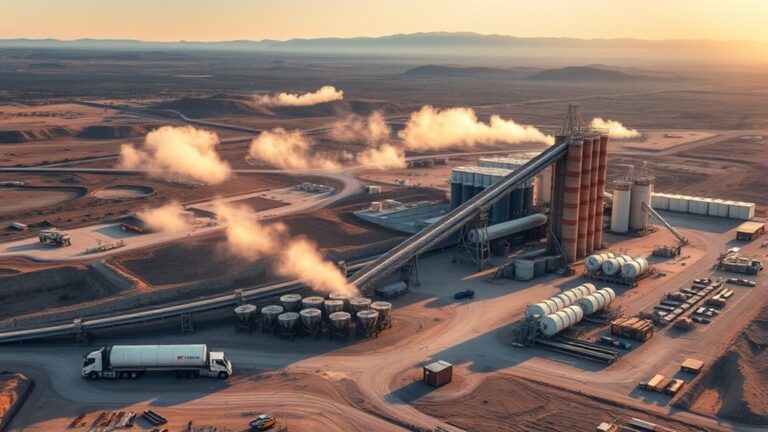
Cemex operates in over 50 countries across six continents, with a strong focus on North America, Europe, and emerging markets in Asia, the Middle East, and Africa. You’ll find major facilities like ready-mix plants, cement plants, and quarries supporting infrastructure projects worldwide.
Their growth relies heavily on strategic acquisitions and tailored local solutions. If you want to understand how their global presence drives sustainability and community impact, there’s more detailed insight ahead.
Cemex’s Global Footprint: Countries of Operation

Cemex operates in over 50 countries across six continents, including key regions like North America, Latin America, Europe, the Middle East, Africa, and Asia. You’ll find Cemex’s global footprint spans diverse markets, supported by its extensive operations.
Cemex’s extensive operations span over 50 countries across six continents, serving diverse global markets.
The company runs cement plants, ready-mix concrete facilities, and aggregates quarries, enabling it to serve infrastructure needs worldwide. Cemex’s international presence reflects strategic expansion targeting both mature and emerging markets, ensuring broad coverage and supply chain strength.
This widespread network allows Cemex to adapt to regional demands efficiently. By maintaining operations in numerous countries, Cemex sustains its role as a leading supplier in the construction materials sector.
It’s all about reinforcing its commitment to global growth and market responsiveness through continuous expansion and operational excellence.
Key Regions in Cemex’s Global Presence
You’ll find Cemex’s operations span over 50 countries. Key markets include North America, Latin America, Europe, the Middle East, Africa, and Asia.
The United States and Mexico lead in revenue, which really highlights how important they’re in Cemex’s portfolio.
Understanding this regional distribution gives you a clearer picture of where Cemex focuses its resources and growth efforts.
Regional Market Distribution
While operating in over 50 countries worldwide, Cemex concentrates its efforts on key regions that drive the bulk of its revenue. Its market distribution centers on North America, Europe, Asia, the Middle East, and Africa, forming a diverse global footprint.
North America, including the United States and Mexico, hosts 279 ready-mix plants, 8 cement plants, and 52 aggregates quarries, reflecting a robust regional presence.
The EMEA region, encompassing Europe, the Middle East, and Africa, contributes approximately $5.1 billion in sales with 565 ready-mix plants and 141 aggregates quarries.
Cemex’s strategic focus on these regional markets guarantees sustained growth and a solid market distribution. This reinforces its competitive stance across multiple continents and strengthens its presence in key countries within its global footprint.
Key Operational Territories
Although operating across more than 50 countries, Cemex’s core strength lies in its key territories: North America, Latin America, Europe, the Middle East, Africa, and Asia. You’ll find its largest markets in the United States and Mexico, where extensive production facilities support strong sales.
Cemex’s global presence in Europe has grown through strategic acquisitions, especially in Germany and Spain, enhancing its footprint across these regions. Each territory hosts numerous plants, quarries, and trading locations that streamline operations and support international expansion.
This diversified footprint allows Cemex to adapt to regional market demands effectively. By focusing on these key operational territories, Cemex maintains a robust international footprint, ensuring sustained growth across multiple markets and reinforcing its position as a leading construction materials supplier worldwide.
Cemex’s Strategic International Expansion History
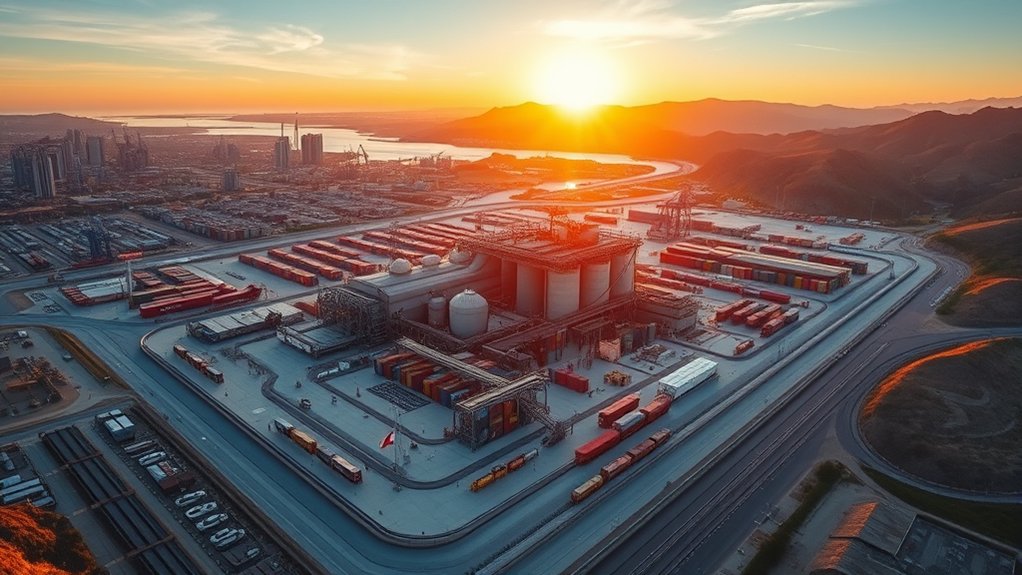
Since its initial move abroad in 1992, Cemex has strategically acquired operations across multiple continents to build a global footprint. You’ll see that its international expansion began with acquisitions in Spain, Venezuela, and the U.S., establishing an early global presence.
Between 1997 and 1999, Cemex pursued geographic diversification by entering Asia and Africa, including the Philippines, Indonesia, and Egypt.
In 2000, the acquisition of U.S. Southdown made Cemex North America’s largest cement firm, accelerating market growth.
The 2005 RMC Group acquisition further expanded Cemex’s strategic growth in European markets and boosted cement production capacity.
More recently, the company has focused on sustainable investments and acquisitions in Germany, reflecting a continued commitment to broadening its footprint while adapting to industry trends within the cement industry.
How Acquisitions Helped Cemex Grow Its Global Presence
Cemex has leveraged over a dozen major acquisitions to establish a strong global presence in the cement industry. These strategic acquisitions fueled its company growth and expanded its geographic reach considerably. Starting in 1992 with purchases in Spain, Venezuela, and the U.S., Cemex initiated rapid market expansion.
The 2005 acquisition of RMC Group boosted its European operations and cement production capacity. Meanwhile, acquiring Southdown positioned Cemex as North America’s largest cement company.
Between 1997 and 1999, entering Asian and African markets, such as the Philippines, Indonesia, and Egypt, further diversified its international operations.
These acquisitions have been critical drivers of Cemex’s market growth, enabling it to operate in over 50 countries. By focusing on strategic acquisitions, Cemex efficiently expanded its footprint and reinforced its leadership within the global cement industry. It’s clear that their smart buying strategy really paid off.
How Cemex Tailors Products to Local Markets
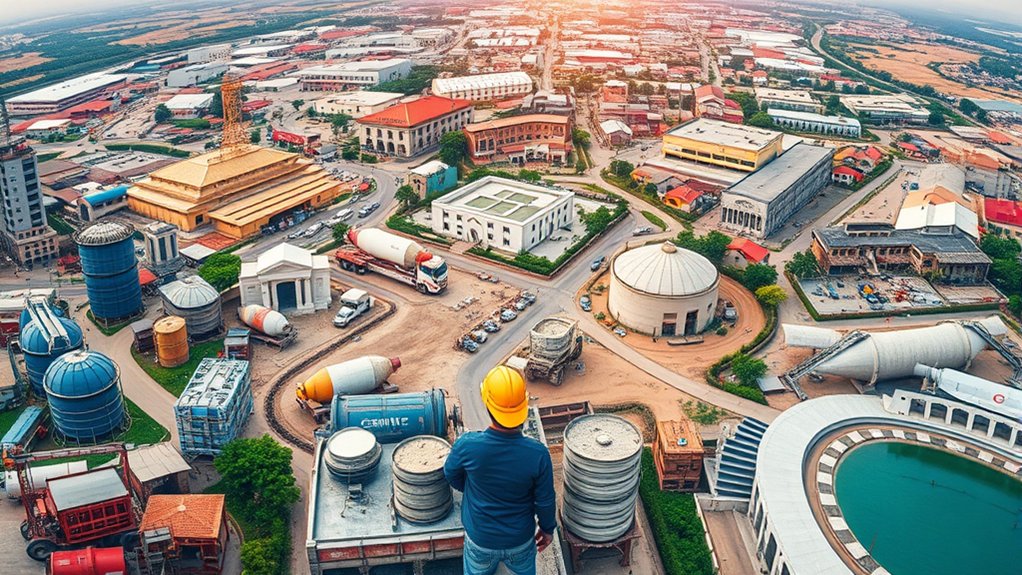
Expanding its footprint across more than 50 countries means adapting products to diverse local demands. Cemex uses regional customization to develop market-specific solutions. They adjust product formulations to meet local construction markets’ climate, infrastructure, and regional standards.
Its regional research centers innovate materials tailored to unique challenges. This supports sustainable development and community-focused building. Collaborations with local stakeholders help ensure alignment with local infrastructure needs and environmental criteria.
| Aspect | Approach | Impact |
|---|---|---|
| Product Formulations | Customized cement & concrete | Optimized performance |
| Regional Research | Local innovation centers | Solutions for unique markets |
| Sustainable Development | Community-focused building | Supports eco-friendly growth |
| Local Infrastructure | Adapted materials | Meets infrastructure demands |
| Regional Standards | Compliance & adaptation | Ensures regulatory alignment |
You’ll see Cemex’s strategy drives precise, data-driven tailoring for each region.
Cemex’s Sustainability Efforts in Global Operations
While reducing its carbon footprint by 35% by 2030 and targeting net-zero concrete production by 2050, Cemex actively integrates cutting-edge technologies and partnerships, such as its collaboration with BP, to accelerate decarbonization and promote sustainable construction across more than 50 countries.
You’ll find Cemex advancing sustainability in its global operations through waste-to-fuel initiatives that support the circular economy and cut fossil fuel reliance. The company explores renewable energy and innovative materials to deliver environmentally friendly solutions.
These efforts enhance Cemex’s ESG ratings, exemplified by the AAA rating from MSCI for 2026, reflecting strong environmental governance.
Impact of Cemex’s Global Reach on Customers and Communities
Because it operates in over 50 countries, Cemex tailors construction material solutions to meet diverse market needs. This approach enhances service quality and boosts customer satisfaction.
Its global reach allows for localized solutions that support economic growth and urbanization through infrastructure projects and social programs. Cemex’s international operations promote community development while integrating sustainability practices. This creates a positive impact for customers all around the world.
| Aspect | Impact on Customers | Impact on Communities |
|---|---|---|
| Local Solutions | Customized materials | Supports urbanization |
| Infrastructure Projects | Reliable supply chains | Drives economic growth |
| Social Programs | Enhanced service experience | Improves living standards |
| Sustainability | Eco-friendly products | Protects natural resources |
| Community Development | Increased customer satisfaction | Strengthens social fabric |
Frequently asked questions
What Types of Construction Materials Does Cemex Produce?
You’ll find Cemex produces cement, ready-mix concrete, and aggregates as their main construction materials. They focus on high-performance, reliable cement suitable for various applications.
Their ready-mix concrete is designed to meet specific project requirements, offering flexibility and quality.
Furthermore, Cemex manufactures urbanization solutions and specialized building materials that support diverse construction needs. This range helps you tackle different projects efficiently with trusted materials.
It’s all about giving you the right products for the job.
How Does Cemex Ensure Quality Control Across Its Products?
You know quality is the name of the game, and Cemex doesn’t cut corners. They use advanced tech and automation to keep product consistency tight.
Plus, they follow ISO 9001 standards and run regular audits to guarantee compliance with quality and environmental rules.
Their thorough testing and certification at every production stage back up reliability. Continuous R&D also helps Cemex stay ahead, improving formulations to meet evolving customer needs.
It’s all about making sure what they deliver is top-notch every time.
What Are Cemex’s Main Competitors in the Global Market?
You’ll find Cemex’s main competitors are LafargeHolcim, HeidelbergCement, and CRH. LafargeHolcim leads globally, operating in over 70 countries.
HeidelbergCement covers more than 50 countries, focusing on Europe, North America, and Asia.
CRH offers a wide range of products internationally. Like Cemex, they prioritize sustainable solutions and tech innovation to secure their market shares.
This makes the competitive landscape intense and dynamic.
How Does Cemex Support Local Employment in the Countries It Operates?
You’ll find that Cemex supports local employment by directly hiring around 40,000 workers globally and running manufacturing plants and quarries in those regions.
They invest in community programs and training to boost job skills, partner with educational institutions for workforce readiness, and develop sustainable projects that create additional jobs for local contractors and suppliers.
This multi-faceted approach guarantees you see both immediate and long-term employment growth where Cemex operates.
It’s all about building strong communities and creating opportunities that last.
What Technologies Does Cemex Use to Innovate in Construction Materials?
You’ll find Cemex innovates using digital platforms like Cemex Go to optimize supply chains.
They develop low-carbon cements and advanced concrete formulations to cut emissions.
They also apply waste-to-fuel and circular economy methods by co-processing plastic waste and industrial byproducts.
Cemex invests through Cemex Ventures in sustainable construction tech.
They partner with research groups and coalitions, such as the WEF First Movers Coalition, to advance decarbonization and material innovation.
It’s all about pushing the industry forward in a smarter, greener way.
Final Thought
You’ll find Cemex operates in over 50 countries, showing just how expansive its global footprint is. This extensive reach means Cemex can tailor its products to diverse markets while driving sustainability efforts worldwide.
Understanding that Cemex serves millions of customers across continents highlights the company’s impact on communities and industries alike. This global presence not only supports local economies but also positions Cemex as a key player in the construction sector worldwide.
More Cemex Guides
Need a Local Concrete Supplier?Tri County Concrete is a family-owned ready mix supplier serving Greater Cleveland for over 50 years. Request a quote or call 440-582-1100.