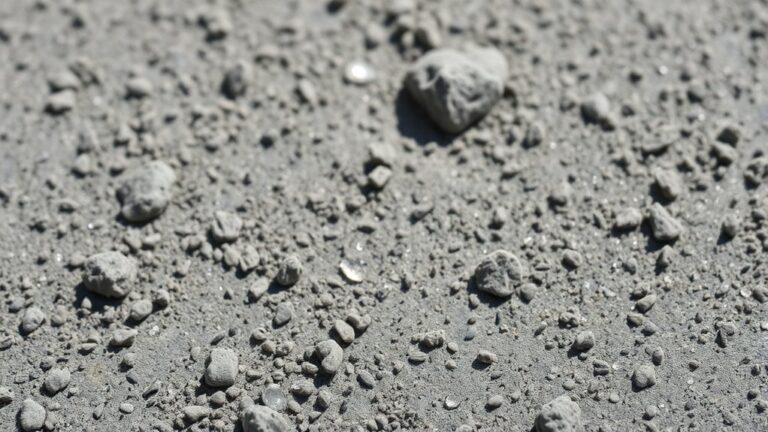
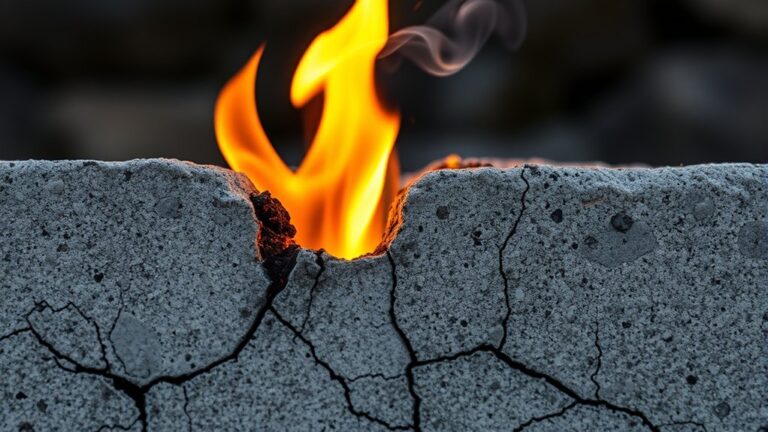
What Is Concrete Sand – A Closer Look
Concrete sand is made up of coarse, angular particles that give it strength and stability. It’s different from finer sands because it has uniform grading and very few impurities.
You’ll use concrete sand to make strong, durable concrete mixes and stable foundations. This is thanks to its great compaction and drainage properties.
Handling and curing it properly is key for the best results. Too much water or contamination can weaken the mix.
Knowing these qualities helps ensure your projects have lasting structural integrity and reliability. I’ll share more detailed insights next.
What Is Concrete Sand and How Does It Differ?
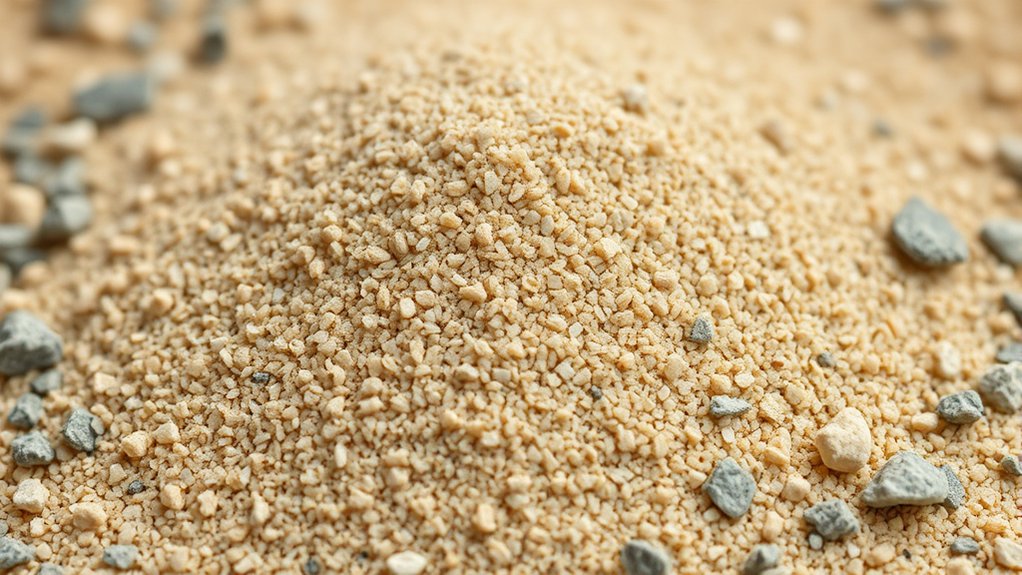
Concrete sand consists of coarse, angular particles specifically engineered to enhance strength and stability in concrete mixtures. You’ll notice that concrete sand differs markedly from masonry or play sand due to its larger, more uniform particle size and rougher texture.
Concrete sand’s coarse, angular particles boost strength and stability, setting it apart from masonry or play sand.
This composition guarantees superior compaction and bonding within concrete, essential for structural applications.
Unlike finer sands such as mortar or mason sand, concrete sand contains minimal silt, clay, or organic matter, which could otherwise weaken the mixture and impede drainage.
When you use concrete sand, you benefit from improved load-bearing capacity and durability, making it ideal for foundations and paver bases.
Its precise particle characteristics contribute considerably to the mechanical performance of concrete, distinguishing it from other sand types in construction.
Why Concrete Sand Matters for Strong Foundations
Why does the choice of sand matter so much when building strong foundations? Concrete sand plays a critical role by providing a stable, well-draining base that enhances foundation strength and durability. Its coarse particles lock tightly, minimizing shifting and settling in structural applications.
This uniformity guarantees consistent mixture quality, which is essential for producing resilient, long-lasting concrete. Properly graded concrete sand also improves adhesion between layers, reinforcing overall structural integrity.
By selecting the correct concrete sand, you reduce the risk of cracks and foundational failures, especially in load-bearing scenarios.
When to Use Concrete Sand Instead of Other Sands
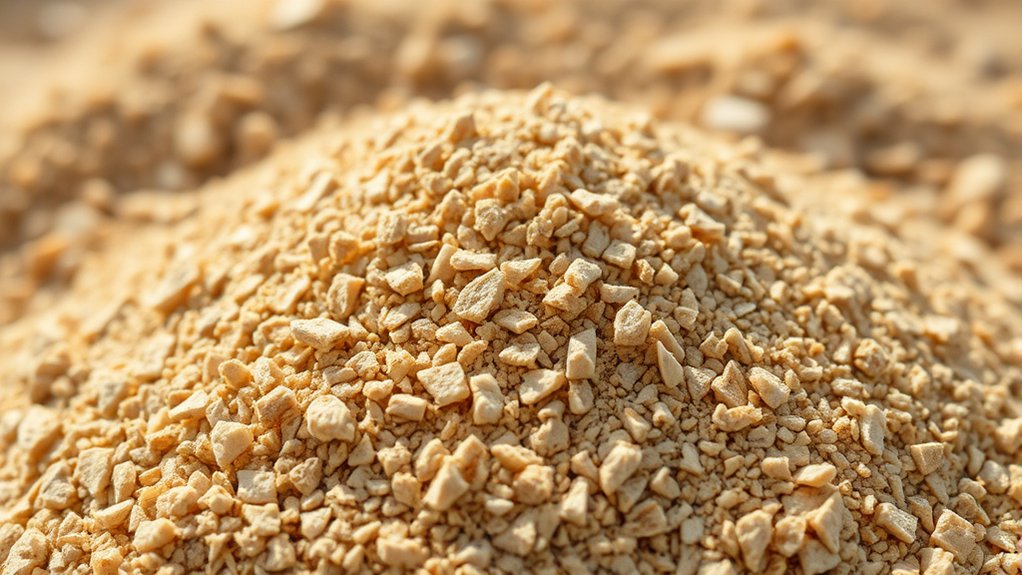
Choosing the right type of sand directly impacts the strength and stability of your construction projects. You should use concrete sand when a coarse, durable material is necessary to provide support for pavers and heavy loads.
Concrete sand’s larger, angular particles lock together more effectively than finer sands, making it ideal for mixing with cement to form strong mortar or concrete with superior cohesion. It’s particularly suited for driveway bases and drainage systems, where its coarse texture promotes excellent drainage.
However, avoid concrete sand for projects that require a fine finish or decorative appearance, as its coarse grit compromises surface smoothness. By selecting concrete sand over masonry or play sand, you guarantee enhanced structural integrity and durability in demanding applications.
How to Identify High-Quality Concrete Sand
Although selecting the right sand may seem straightforward, identifying high-quality concrete sand requires careful evaluation of its cleanliness, grain size, and texture.
You must make sure the sand is clean, washed, and screened to remove impurities such as clay, silt, and organic matter. These contaminants weaken the concrete mix.
Focus on sand with a uniform particle size and perform sieve analysis to confirm proper distribution.
The texture should be coarse with angular grains to promote strong interlocking and stability within the concrete.
Furthermore, observe the sand’s color; light tan to gray hues typically indicate minimal contamination and adherence to quality materials standards.
Common Applications of Concrete Sand in Construction
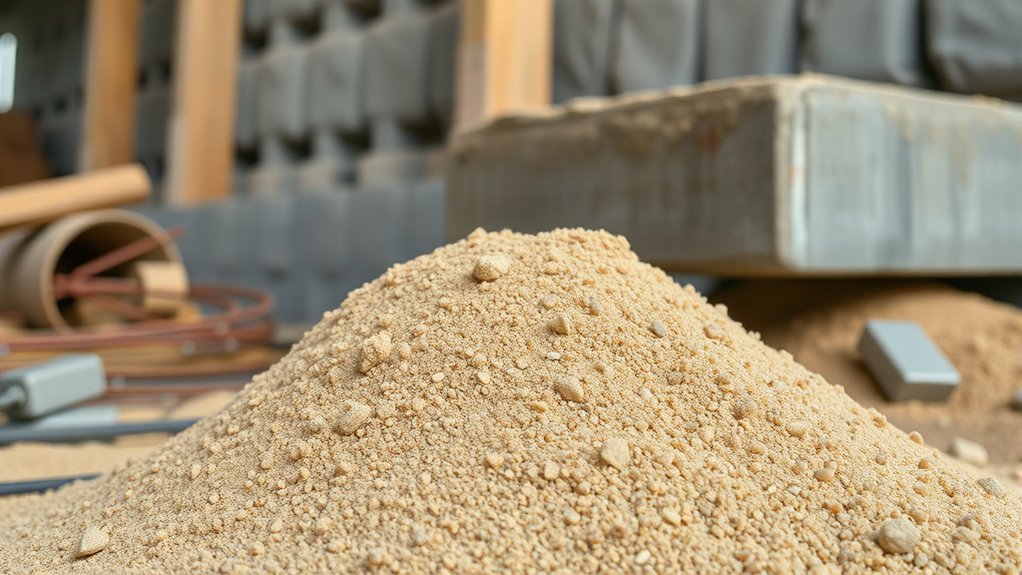
You’ll find concrete sand essential for both structural applications and landscaping projects. It provides stability in foundation beds and concrete mixes.
Plus, it serves as a reliable base for paving surfaces like driveways and patios. Understanding these common uses really helps clarify its critical role in construction.
Structural Uses Overview
How does concrete sand contribute to the structural integrity of construction projects? You rely on its coarse, sharp-edged texture to enhance concrete strength and stability.
When you use mason sand in mortar mixes, it guarantees proper bonding and durability. Concrete sand’s uniform particle size ensures consistent mixing, which is essential for load-bearing structures.
Its excellent drainage and compaction properties help prevent settling and shifting over time.
Key structural uses include:
- Serving as aggregate in concrete mixtures to improve strength
- Acting as a leveling base beneath foundation slabs
- Incorporating in masonry mortar for reliable adherence
- Providing a stable base for paver installations to lock stones in place
Landscaping And Paving
Because of its coarse, angular texture and excellent compaction properties, concrete sand plays a critical role in landscaping and paving projects. You’ll find it commonly used as a base layer for patios, walkways, and driveways. Its superior drainage prevents water accumulation and promotes stability.
Concrete sand’s angular grains lock pavers firmly in place, minimizing shifting and enhancing the longevity of paved surfaces. Its texture also helps materials interlock better, which reduces weed growth and surface settling.
In landscaping, concrete sand serves as an effective bedding material to create level surfaces for various outdoor structures. By choosing concrete sand, you’re ensuring a durable, stable foundation that supports both the functional and aesthetic needs of your paving and landscaping projects.
How Concrete Sand Strengthens Your Mixes and Mortar
Why does concrete sand play a critical role in enhancing your concrete mixes and mortar? Concrete sand’s coarser grain size and angular particles improve strength and stability by locking together tightly. This reduces shifting and settling, making your mix more reliable.
Its high silica content also boosts tensile strength and load-bearing capacity. Plus, proper grading ensures the best water drainage and bond strength, which are essential for a long-lasting finish.
Consider these key contributions of concrete sand:
- Coarser grains increase compressive strength and stability.
- Angular particles enhance compaction and reduce movement.
- Dense mixtures resist cracking and wear, improving durability.
- High silica content strengthens tensile properties and load support.
Tips for Handling and Storing Concrete Sand Properly
Although concrete sand is a durable material, you must handle and store it properly to maintain its quality and performance. For effective storage, keep the sand in a dry, covered area to prevent moisture absorption. Moisture can really mess with the consistency and workability of the sand.
It’s a good idea to elevate the sand off the ground using pallets or tarps. This helps avoid contamination from dirt and debris. When you’re dealing with smaller quantities, airtight containers or sealed bags work great to keep the sand dry and prevent clumping.
Try to avoid exposing the sand to heavy rain or high humidity. Too much moisture can promote mold growth and degrade the quality. Make it a habit to regularly check your stored concrete sand for any signs of moisture or contamination.
And don’t forget to replenish your supply promptly. That way, you ensure maximum usability in your mixes and mortar formulations. Proper storage is really key to preserving the integrity of concrete sand.
Mistakes to Avoid When Using Concrete Sand
Proper storage of concrete sand sets the foundation for its effective use, but handling the material correctly during mixing and application is just as important. Avoid these common mistakes to keep the sand’s fineness and structural integrity intact.
First, don’t use concrete sand that contains impurities or debris because that can weaken the strength. Also, be careful not to add too much water to the mix since extra water reduces durability and affects the sand’s fineness.
Avoid using concrete sand with impurities and don’t add excess water to maintain strength and durability.
Mixing batches from different sources is another no-no, as it causes inconsistent grain size and composition.
Make sure your workspace is properly prepared too. If you don’t, the concrete can settle unevenly or shift, which will mess up the final structure.
And one more thing—don’t rush the curing process. If the concrete doesn’t cure properly, cracks can form and weaken everything.
Frequently asked questions
Can Concrete Sand Be Used for Gardening or Landscaping Soil Improvement?
You shouldn’t use concrete sand for soil enhancement in gardening or landscaping. Its coarse texture and large particle size actually hinder water retention and aeration. And these things are essential for healthy plant growth.
Instead, you should choose finer sands like mason or play sand. These types do a better job improving soil structure and nutrient retention.
Using concrete sand can negatively impact soil quality. It can lead to poor drainage and reduced fertility. So, it’s best to avoid it when you’re looking to improve soil.
What Is the Environmental Impact of Mining Concrete Sand?
You should know that sand mining accounts for up to 90% of global sand extraction, highlighting significant environmental concerns.
Mining concrete sand disrupts habitats, leading to biodiversity loss, and consumes vast water and energy resources.
You’ll also face sediment runoff polluting aquatic ecosystems and destabilizing riverbanks through erosion.
To mitigate these environmental concerns, you must implement sustainable practices and strict regulations that balance resource extraction with ecological preservation.
How Does Concrete Sand Compare in Cost to Other Aggregate Materials?
When you conduct a price comparison, you’ll find concrete sand typically costs $40 to $50 per cubic yard. This places it above basic construction sands but below specialty aggregates.
Its coarse texture and strict grading requirements justify the higher price relative to finer sands.
Compared to gravel or crushed stone, concrete sand’s cost is similar or slightly higher. This depends on regional availability and purchase volume.
Is Concrete Sand Safe for Children’s Play Areas or Sandboxes?
Certainly, concrete sand can contribute to child safety in play areas if carefully chosen and correctly cared for. You should select clean, coarse, kiln-dried sand that curtails moisture and contaminant accumulation.
Consistent screening and strict safety standards guarantee the sand stays safe, reducing bacteria risks. By diligently maintaining and inspecting the sandbox, you protect children from harmful debris and potential pathogens.
This helps create a secure, sanitized, and supportive play space.
Can Concrete Sand Be Recycled or Reused After Construction Projects?
Yes, you can recycle and reuse concrete sand after construction projects, but you’ll face recycling challenges like removing contaminants and restoring particle size. The process involves crushing, screening, and washing to meet quality standards.
Despite these challenges, properly processed recycled concrete sand serves as a reliable base material for roads or bedding. Recycling reduces landfill waste and demand for virgin sand, making it both environmentally and economically beneficial when managed precisely.
Final Thought
Think of concrete sand as the unsung architect of your foundation’s fortress. Without it, your structure is like a ship without a keel, vulnerable to collapse. By choosing and handling concrete sand wisely, you provide your mixes with the critical support they need to endure pressure and time.
Avoid shortcuts, and treat this material with respect. In doing so, you’ll build a foundation as steadfast and enduring as the bedrock beneath it.
More Concrete Basics Guides
Buying Sand, Gravel or Ready Mix?Portage Aggregate & Supply carries triple-washed sand and gravel, and Tri County Concrete delivers ready mix across Greater Cleveland. Request a quote or call 440-582-1100.