What Is Fly Ash In Concrete – Everything to Know
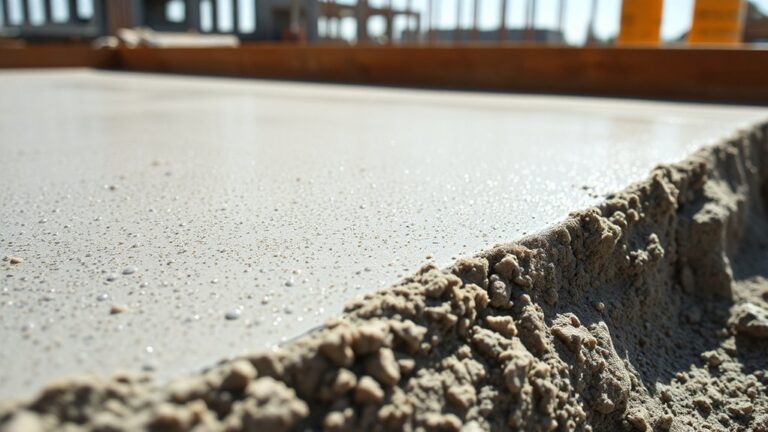
Fly ash is a fine industrial byproduct from coal combustion used in concrete to enhance strength, durability, and sustainability. You’ll find it replaces 15-30% of Portland cement, improving workability, reducing water demand, and lowering permeability.
Its types, Class F and Class C, differ chemically, which affects how they perform. Proper mix design and environmental adjustments guarantee the best curing.
Handling challenges like carbon content and storage require attention. Exploring further reveals how fly ash transforms concrete quality and cost efficiency.
What Is Fly Ash and Where Does It Come From?

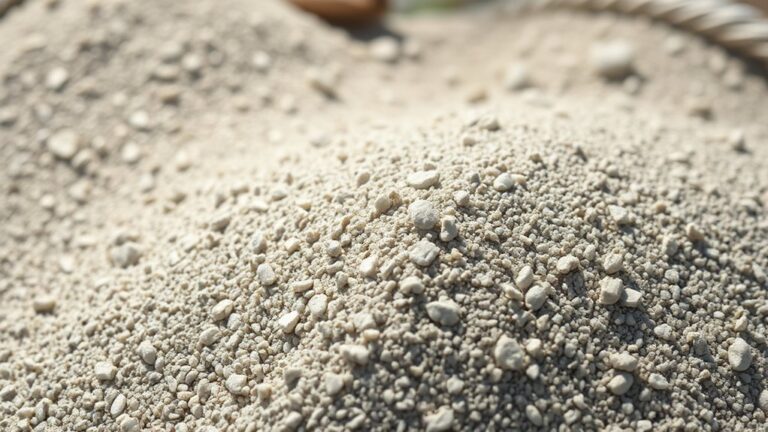
Where does fly ash come from, and what exactly is it? Fly ash is a fine, powdery byproduct generated during coal combustion in power plants. It forms when silica, alumina, and iron oxides in coal ash fuse at high temperatures and are carried out with flue gases.
Fly ash is a fine powder created when coal burns in power plants, formed from fused mineral oxides.
Electrostatic precipitators or baghouses collect these spherical particles, which are smaller than cement grains.
You can use fly ash as a pozzolan, meaning it reacts chemically with lime to form additional cementitious materials. These materials enhance concrete’s durability and strength.
Typically, fly ash constitutes 15% to 35% of the total cementitious content in concrete mixes.
Understanding fly ash’s origin and role in improving concrete performance is essential for its effective application in construction.
Types and Chemical Properties of Fly Ash
Although fly ash originates from coal combustion, its classification and chemical properties vary considerably, influencing its behavior in concrete applications. You’ll find two primary types: Class F and Class C.
Class F fly ash, derived from anthracite or bituminous coal, contains a higher silica content, typically over 50%, and less than 10% calcium oxide. This composition promotes pozzolanic activity, which means it needs a cementitious environment to react.
Conversely, Class C fly ash, sourced from lignite or subbituminous coal, has a calcium oxide content exceeding 10%, and often between 35% and 50% silica. This allows it to have some self-cementing properties alongside pozzolanic activity.
The chemical composition, including silica, alumina, and calcium oxide proportions, varies with coal type and combustion conditions. These differences directly affect fly ash’s reactivity and suitability for specific concrete formulations.
How Fly Ash Enhances Concrete Strength and Durability

Understanding the chemical properties of fly ash helps you appreciate how it interacts within a concrete mixture to enhance performance. Fly ash reacts with calcium hydroxide generated during cement hydration to form additional cementitious compounds, which increases concrete strength over time.
Fly ash chemically reacts with calcium hydroxide in cement to boost concrete strength over time.
Its spherical particles improve workability and reduce water demand, resulting in a denser, stronger matrix.
You’ll also find that fly ash’s fine particles fill microvoids, decreasing porosity and permeability. This reduction in permeability enhances durability by limiting water ingress and resistance to chemical attack.
Plus, concrete containing fly ash often gains strength beyond the standard 28-day period.
It achieves higher ultimate strength compared to plain Portland cement concrete. So, incorporating fly ash optimizes both concrete strength and durability, making it a valuable additive in modern concrete technology.
Using Fly Ash in Concrete Mix Design
You’ll typically replace about 15 to 30% of Portland cement with fly ash. It’s important to adjust the water-to-pozzolan ratio to keep the mix workable and strong.
To get the best results, you’ll need to fine-tune the water content, admixture dosage, and curing methods.
When you understand these factors well, you can make sure the concrete meets the strength and durability you need — without any wasted effort.
Fly Ash Replacement Ratios
When designing a concrete mix with fly ash, selecting the appropriate replacement ratio is essential to balancing strength, workability, and durability. Fly ash replacement ratios typically range from 15% to 30% by weight of cement. This range helps maximize strength development and workability.
Higher ratios, up to 50%, can enhance durability but may reduce early strength. Mass concrete applications often use higher fly ash contents to manage thermal control and improve long-term performance. You’ll want to tailor the mix design and conduct testing to find the ideal ratio for your specific project needs.
| Fly Ash Replacement Ratio | Effect on Concrete Mix |
|---|---|
| 15% – 30% | Balanced strength and workability |
| 30% – 50% | Improved durability, slower strength development |
| > 50% | Used in specialized high-performance mixes |
| Mass Concrete | Higher ratios for thermal control and durability |
Water-to-Pozzolan Ratios
How does adjusting the water-to-pozzolan ratio influence the performance of fly ash concrete? Using the water/(cement + fly ash) ratio rather than the traditional water/cement ratio improves durability and workability in your mix design.
The ideal water-to-pozzolan ratio generally falls between 0.35 and 0.55, depending on the fly ash and aggregates used. You should consider these effects:
- Lower ratios increase strength by reducing pore spaces.
- Reduced permeability enhances durability against environmental attack.
- Workability improves as the ratio approaches the upper limit, aiding placement.
- Adjustments help control setting time and mitigate early strength delays typical of fly ash.
Proper calibration of the water-to-pozzolan ratio is essential to balance strength, permeability, and workability in your fly ash concrete. Getting this right makes a big difference in how your mix performs.
Mix Performance Optimization
Why does optimizing the mix design matter when incorporating fly ash into concrete? Optimizing mix design guarantees that fly ash enhances concrete performance without compromising workability or strength.
You can increase the water/cement ratio due to fly ash’s spherical particles, improving workability while reducing reliance on water reducers.
However, fly ash’s slower early strength gain means you need to adjust supplementary materials, such as lime or superplasticizers, to meet project timelines.
Monitoring fly ash’s fineness and silica content, at least 50% for Class F, is vital for long-term durability and strength.
You also have to conduct tests to fine-tune water content, admixture dosages, and curing practices.
How Weather and Environment Affect Fly Ash Concrete
You’ll notice that cold weather slows down the hydration process in fly ash concrete, which reduces early strength and means you’ll need to cure it for longer.
Even though hydration still happens below 4.4°C, it’s much slower, so you’ll want to adjust your finishing schedule and think about freeze-thaw protection.
Also, because temperatures change with the seasons, you’ll need to tweak your mix to keep the concrete performing consistently all year round.
Cold Weather Effects
Although fly ash enhances many properties of concrete, cold weather poses distinct challenges that affect its hydration and strength development. In cold conditions, hydration slows down, delaying setting times and reducing the rate of strength gain.
Fly ash hydration continues below 4.4°C, but strength development considerably diminishes as temperatures drop.
To counter these effects, you must apply specific measures. First, use chemical accelerators to promote faster setting and early strength gain. Then, extend curing times to accommodate slower hydration rates.
You can also implement insulation techniques to maintain ideal temperature and prevent freezing damage. Finally, monitor curing conditions closely to ensure durability and avoid frost-related issues.
Taking these steps helps keep your concrete strong, even when it’s cold.
Seasonal Mix Adjustments
How do weather and environmental conditions dictate the adjustments needed for fly ash concrete mixes? Seasonal adjustments are vital, especially in cold weather. That’s because hydration slows down a lot, which delays strength gain and increases the risk of freezing before the concrete sets.
You’ll need to use chemical admixtures, like accelerators, to counteract these effects and ensure proper curing. Also, fly ash sets more slowly in low temperatures, so you have to carefully schedule finishing and form removal to avoid delays.
Temperature changes can impact air entrainment and workability too. This means continuous field testing and mix adjustments are necessary to keep things on track. Using insulating forms and tweaking water content helps maintain the right workability and durability.
Common Fly Ash Concrete Challenges

When incorporating fly ash into concrete, you must address several common challenges to guarantee performance and durability. High carbon content in fly ash can adsorb air-entraining agents, which makes achieving the desired air content tricky. Variations in fly ash quality also affect workability and air entrainment consistency.
You need to monitor admixture dosages precisely to maintain uniform air voids. Some key challenges include:
- Adsorption of air-entraining agents by high carbon fly ash, reducing air content.
- Quality fluctuations, such as loss on ignition (LOI) and fineness, impacting workability.
- Excessive fly ash leading to diminished air content and freeze-thaw vulnerability.
- Incompatibility between high-carbon fly ash and admixtures causing finishing and floatation problems.
Best Practices for Storing and Handling Fly Ash in Concrete
Proper storage and handling of fly ash play a crucial role in preserving its quality and guaranteeing consistent concrete performance. You must store fly ash in sealed, watertight silos or containers to prevent moisture absorption and contamination.
Make sure to maintain clear segregation by marking bins and using separate holding units for different fly ash types. This practice supports strict quality control and avoids cross-contamination. Protect storage from rain and humidity, and inspect regularly for leaks or moisture ingress.
| Best Practice | Purpose |
|---|---|
| Sealed, watertight storage | Prevent moisture and contamination |
| Clear bin segregation | Facilitate quality control |
| Regular inspection | Detect leaks and maintain quality |
Adhering to these handling protocols ensures fly ash retains its chemical and physical properties. Following these steps helps keep your concrete mix consistent and reliable.
Cost and Environmental Benefits of Fly Ash Concrete
Maintaining the quality of fly ash through effective storage and handling directly impacts the economic and environmental advantages you gain when using it in concrete. Fly ash enhances sustainability by reducing reliance on energy-intensive Portland cement production, yielding notable cost savings and environmental benefits.
Proper storage and handling of fly ash unlocks significant economic and environmental benefits in concrete use.
Here are some key points to consider:
- Incorporating fly ash can reduce concrete costs by approximately 18% compared to using only Portland cement.
- A 20% fly ash substitution lowers cement-related expenses by about 3.5%, which helps optimize project budgets.
- Larger cement replacements with fly ash or slag can achieve up to 9% cost savings.
- Using fly ash also decreases greenhouse gas emissions and promotes the reuse of industrial byproducts.
Frequently asked questions
Can Fly Ash Concrete Be Used in Underwater Construction?
Yes, you can use fly ash concrete in underwater construction. Its low permeability and enhanced durability prevent water ingress and deterioration effectively.
You’ll need a proper mix design with increased water-reducing admixtures to maintain workability and placement quality underwater.
The spherical shape of fly ash particles improves flowability, reducing segregation during placement.
Plus, fly ash lowers the heat of hydration, which helps minimize thermal cracking in large submerged structures. This ensures long-term performance and durability.
How Does Fly Ash Affect the Color of Concrete?
Imagine painting with shadows. Fly ash darkens concrete, giving it a grayish or deeper hue. You’ll notice the color shift depends on the fly ash type and quantity.
The more fly ash you use, the darker the concrete gets. High-carbon fly ash makes this effect stronger and can sometimes cause uneven tones.
Is Fly Ash Safe for Indoor Air Quality?
Yes, fly ash is safe for indoor air quality once it’s embedded in cured concrete because the particles are chemically bound and not airborne.
However, during handling or mixing, you need to control dust and wear proper protective equipment to avoid inhaling respirable crystalline silica or unburned carbon.
Make sure there’s adequate ventilation and follow OSHA exposure limits to protect your respiratory health.
These steps help minimize any potential airborne contaminants associated with fly ash before it’s incorporated into the concrete matrix.
Can Fly Ash Concrete Be Recycled or Reused?
Yes, you can recycle fly ash concrete effectively. While you might worry about compromised strength, crushed fly ash concrete that meets standards like ASTM C618 retains essential pozzolanic properties for reuse.
You can incorporate it as aggregate in new mixes, especially for non-structural applications such as pavements. This process not only conserves raw materials but also reduces landfill waste.
It supports sustainable construction without sacrificing durability or performance.
What Are the Long-Term Maintenance Needs for Fly Ash Concrete?
You’ll need to perform regular inspections to detect early cracking or surface wear caused by environmental factors. Maintain the concrete’s appearance and protect its integrity through periodic cleaning and sealing.
Make sure the initial curing was done properly and keep up with ongoing structural assessments to guarantee durability.
Fly ash concrete’s enhanced resistance to sulfate attack, alkali-silica reaction, and freeze-thaw cycles reduces maintenance frequency.
But remember, it doesn’t eliminate the need for diligent, long-term upkeep. Staying on top of maintenance will help your concrete last longer and perform better over time.
Final Thought
By incorporating fly ash into your concrete mix, you not only enhance strength and durability but also contribute to sustainability. Consider this: using just 30% fly ash can reduce cement demand by nearly one-third. This reduction lowers carbon emissions markedly, making your projects both cost-effective and eco-friendly.
Proper handling and mix design guarantee peak performance. This helps you meet technical standards while supporting environmental goals. Fly ash truly transforms concrete into a smarter, greener material.
More Concrete Basics Guides
Buying Sand, Gravel or Ready Mix?Portage Aggregate & Supply carries triple-washed sand and gravel, and Tri County Concrete delivers ready mix across Greater Cleveland. Request a quote or call 440-582-1100.