What Is Concrete Made Of – What to Know
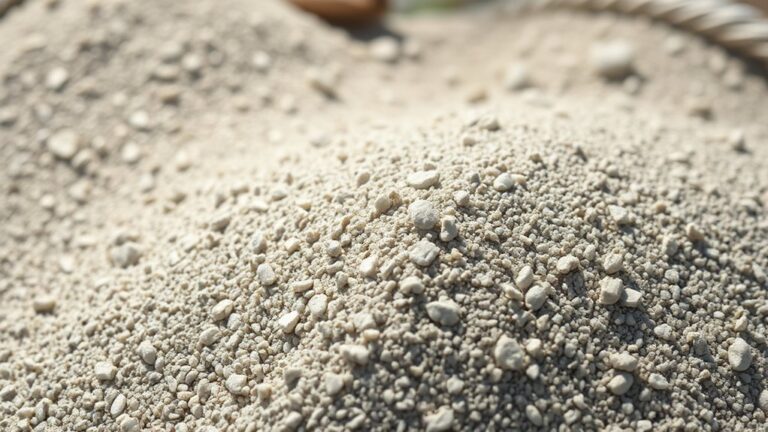
Concrete is made of cement, aggregates (both coarse and fine), water, and special additives called admixtures. Cement acts as the binder, chemically reacting with water during hydration to form a solid, durable matrix that holds the aggregates together.
Coarse and fine aggregates give concrete its strength and bulk. Water is essential for the chemical reactions and ensures the mix is workable. Admixtures help adjust setting time and improve durability.
Air entrainment is another important factor—it protects concrete against freeze-thaw damage. Knowing these components helps you understand how concrete gets its strength and versatility.
What Is Concrete and Why Is It Important?

What makes concrete so essential in construction? You rely on concrete because it forms a strong, durable base for nearly all large-scale infrastructure.
Concrete is a composite material made primarily of cement, aggregates, and water. When you mix these components, the hydration process triggers a chemical reaction that binds the materials into a solid, stable mass. This reaction ensures concrete’s strength and resilience, allowing you to mold it into various shapes to meet specific construction needs.
Its versatility means you can use concrete in bridges, buildings, roads, and more. Plus, concrete’s cost-effectiveness and long service life make it indispensable for modern construction projects. It supports your need for reliable, long-lasting structures without excessive expense.
What Role Does Cement Play in Concrete?
You’ll find that cement acts as the primary binder in concrete. It kicks off strength by reacting chemically with water.
Different types of cement, especially Portland cement, have different compositions. This variation can really change how your concrete behaves.
Knowing these differences helps you manage things like how fast it sets, how durable it is, and how well it resists wear and tear in your concrete mix.
Cement’s Binding Function
How exactly does cement contribute to concrete’s strength and durability? Cement acts as the primary binding agent, hardening through hydration, which is a chemical reaction with water. This process forms strong, water-resistant compounds that hold the concrete mixture together.
When you add cement to aggregates, the cement paste fills the voids, ensuring cohesion and structural integrity. The quality and proportion of cement directly impact concrete’s performance, influencing both strength and durability.
Furthermore, cement controls setting time and workability. This allows you to shape and finish the concrete before it hardens.
- Cement chemically binds aggregates into a solid mass
- Hydration forms durable, water-resistant compounds
- Cement paste fills gaps for structural cohesion
- Controls concrete’s setting time and workability
Cement’s binding function is essential to concrete’s overall reliability.
Types Of Cement
Cement’s binding properties depend largely on its type and composition, which directly affect concrete’s performance. Portland cement, the most common type, is made by heating limestone, clay, and sand to form clinker. Then, it’s ground with gypsum to control setting time.
You’ll find various cement types, from Type I through V, each designed for specific structural or environmental needs. These differences influence durability and strength.
| Cement Type | Key Feature | Typical Use |
|---|---|---|
| Type I | General purpose | Standard construction |
| Type II | Moderate sulfate resistance | Industrial structures |
| Type V | High sulfate resistance | Harsh environments |
Understanding these types helps you select the right cement. That way, your concrete meets the required performance standards.
Cement Composition Effects
What role does cement play in concrete’s performance? Cement acts as the primary binding agent, initiating hydration with water to form a durable, stone-like matrix. The cement composition critically impacts strength, setting time, and durability.
For example, Portland cement contains calcium silicates that accelerate early strength gain. Adjusting the cement composition by incorporating additives like fly ash or slag can optimize concrete properties for specific applications.
Consider these effects of cement composition on concrete:
- Influences compressive strength through cement content proportion
- Determines setting and curing time via chemical compounds
- Enhances workability and finish quality with supplementary materials
- Improves resistance to chemical attack and environmental degradation
Understanding cement composition helps you design concrete mixes tailored to performance requirements. It really makes a difference when you want a mix that fits your specific needs.
How Do Aggregates Add Strength and Bulk to Concrete?
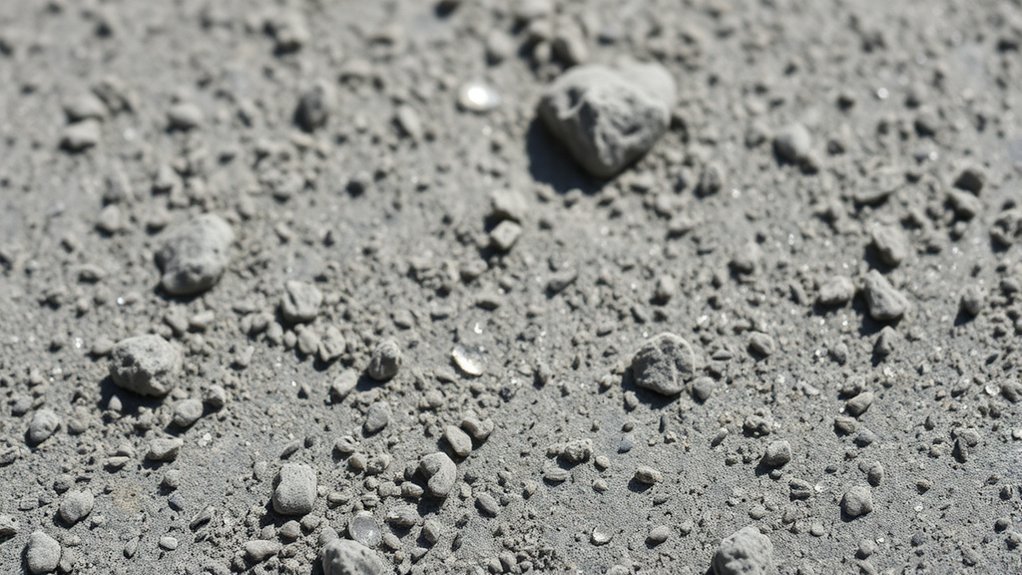
Although cement binds the mixture, aggregates play a crucial role by providing the bulk and structural framework that give concrete its strength and durability.
Coarse aggregates, such as gravel or crushed stone, notably improve compressive strength and reduce shrinkage, enhancing the overall stability of the concrete.
Meanwhile, fine aggregates fill the voids between coarse particles, increasing density and workability.
The size, shape, and gradation of aggregates directly influence the concrete’s mechanical properties, including strength and permeability.
By selecting and grading aggregates properly, you guarantee the concrete can withstand loads and environmental stresses effectively, maintaining integrity over time.
Understanding how aggregates interact within the mix is essential for optimizing concrete performance and achieving the desired structural outcomes.
Why Is Sand Essential for Concrete Smoothness?
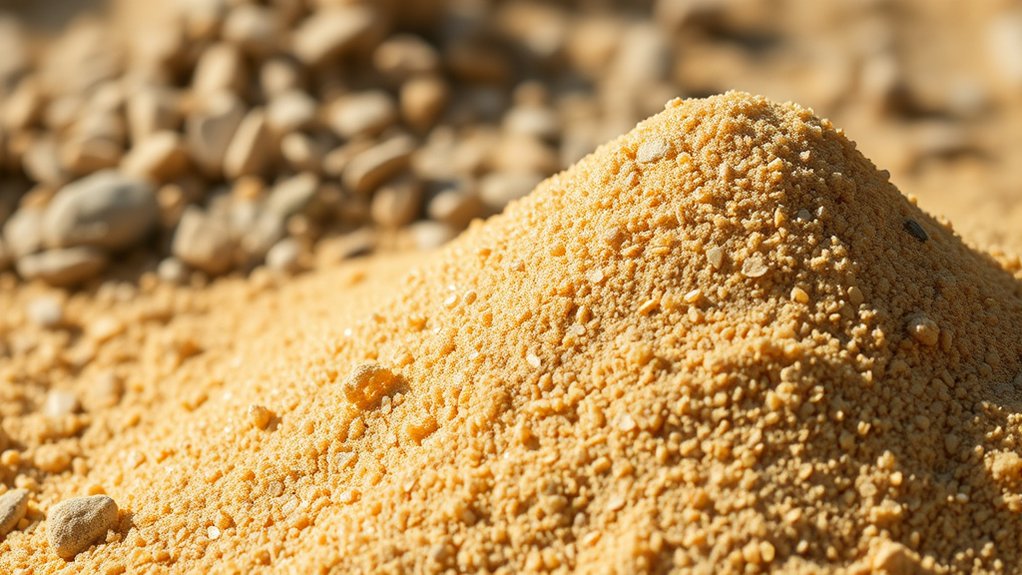
You’ll find that sand, as a fine aggregate, fills the voids between larger particles, which directly influences how smooth your concrete turns out.
Basically, the grain size and shape of the sand play a big role in how well it bonds with the cement and spreads throughout the mix.
When you understand these factors, it’s easier to control the texture and surface quality in your concrete projects.
Fine Aggregate Importance
How does sand contribute to the smoothness of concrete? As a key fine aggregate, sand fills the voids between coarse aggregates, creating a more compact structure. Its small particle size, ranging from 63 microns to 5 mm, enhances the concrete mix’s workability and flow, allowing for easier placement and finishing.
Using properly graded fine aggregate guarantees uniform distribution to minimize voids. It also improves surface finish quality during pouring.
Plus, it enhances durability due to reduced porosity.
You’ll also get a consistent texture that results in smoother concrete surfaces. So, choosing the right sand really makes a difference in the final look and strength of your concrete.
Grain Size Effects
Why does the grain size of sand play a crucial role in concrete smoothness? The grain size, usually between 63 microns and 5 mm, determines how well fine sand particles fill the gaps between larger aggregates. This filling action reduces voids, improving the packing density and therefore enhancing both strength and durability.
Properly graded sand ensures a uniform, smooth finish by addressing microscopic surface irregularities. If you use too much fine sand, the mix becomes sticky and harder to work with. Too little, and the surface turns rough with increased porosity.
How Does Water Trigger Concrete’s Chemical Reaction?
Although water might seem like a simple ingredient, it plays a crucial role in triggering the chemical reaction within concrete. This process, called hydration, begins when water reacts with cement’s calcium silicates, forming new minerals that harden and bind aggregates.
Water initiates hydration, reacting with cement to form minerals that harden and bind concrete aggregates.
You need to control the water-cement ratio carefully because adequate water guarantees complete hydration, maximizing strength. On the other hand, insufficient water limits hydration, which reduces durability.
And if there’s too much water, it increases porosity and weakens the structure.
Proper mixing is also important because it distributes water evenly, ensuring a consistent chemical reaction throughout the concrete. So, getting the balance right really makes a big difference in the final strength and longevity of the concrete.
What Do Admixtures Do to Improve Concrete Performance?
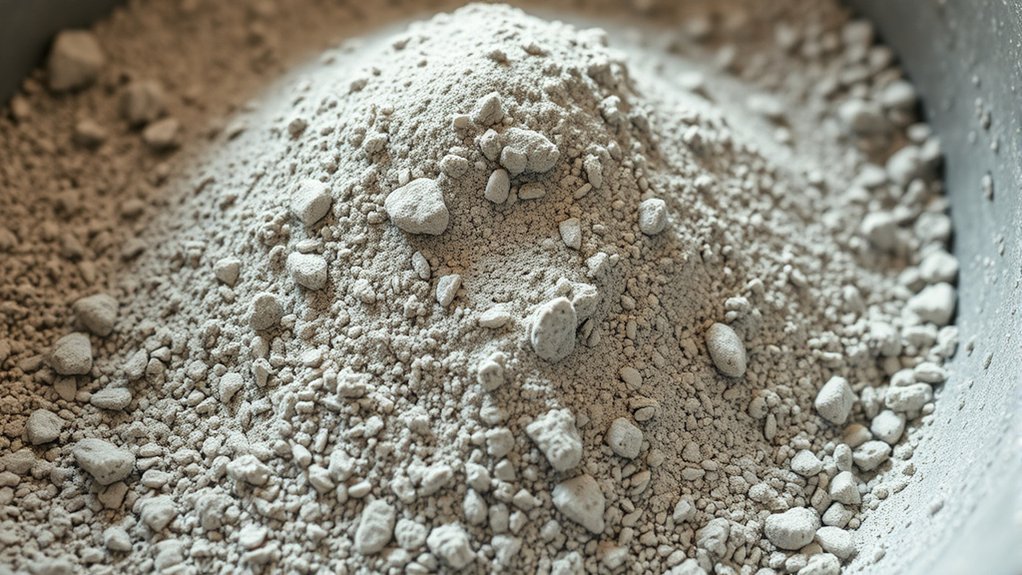
What role do admixtures play in enhancing concrete performance? You use admixtures to tailor concrete properties, improving workability, setting time, and durability.
For example, plasticizers reduce water content without weakening strength. Meanwhile, accelerators and retarders adjust setting times to suit temperature conditions.
Superplasticizers boost flowability, which is essential for high-strength or self-consolidating concrete.
| Admixture Type | Primary Function | Benefit |
|---|---|---|
| Plasticizers | Reduce water content | Enhance workability |
| Accelerators/Retarders | Modify setting time | Adapt to cold/hot environments |
| Superplasticizers | Increase flowability | Support high-strength concrete |
Why Does Air Matter for Concrete Durability?
How does air entrainment enhance concrete durability in harsh environments? Air entrainment introduces microscopic, evenly distributed air bubbles into the concrete mix. These bubbles act as pressure relief zones during freeze-thaw cycles. This process markedly reduces cracking and surface scaling in cold climates by accommodating the expansion of freezing water.
When you control air entrainment precisely, typically maintaining 4-8% air content, you get some great benefits. You improve resistance to freeze-induced damage. Plus, the concrete becomes easier to work with and place. Better consolidation also happens, which helps ensure long-term durability.
At the same time, it prevents excessive voids that could weaken the concrete’s strength. Without enough air entrainment, water expansion during freezing causes internal stress that can lead to premature failure. But if there’s too much air, the concrete’s density and compressive strength drop.
Using Sustainable Materials Like Fly Ash and Slag in Concrete
Beyond controlling air content, improving concrete’s sustainability also plays a significant role in its overall performance and environmental impact.
By incorporating fly ash and slag, you can reduce carbon emissions by up to 50% compared to traditional cement. Fly ash, a coal combustion byproduct, functions as a pozzolanic material that enhances durability and workability.
Slag, sourced from steel manufacturing, replaces part of the cement, improving resistance to sulfate attack and lowering heat of hydration. Using these industrial byproducts not only diverts waste from landfills but also tailors concrete’s properties for specific environmental conditions.
When you choose blended cements containing fly ash and slag, you contribute to sustainable construction without compromising concrete’s structural integrity or longevity.
It’s a smart way to build greener while keeping your projects strong and durable.
How Do Components Affect Concrete Strength and Workability?
Although concrete’s overall performance depends on many factors, the components you choose play a crucial role in determining its strength and workability. The cement content sets the baseline for binding strength. Higher cement ratios yield greater compressive strength.
The water-to-cement ratio critically influences durability. Less water produces stronger concrete but reduces workability.
Aggregate size and gradation affect how easily the mix compacts and minimizes voids, enhancing consistency.
Chemical admixtures, such as plasticizers, improve workability without adding water. This way, you can maintain strength while making the mix easier to handle.
Consider these effects on concrete:
- Lower water-to-cement ratio increases strength but stiffens the mix
- Well-graded aggregates improve compaction and reduce voids
- Plasticizers enhance flow without compromising strength
- Excess water boosts workability but creates porosity, weakening concrete
You have to balance these elements to optimize concrete performance effectively. It’s all about finding the right mix for your specific needs.
Frequently asked questions
How Long Does Concrete Take to Fully Cure?
Concrete typically takes about 28 days to fully cure and reach its maximum strength.
You’ll notice it gains roughly 70% of its strength within the first 7 days.
To guarantee proper curing, you need to keep it moist and at an appropriate temperature during this period.
Factors like mix design, environmental conditions, and cement type can influence the exact curing time.
Can Concrete Be Recycled After Demolition?
Yes, you can recycle concrete after demolition by crushing it into smaller pieces called recycled concrete aggregate (RCA). Before crushing, you’ll need to remove contaminants like steel reinforcement.
RCA helps reduce landfill waste and conserves natural resources. It might have slightly lower strength than new concrete, but it’s still useful.
You can use it for base layers, road subgrades, or fill. Just make sure there’s proper processing and quality control to keep the structural integrity and durability intact.
What Are Common Causes of Concrete Cracking?
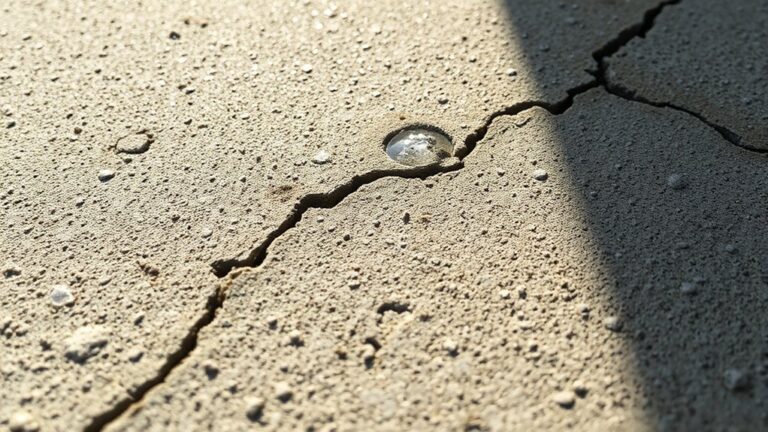
Think of concrete as a brittle shell that can crack under pressure. You’ll find common causes like shrinkage as water evaporates, thermal expansion and contraction from temperature swings, and excessive loading that exceeds tensile strength.
Poor compaction or curing also weakens the structure.
Chemical reactions such as alkali-silica create internal stresses. Understanding these factors helps you prevent or manage cracking in your concrete projects efficiently.
How Is Concrete Tested for Quality On-Site?
You test concrete quality on-site primarily through slump tests to check its workability and consistency. You also monitor temperature and moisture during curing to guarantee proper strength development.
For air content, you use pressure or volumetric methods to confirm air entrainment.
Though compressive strength tests require lab curing, you can take samples on-site for testing later. These tests help you verify concrete meets required standards before it sets.
It’s all about making sure everything is right while the concrete is still fresh.
What Maintenance Does Concrete Require Over Time?
You need to maintain concrete by sealing it every 2 to 3 years to prevent water damage and surface wear. Regularly clean it with mild soap and water to remove dirt and organic growth.
Inspect for cracks often, repairing them promptly with suitable patching materials.
Address surface spalling or scaling through proper maintenance. Reapply protective coatings or sealants periodically to extend concrete’s lifespan and preserve its structural integrity and appearance.
Taking these steps will help keep your concrete looking good and lasting longer.
Final Thought
Now that you’ve uncovered concrete’s recipe, you see it’s more than just a mix. It’s a symphony of materials working in harmony. Cement acts as the conductor, aggregates provide the rhythm, and water sparks the reaction, creating strength and durability.
By mastering these components and adding sustainable ingredients like fly ash, you’re not just building structures. You’re crafting resilient foundations that stand the test of time, blending science with solid artistry.
More Concrete Basics Guides
Buying Sand, Gravel or Ready Mix?Portage Aggregate & Supply carries triple-washed sand and gravel, and Tri County Concrete delivers ready mix across Greater Cleveland. Request a quote or call 440-582-1100.