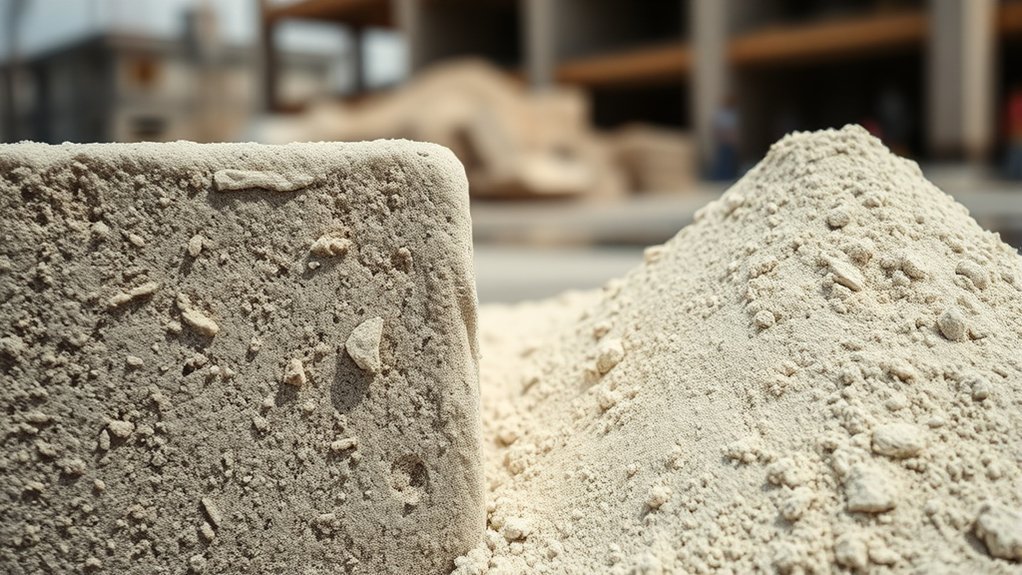
What Is The Difference Between Concrete And Cement – Guide
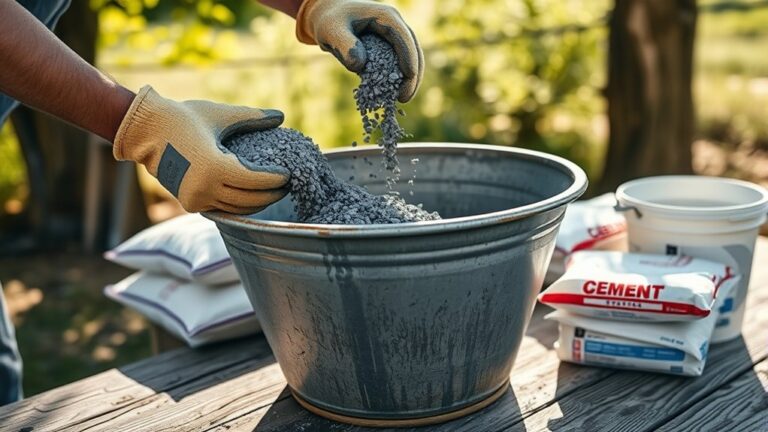
You use cement as a fine powder binder made primarily from limestone and clay. It initiates chemical hydration but lacks structural strength on its own.
Concrete, by contrast, combines cement with water and aggregates like sand and gravel. This forms a durable composite capable of bearing loads.
Cement provides the adhesive property, while concrete gains strength and durability through proper mix ratios and curing. Understanding these distinctions helps you select appropriate materials.
If you want to learn more, there are further insights available on types, production, and sustainability.
What’s The Difference Between Cement And Concrete?
How do cement and concrete differ in composition and function? Cement is a fine powder that acts as a binder, initiating hydration when mixed with water. This chemical reaction forms a hardened paste, but cement alone lacks structural strength.
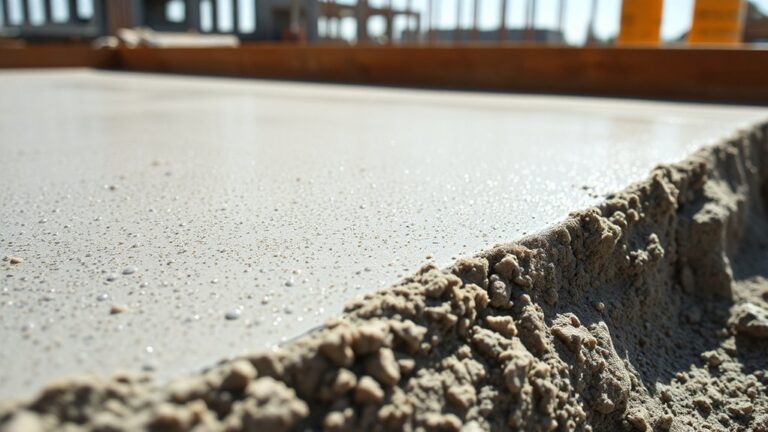
Concrete, conversely, is a composite material comprising cement, aggregates, and water. During hydration, the cement paste binds the aggregates, creating a solid matrix that delivers the necessary strength and durability for construction.
While cement serves as the essential binding agent, concrete is the final product capable of being poured, shaped, and hardened. You must understand that cement can’t be used independently as a building material; it functions solely as an ingredient within concrete, which provides the combined properties required for structural applications.
Cement: Definition And Function
Understanding concrete’s strength means knowing the role of cement in its makeup. Cement acts as a binder. When you mix it with water, it starts a chemical reaction that forms a hardened paste. This paste then binds the aggregates together.
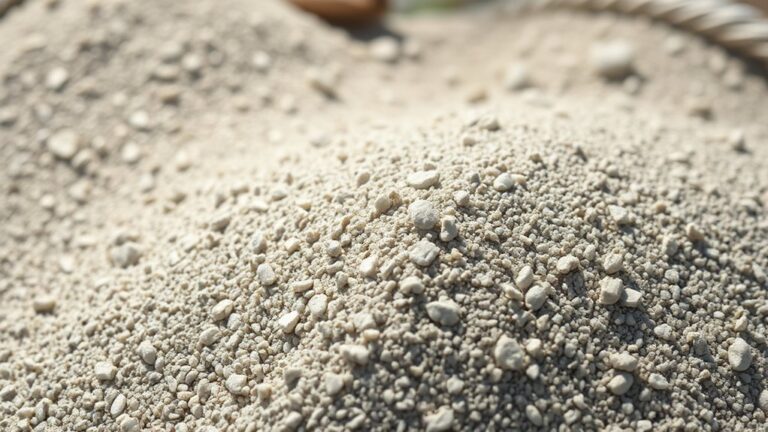
Cement is a finely ground powder made from raw materials like limestone and clay. These materials are processed at high temperatures. The most common type you’ll hear about is Portland cement. It’s made by heating these raw materials into clinker and then grinding that into powder.
It’s important to remember that cement by itself isn’t structural. But without it, concrete wouldn’t hold together. So, it’s absolutely essential for concrete’s strength and cohesion.
Here are some key points about cement:
- Made from limestone, clay, and other raw materials
- Works as a binder through a chemical reaction with water
- Portland cement is the most common type
- Provides chemical bonding in concrete and mortar
- Not structural on its own but crucial for concrete’s cohesion
How Portland Cement Is Made And Why It Matters
You make Portland cement by heating a carefully measured mix of limestone, clay, and a few other materials at really high temperatures. This process creates something called clinker.
After that, the clinker is ground up with gypsum, which helps control how quickly the cement sets.
This whole manufacturing process is pretty important because it involves key chemical reactions that affect how the cement behaves when mixed with water. Knowing how these steps work is crucial since the quality of Portland cement has a big impact on the strength and durability of concrete.
Plus, it also influences the environmental footprint of the final product.
Portland Cement Production
What processes transform raw limestone and clay into the essential binding material known as Portland cement? You begin by combining these raw materials and subjecting them to intense kiln firing. This heat induces a chemical process called calcination, producing clinker, which are small, hard nodules critical to Portland cement’s performance.
Once cooled, clinker is finely ground to create cement powder. This powder enables hydration reactions that provide binding strength when mixed with water.
Key steps in Portland cement production include:
- Mining and blending limestone, clay, and other materials
- Heating the mixture in a rotary kiln at high temperatures
- Forming clinker through chemical transformations
- Grinding clinker into a fine powder
- Initiating hydration reactions upon contact with water
This precise chemical process defines Portland cement’s essential role in construction. It’s fascinating how these raw materials turn into something so fundamental to building our world.
Importance Of Manufacturing Process
The transformation of raw limestone and clay into Portland cement hinges on a meticulously controlled manufacturing process that directly affects the material’s properties. You start by heating raw materials in a kiln at around 2,700°F, initiating complex chemical reactions, primarily calcination, that produce clinker.
This clinker is then cooled and ground finely, mixed with gypsum to form cement. Every stage demands rigorous quality control to ensure the raw materials’ composition and kiln temperature remain precise. These factors critically influence clinker quality, which determines the cement’s strength and durability.
By maintaining strict manufacturing process standards, you guarantee consistent cement performance and compliance with environmental regulations. This ultimately impacts the concrete’s reliability in construction applications.
Understanding this process is essential for appreciating cement’s pivotal role in building materials.
Common Types Of Cement And Their Applications
You’ll come across different types of cement, each designed for specific uses, whether it’s general construction or more specialized settings. Knowing the properties of Portland cement variants, as well as blended or specialty cements, makes it easier to pick the right one for your project’s needs.
Cement Types Overview
How do different cement types meet the varied demands of construction projects? Portland cement, a hydraulic cement, serves as the foundation with Type I for general use. Blended cements integrate supplementary materials to enhance performance and sustainability.
Sulfate resistance varies across types, adapting to environmental challenges.
- Type I: General-purpose Portland cement for diverse applications.
- Type II: Provides moderate sulfate resistance for specific conditions.
- Type V: Offers high sulfate resistance in aggressive environments.
- Type III: High-early-strength cement for expedited construction.
- Blended cements (Type IL, IP, IS, IT): Improve durability and reduce environmental impact.
Understanding these cement types helps you select the most suitable hydraulic cement. This ensures structural integrity and tailored performance in your projects.
Application-Based Cement Uses
Different construction projects demand specific cement properties to guarantee ideal performance and durability. In application-based cement uses, Portland cement is predominant for producing high strength concrete in structural building materials like bridges and commercial buildings. Masonry cement suits mortar applications, enhancing bricklaying and stonework with improved workability.
For environments with elevated sulfate exposure, sulfate-resistant cement ensures longevity in sewage treatment and marine structures. Rapid-hardening cement facilitates quick repairs and supports precast concrete where early strength is critical. White Portland cement serves decorative concrete and architectural finishes due to its color adaptability.
Selecting appropriate types of concrete based on these cement variants optimizes structural integrity while minimizing environmental impact through efficient material use. Understanding these distinctions enables you to tailor cement choices precisely to your construction needs. It really helps to pick the right cement for the job, so your project lasts longer and performs better.
What Is Concrete And What Are Its Main Ingredients?
Although concrete appears as a single solid material, it’s actually a composite formed by mixing cement, water, and aggregates such as sand and gravel. The primary ingredients of concrete include:
Concrete is a composite material made by combining cement, water, and aggregates like sand and gravel.
- Cement, which acts as the binder
- Water, initiating the hydration process
- Fine aggregates, typically sand
- Coarse aggregates, such as gravel or crushed stone
- Proper proportions to guarantee ideal strength and durability
During hydration, cement reacts chemically with water, binding the aggregates into a solid mass.
Typically, concrete consists of 10-15% cement, 15-20% water, and 60-75% aggregates by volume.
The quality and ratio of these ingredients greatly influence the concrete’s performance.
Understanding these foundational components helps you appreciate how concrete achieves its characteristic strength and durability.
Types Of Concrete Mixes And Their Best Uses
When selecting a concrete mix, you must consider the specific structural demands and aesthetic goals of your project. Concrete mixes vary in cement, aggregates, and water proportions to maximize performance for distinct applications.
High-strength mixes, reaching up to 6,000 PSI, suit skyscrapers and bridges requiring exceptional durability.
Standard mixes around 3,500 PSI serve well for sidewalks and driveways.
For aesthetic purposes, decorative mixes incorporate colorants or textured aggregates to enhance finishes on patios and architectural elements.
Rapid-setting mixes, achieving 4,000 PSI within 24 hours, are ideal for urgent repairs.
Lightweight mixes use aerated or lightweight aggregates to reduce structural load or improve insulation.
Understanding these types helps you select the most suitable concrete mix that balances strength, water content, aggregates, and performance to meet your project’s precise requirements.
It’s all about finding the right fit for what you need.
Why Cement Alone Isn’t Used In Concrete Construction
Understanding the specific concrete mix is only part of the equation. Recognizing why cement alone isn’t suitable for construction is equally important. Cement functions as a binder but lacks the necessary components to provide structural strength and durability on its own.
Cement binds materials but lacks the strength and durability needed for construction on its own
In construction, cement must combine with aggregates to form a composite material capable of bearing loads and resisting environmental stresses. Here’s why cement alone isn’t used:
- It lacks aggregates needed to enhance strength and stability
- Can’t withstand compression without granular materials
- Fails to provide durability for large-scale projects
- Produces a brittle, weak material unsuitable for construction
- Relies on aggregates and water to form a load-bearing composite
How Concrete Gains Strength And Why Curing Matters
Because concrete’s strength develops through a chemical reaction known as hydration, maintaining proper moisture and temperature during curing is essential. You must guarantee adequate curing to support the hydration process, allowing cement to react fully with water and form strong binding compounds.
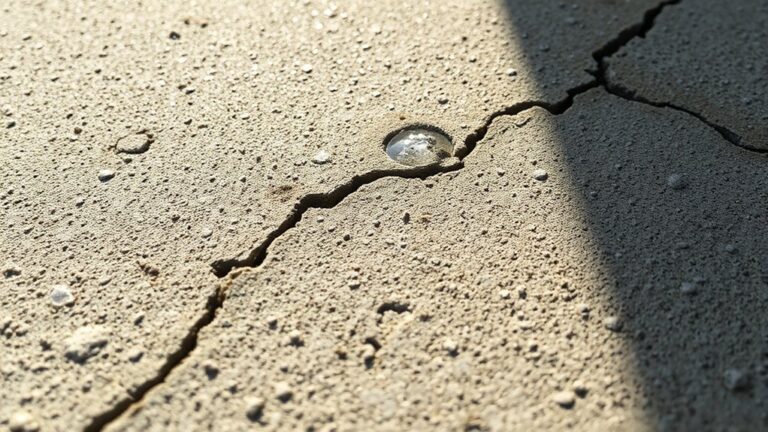
This curing phase critically influences strength development, with the majority of concrete’s strength gained within the first 28 days. If curing is insufficient, hydration remains incomplete, producing weaker concrete prone to cracking and diminished durability.
Employing ideal curing methods, such as moist curing or applying curing compounds, can enhance concrete strength by up to 50% compared to poorly cured concrete.
Environmental Benefits Of Modern Cement And Concrete
How do modern advancements in cement and concrete technology contribute to environmental sustainability? You’ll find that incorporating recycled materials and supplementary cementitious materials, such as fly ash and slag, substantially reduces environmental impact.
Using blended cements like Portland limestone cement lowers clinker content, cutting CO₂ emissions during production.
Moreover, concrete naturally absorbs CO₂ through carbonation, offsetting up to 43% of emissions since 1930. Advances in low-carbon concrete mixes and carbon capture technologies further diminish the carbon footprint.
These innovations support energy efficiency in construction and infrastructure.
- Utilization of recycled materials and supplementary cementitious materials
- Reduction of clinker content with blended cements
- CO₂ absorption via concrete carbonation over lifespan
- Development of low-carbon concrete formulations
- Implementation of carbon capture technologies
How To Choose The Right Cement Or Concrete For Your Project
You’ll want to take a close look at your project’s specific needs first. Think about things like the environment it will be in and how much weight it needs to support.
Then, focus on strength and durability by picking mixes that have the right PSI ratings or special formulas.
Finally, choose the type of mix that matches both your structural requirements and the look you’re going for. That way, you can be sure your project will perform just right.
Project Requirements Assessment
When selecting the appropriate cement or concrete for your project, start by thoroughly evaluating its structural demands and environmental conditions. Your project requirements guide the material choice between cement as a binder or concrete for load-bearing applications.
Consider these factors:
- Compressive strength needed: e.g., 3,500 PSI for sidewalks, 6,000 PSI for high-rise structures
- Environmental conditions: exposure to sulfate, freeze-thaw cycles, or moisture
- Concrete mix specifications: strength, setting time, and finish characteristics
Think about the project scale too. Small repairs might use bagged cement or quick-setting mixes.
Also, don’t forget your desired aesthetic qualities like color, texture, or decorative finishes.
Accurately matching these parameters guarantees maximum performance and durability tailored to your project’s specific needs. Taking the time to get it right will save you headaches down the road.
Strength And Durability
Although selecting cement or concrete may seem straightforward, guaranteeing the right strength and durability requires careful consideration of mix proportions, curing methods, and environmental factors. The water-to-cement ratio critically influences concrete strength. Too much water reduces durability, while proper curing enhances both properties.
High-performance concrete achieves compressive strengths above 6,000 psi, which is ideal for demanding structural applications. You also have to consider the mix’s resistance to environmental exposure to extend longevity.
| Factor | Impact on Strength and Durability |
|---|---|
| Water-to-Cement Ratio | Controls porosity and compressive strength |
| Curing | Ensures hydration, improving durability |
| Specialized Cement Mix | Enhances resistance to chemicals, sulfate |
Mix Type Selection
How do you determine the most suitable concrete or cement mix for your project? You need to evaluate your project needs carefully, focusing on strength, durability, and performance requirements. The water-to-cement ratio plays a vital role in achieving the desired strength and longevity.
Think about these factors when selecting your mix type: required compressive strength and structural load, setting time based on your project timeline, environmental exposure and resistance needs, surface finish and texture demands, and any specialized properties like sulfate resistance or fast-setting.
High-performance mixes exceed 6,000 PSI for demanding applications. On the other hand, fine Sand Mixes are great for decorative or thin stone projects. Balancing these elements helps ensure the mix you select effectively supports your project’s structural and functional goals, delivering reliable, long-lasting results.
Frequently asked questions
Can Cement Be Used for Purposes Other Than Concrete?
Yes, you can use cement for alternative uses beyond concrete. It serves as a binder in mortar for bricklaying, plastering, and precast products like tiles and pavers.
Historically, cement manufacturing evolved to reduce environmental impact and cost compared to traditional materials.
Cement also appears in grout, stucco, and high-temperature mortars.
These applications demonstrate its versatility, offering cost-effective and eco-conscious solutions in construction and repair projects.
How Long Does Concrete Take to Fully Cure?
Think of concrete as a slow-maturing sculpture, reaching full strength in about 28 days. The curing time depends on mixing ratios, ambient conditions, and moisture maintenance.
Within this period, concrete gains roughly 99% of its strength, though curing continues gradually beyond.
You should guarantee proper curing protocols during these essential weeks to achieve ideal durability and performance. Premature stress can compromise the integrity of your concrete structure, so it’s important to be patient and careful throughout the process.
What Are the Common Additives in Cement and Their Effects?
Common admixture types in cement include gypsum, fly ash, slag, and silica fumes. Gypsum controls setting time, preventing flash setting through chemical reactions.
Fly ash and slag enhance durability and reduce environmental impact by lowering heat of hydration.
Silica fumes improve strength and chemical resistance by refining pore structure. These additive effects optimize cement performance, tailoring workability and curing times while promoting sustainability and long-term structural integrity in construction applications.
How Does Weather Affect Concrete Pouring and Setting?
Temperature fluctuations, moisture levels, and wind have a big impact on concrete pouring and setting. You’ll notice that freeze-thaw cycles cause cracking, while sunlight speeds up water evaporation. This can risk inadequate hydration.
Managing moisture is super important. Too much moisture weakens the mix, but too little slows down curing. You need to adjust mix designs and use protective measures like curing compounds or coverings.
These steps help counteract weather effects and ensure the concrete develops excellent strength and durability during the setting process. It’s all about keeping things balanced so your concrete performs well.
Is Recycled Concrete as Strong as New Concrete?
Yes, recycled concrete strength can match new concrete when the recycling process guarantees high-quality aggregates and contaminant removal. You’ll find that its performance supports eco-friendly construction and offers significant sustainability benefits by reducing environmental impact.
However, slight variability in porosity may affect consistency. When properly processed and tested, recycled concrete effectively promotes sustainable building practices without compromising structural integrity.
It’s a smart choice if you’re looking to build green without giving up strength.
Final Thought
Now that you’ve grasped the key differences between cement and concrete, you’re better equipped to choose the right material for your project. Remember, cement is just one ingredient, while concrete is the full package that gains strength over time through curing.
Don’t put all your eggs in one basket. Selecting the proper type guarantees durability and sustainability.
With this knowledge, you can make informed decisions that stand the test of time and environment.
More Concrete Basics Guides
Buying Sand, Gravel or Ready Mix?Portage Aggregate & Supply carries triple-washed sand and gravel, and Tri County Concrete delivers ready mix across Greater Cleveland. Request a quote or call 440-582-1100.