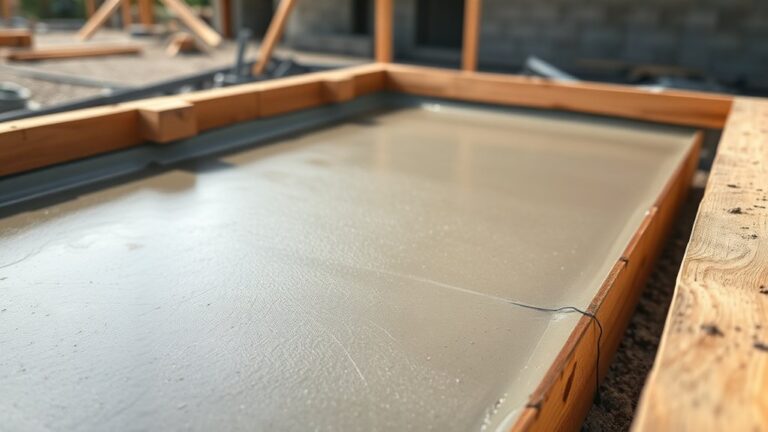
How Long Before You Can Drive On Concrete – Facts & Figures
You should wait at least 7 days before driving on new concrete. This allows it to reach about 70% of its strength, which can support light to moderate loads without damage.
Driving earlier can cause surface impressions, cracks, and structural weakening. Especially since concrete at 3 days is only 35-40% strong, it’s just not ready yet.
Heavy vehicles need a full 28-day cure to guarantee durability under their weight. Keep in mind, environmental factors and mix design also play a role in how long curing takes.
It’s worth exploring these aspects further to get the best performance out of your concrete.
How Long Before You Can Drive On New Concrete?

Although it might be tempting to drive on new concrete right away, you should wait at least 7 days before doing so. By then, the concrete usually reaches about 70% of its full strength. This level of strength generally supports light vehicle traffic without causing surface damage.
Driving on new concrete before the 7-day mark risks leaving impressions, causing cracks, and weakening the structure since the concrete isn’t strong enough yet. Proper curing during these first days is really important. Keeping the concrete moist helps with hydration, which in turn promotes strength and durability.
Full strength and maximum load capacity are usually achieved around 28 days. But waiting 7 days is a good balance between being able to use the surface and protecting its long-term integrity.
Why Waiting 3 Days Protects Your Concrete
Why should you wait at least 3 days before driving on new concrete? Waiting allows essential curing and hydration processes to progress, enabling the concrete to achieve roughly 35-40% of its full strength. This period protects your concrete from early driving risks.
Consider these points: Concrete gains enough strength to support light vehicle loads without surface damage. Hydration continues internally; premature load-bearing can cause microcracks. Early driving increases chances of ruts, chips, and surface impressions.
Waiting minimizes structural weaknesses, preserving durability until full strength develops. So, giving your concrete that initial time to set really pays off in the long run. It’s worth the wait!
What Happens If You Drive On Concrete Too Early?

Waiting the initial days allows concrete to gain some strength, but driving on it too soon can cause serious damage. Early driving subjects the concrete to loads before it reaches sufficient strength, typically around 70% after 7 days. This can result in surface impressions, cracks, and chips.
At just 3 days, concrete is only about 35-40% strong, making it highly vulnerable to deformation and surface damage. Premature vehicle loads can cause surface ruts, edge chipping, and increased cracking. All of these issues compromise durability and aesthetics.
These defects often mean costly repairs or replacements down the line. Proper curing time is essential to develop adequate strength and prevent structural damage.
So, to avoid problems, heavy vehicles should wait at least 28 days before driving on newly poured concrete. This waiting period helps make sure the surface maintains its integrity and lasts longer.
It’s a small patience investment that saves a lot of trouble later on.
How Weather And Mix Affect Concrete Curing
Because weather conditions and concrete mix design directly influence hydration rates and strength development, understanding their effects is essential for proper curing. You need to take these factors into account carefully to optimize curing time and durability.
Warm, humid weather accelerates hydration, which reduces curing time and boosts early strength development. On the other hand, cold or freezing weather slows hydration, making curing take longer and risking incomplete strength gain.
A higher water-to-cement ratio speeds hydration but might compromise long-term strength. So, finding the right balance is really important.
Adding accelerators to the concrete mix can also shorten curing time, often allowing for light use within 3-4 days.
Controlling weather exposure and mix proportions helps ensure consistent curing. This way, you minimize surface defects and get the best structural performance.
When Can Heavy Vehicles Drive On New Concrete?
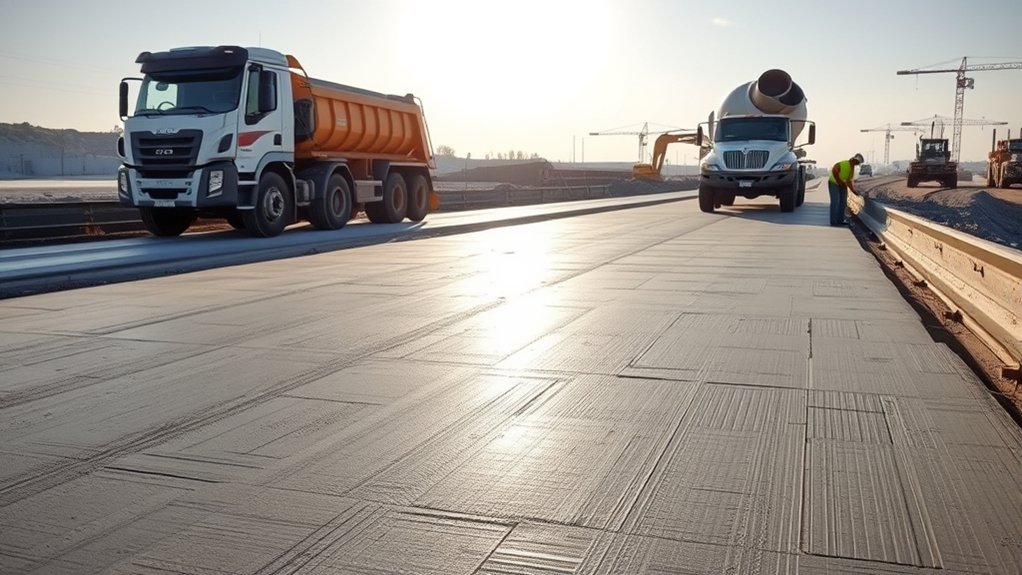
How soon can you safely drive heavy vehicles on new concrete? Heavy vehicles need the concrete to reach full curing and maximum strength to avoid damage.
While concrete gets about 70% of its strength after 7 days, that’s not enough for heavy loads.
Driving heavy vehicles on concrete before the recommended wait times can cause cracking because of the heavy pressure on the slab.
To make sure your concrete lasts and stays strong, it’s best to wait at least 28 days for it to fully cure.
This full curing time lets the concrete build the strength needed to support heavy vehicles safely.
Skipping or rushing this waiting period can shorten the slab’s lifespan and hurt its performance under heavy traffic.
How To Protect New Concrete While It Cures
Protecting new concrete during its curing phase guarantees that the slab develops the necessary strength and durability to handle future loads. To effectively protect new concrete and secure optimal moisture retention during the curing period, focus on these key steps:
Ensuring proper protection during curing helps new concrete gain essential strength and durability for future use.
- Cover the surface with plastic sheeting or damp burlap to maintain consistent moisture.
- Apply curing compounds or sealers specifically designed for concrete to reduce evaporation.
- Mist the concrete regularly to prevent rapid drying and cracking.
- Install physical barriers or fencing to restrict foot and vehicle traffic, preventing premature driving on new concrete.
Following these measures during the critical curing period minimizes surface damage and promotes uniform strength development.
This way, you can be sure the concrete achieves its required performance before you allow any driving on new concrete.
Why Waiting 28 Days Makes Concrete Stronger
You need to understand that concrete strength depends on ongoing hydration, not just drying. It’s not about the water evaporating, but about the chemical reactions happening inside.
Over 28 days, these hydration reactions complete, which lets the concrete reach its full designed strength.
If you skip this timeline, you risk the concrete not developing all its strength. Plus, it can end up more porous, which isn’t good for durability.
Hydration Versus Drying
Although concrete may look dry and hard shortly after pouring, its strength keeps developing through a chemical process called hydration. This is where cement reacts with water to form durable bonds.
The curing phase is really important because strength gain depends on ongoing hydration, not just the concrete drying.
When concrete dries too quickly, hydration stops, which compromises strength. Think about it like this:
- Hydration is a chemical reaction essential for bond formation.
- Strength increases continuously during curing, peaking around 28 days.
- Drying removes moisture, but it’s not what makes concrete hard.
- Premature drying interrupts hydration and weakens the structure.
Strength Development Timeline
Because concrete strength increases gradually through ongoing hydration, waiting the full 28 days before driving on it guarantees it reaches nearly 100% of its designed capacity. After seven days of curing, concrete reaches approximately 65% of its full strength, showing just how important continued hydration is.
Proper curing over this period keeps the moisture in, which helps the hydration process move along efficiently. This ongoing chemical reaction between cement and water makes the microstructure denser, improving durability and load-bearing capacity.
While accelerated mixes can speed up strength gain, industry standards still rely on the 28-day curing timeline to ensure maximum strength development. Giving it this amount of time means you can be confident the surface is ready to handle traffic without risking the structure’s integrity or longevity.
Frequently asked questions
Can Chemicals Speed up Concrete Curing Time?
Yes, chemicals can speed up concrete curing time by accelerating the hydration process.
When you add accelerators containing compounds like calcium chloride, they increase early strength development. This allows the concrete to gain sufficient load-bearing capacity faster, often within 3 to 7 days instead of the standard 28.
However, you need to apply these admixtures carefully. Improper use can cause cracking or weaken long-term durability.
Is Sealing Concrete Necessary After Curing?
Imagine your concrete as a fortress. Sealing it after curing is essential to fortify that defense. You want to lock out stains, water, and freeze-thaw damage, which can erode strength over time.
Without sealing, microscopic pores remain vulnerable. This allows moisture and contaminants to seep in.
By sealing once fully cured, you boost durability and lifespan.
This ensures your concrete maintains its integrity and appearance. It stands strong under constant wear and environmental stress.
How Does Concrete Thickness Affect Curing Duration?
Concrete thickness directly affects curing duration because thicker slabs slow hydration, requiring more time to develop full strength.
If you pour a 4-inch slab, it typically cures to about 70% strength in 7 days. But slabs 6 inches or thicker need 14 to 28 days to cure properly.
You must guarantee consistent moisture throughout the depth to avoid cracking and weaknesses.
Skipping adequate curing risks durability and structural integrity.
Can Sunlight Exposure Damage Curing Concrete?
Absolutely, sunlight can wreak havoc on curing concrete if you’re not careful. It accelerates moisture evaporation, causing surface cracks and weakening the hydration process critical for strength.
You’ll want to shield your concrete with shade or curing covers, especially on hot days, to maintain moisture and prevent shrinkage cracks.
Proper curing techniques combat sunlight’s drying effects, ensuring the concrete cures evenly and achieves maximum durability for safe driving.
Taking these steps really makes a difference in the long run. So, keeping an eye on the weather and protecting your concrete is definitely worth it.
What Maintenance Is Needed After Concrete Curing?
After concrete cures, you need to apply a sealant to protect it from stains, moisture, and wear. Cleaning the surface regularly with mild soap and water helps prevent dirt buildup. It’s a simple step that goes a long way in keeping your concrete looking good.
Make sure to inspect for cracks or any damage often, and fix problems right away. Reapplying the sealant every 2 to 3 years is important to maintain durability. This keeps your concrete strong and looking fresh.
During the first winter, avoid using harsh chemicals and de-icing salts. These can cause surface damage. Taking these precautions will help extend the lifespan of your concrete effectively.
Final Thought
You might feel like driving on new concrete the minute it’s poured, but trust me, rushing it is like expecting a skyscraper to stand after a day. Waiting at least three days protects your investment from cracking disasters.
And those critical 28 days? They’re the difference between fragile and fortress. Weather, mix, and weight all play their part. So play it smart, or your concrete could crumble under pressure before it’s even ready.
More Pouring & Curing Guides
Need Concrete in Greater Cleveland?Tri County Concrete delivers ready mix from plants in North Royalton and Twinsburg, Ohio. Request a quote or call 440-582-1100.