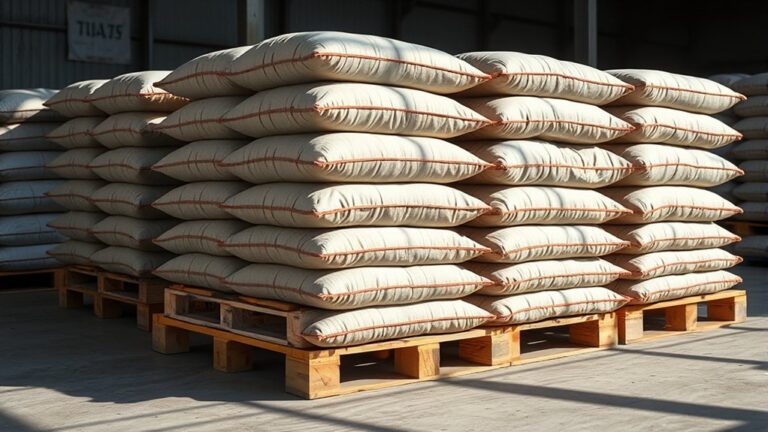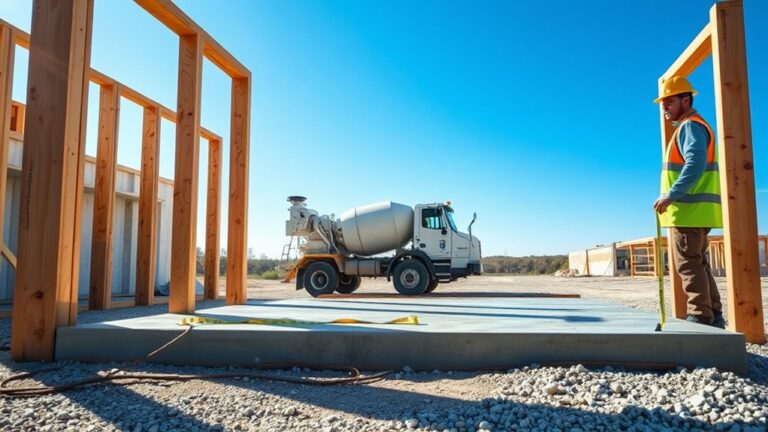
How Many Bags Of Concrete Do I Need – Exact Amounts
To find exactly how many concrete bags you need, first measure your project’s dimensions accurately and calculate the volume using the right formula. For slabs, multiply length × width × depth. For columns, use π × radius² × height.
Next, convert your volume to cubic yards and divide by the bag yield, keeping in mind that weights can vary. It’s a good idea to add 5-10% extra for waste to be safe.
Choosing the proper bag sizes helps avoid shortages or having too much leftover. Keep going to explore detailed calculation and management strategies.
How To Measure Your Project For Concrete Bags
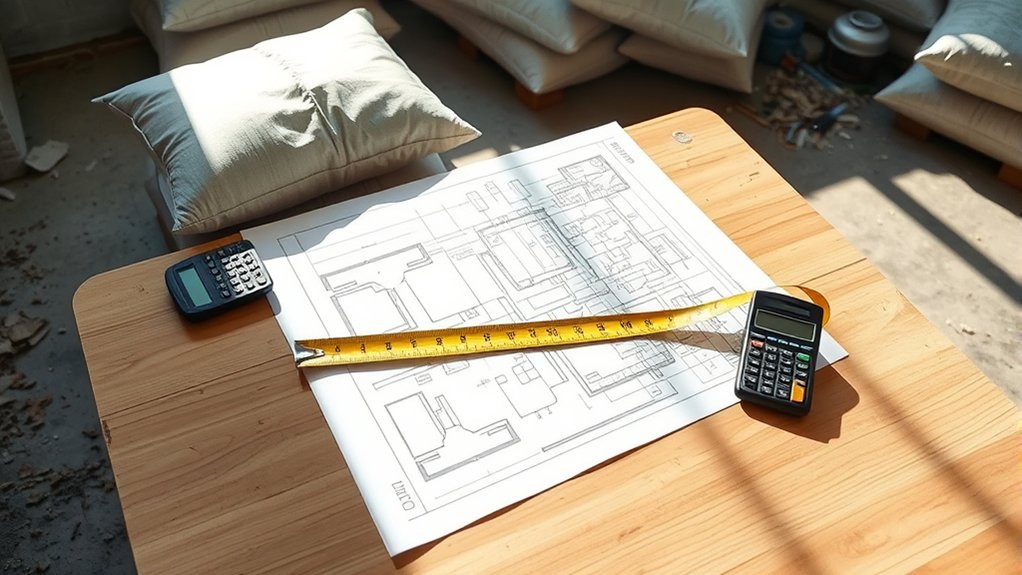
Before you can determine how many bags of concrete you’ll need, you must measure your project area accurately. Start by taking precise measurements of the length, width, and depth of your project dimensions in feet or inches.
Make sure to convert all measurements to consistent units before performing volume calculations to avoid errors.
Use the formula volume = length × width × depth, then divide by 27 to convert cubic feet to cubic yards, which is the standard unit for concrete bags.
If your project has irregular shapes, break the area down into simpler sections. Calculate each volume separately and then add them all together.
Finally, add 5-10% extra to accommodate spillage, wastage, and uneven ground during pouring.
This systematic approach helps you accurately estimate how many concrete bags you’ll need for your project.
Choosing The Right Concrete Bag Size
Selecting the right concrete bag size directly impacts your project’s efficiency and material management. Concrete bags typically range from 40 to 80 pounds, and choosing the appropriate bag size depends on your project volume and mix design.
For small DIY tasks, 40-60 pound bags offer easier handling, reducing labor strain. Larger projects benefit from 80-pound bags, which optimize material usage and cost-effectiveness but often require mechanical assistance for transport and mixing.
Accurately determining the bags needed involves aligning the bag size with calculated project volume, often facilitated by a concrete calculator. Proper bag size selection minimizes waste, streamlines ordering, and ensures consistent mix quality.
Calculating Concrete Volume From Your Measurements
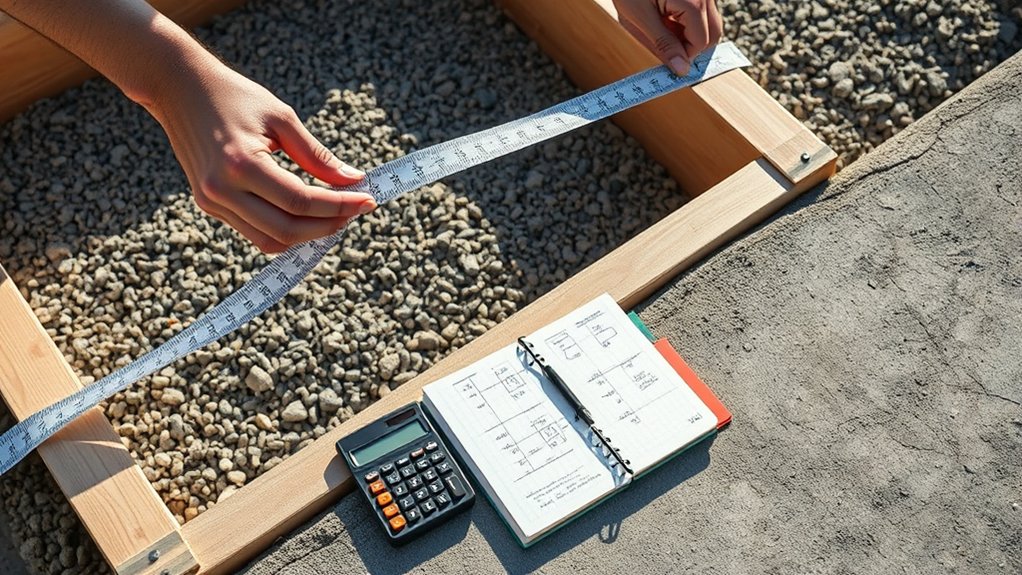
You’ll want to begin by converting all your measurements to the same units, usually feet, to make sure your calculations are accurate.
Once that’s done, just use the right formula for the shape you’re working with. For rectangles, multiply length by width by depth.
If it’s a circle, use π times the radius squared, then multiply by the depth to get the volume in cubic feet.
And don’t forget to add a little extra—typically 5 to 10%—to your total volume to cover any mistakes or material that might get wasted along the way.
This way, you’ll have enough concrete without running short.
Measurement Units Conversion
Accurately calculating the volume of concrete requires converting all measurements, like length, width, and depth, into consistent units before multiplying them together. Start by selecting your preferred measurement units, such as meters or feet.
Then convert inches to feet by dividing by 12 if you’re working with imperial units.
Multiply length by width by depth to find the volume in cubic feet or cubic meters.
To convert cubic meters to cubic feet, use the factor 1 m³ = 35.3 ft³. This units conversion guarantees precision and consistency in your calculations.
Remember to include a 5-10% waste factor to accommodate spillage and surface irregularities. Properly converting measurement units guarantees an accurate volume that informs the exact number of concrete bags needed.
Volume Calculation Formulas
When calculating the volume of concrete needed, make sure to convert all your measurements into consistent units before applying the right formula.
Accurate concrete calculation depends on correctly determining the volume based on your project’s size and shape.
For a rectangular shape, multiply length × width × depth to get the volume in cubic feet. Then, convert cubic feet to cubic yards by dividing by 27.
For circular columns or tubes, use the formula: volume = π × radius² × depth to find the volume in cubic feet.
If you’re working with irregular shapes, break the project into simpler geometric sections. Calculate each volume separately, then add them up for the total volume.
This approach helps you estimate volume precisely, so you can buy exactly the amount of concrete your project needs.
Adding Waste Allowance
Because factors like spillage and over-excavation can affect your concrete needs, always include a waste allowance in your volume calculations. To calculate the amount of concrete accurately, increase your concrete volume by 5-10% for typical projects.
For complex or irregular project sizes, raise the waste allowance to 15% to ensure you have extra concrete on hand. Multiply your volume in cubic units by 1.05 to 1.10 (or up to 1.15) to account for this.
This adjustment prevents shortages during pouring and minimizes additional orders. When you convert the adjusted volume into bags of concrete, you get a more reliable estimate.
Properly adding waste allowance optimizes your material use, keeps your project on schedule, and controls costs by avoiding last-minute shortfalls or over-ordering.
It’s a simple step that can save you a lot of hassle down the line.
Converting Volume To Concrete Bags
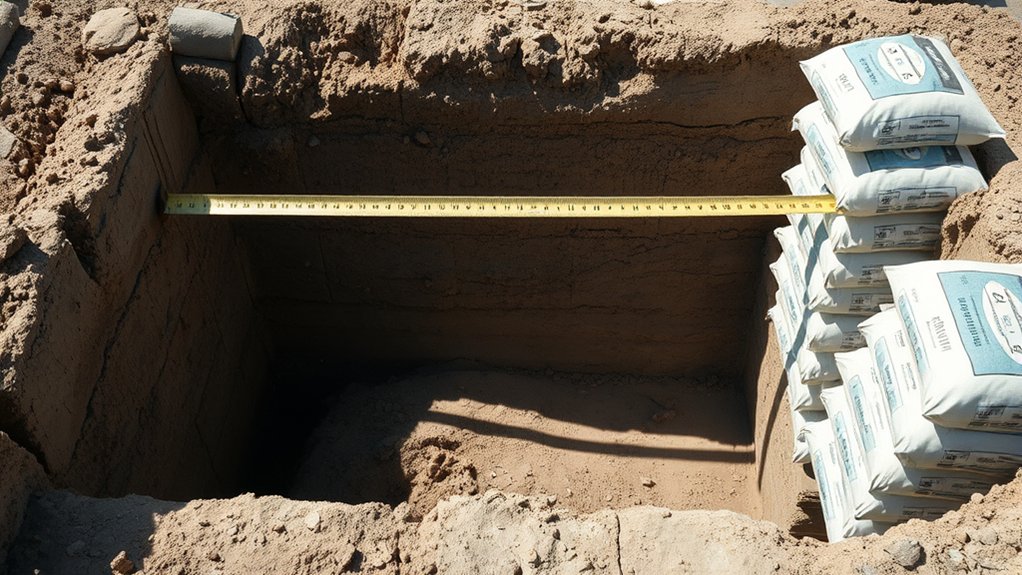
Now that you’ve figured out the volume of concrete you need, the next step is to convert that into the number of bags.
Each bag has a specific yield, which means it covers a certain volume. So, you’ll want to divide your total volume by the yield of one bag to find out how many bags you’ll need.
Also, it’s a good idea to add a little extra—think of it as a safety net for any unexpected spills or slight measurement errors.
This contingency helps make sure you don’t run short on material when you’re ready to work.
Volume To Bag Conversion
To convert a specific volume of concrete into the number of bags required, start by calculating the total volume needed in cubic meters or cubic feet.
Then, follow these steps for accurate concrete calculation:
First, adjust your concrete volume by adding a waste percentage (5-10%) to account for spillage and irregularities.
Next, identify the yield per bag based on the bag size. For example, an 80-pound bag yields about 0.022 cubic meters, while a 60-pound bag yields roughly 0.017 cubic yards.
Finally, divide the adjusted total volume by the bag yield to determine the exact number of bags needed. Always round up to ensure you have enough material.
This method ensures precision in converting volume to bags. It helps you optimize material use and avoid shortages during your project.
Bag Sizes Explained
Several common bag sizes exist for concrete, each producing a distinct volume of mixed material. Concrete bags typically come in 40, 60, 80, or 90-pound weights. Larger bag weights yield more concrete volume per bag.
For example, an 80-pound bag produces about 0.017 cubic meters (0.022 cubic yards) of mixed concrete.
Understanding bag sizes is really important for accurate concrete calculation. You need to know the yield per bag to convert your required concrete volume into the right number of bags.
This bag size explanation helps you factor in variations in bag weight and volume output. That way, you can make precise conversions from concrete volume to bags.
Just keep in mind that handling larger bags might be a bit cumbersome. So, it’s good to balance yield per bag with practical considerations when planning your project.
Calculating Bag Quantity
When you know the total volume of concrete your project requires, calculating the number of bags becomes a straightforward process. To convert volume to concrete bags accurately, follow these steps:
First, calculate the total volume of concrete needed for your project in cubic meters or cubic yards. Then, divide this volume by the yield per bag. The yield depends on the bag weight and mix—for example, an 80-pound bag typically yields about 0.022 cubic yards.
Don’t forget to include a waste factor of 5-10% to cover spillage or uneven ground. It’s always better to have a little extra than to run short.
Use a calculator or conversion chart to switch easily between units. This precise approach ensures you buy the right number of concrete bags without overspending or running short.
Adding Extra Concrete Bags For Waste And Spillage
Although calculating the exact amount of concrete needed can be straightforward, you should always include an additional 5-10% in your order to cover waste, spillage, and uneven pouring surfaces. This waste allowance accounts for material lost during handling and minor site irregularities, ensuring your concrete estimation remains accurate.
For complex or irregular projects, consider increasing this buffer to 15% to prevent shortages that might disrupt workflow. Including extra bags in your order mitigates risks associated with spillage and unforeseen errors, ultimately supporting project success.
Properly evaluating waste is critical. Underestimating can lead to costly delays and extra purchases. So, incorporating a precise waste allowance into your concrete bags calculation is essential for maintaining efficiency and avoiding interruptions during your project.
How Different Concrete Projects Affect Bag Requirements
Accounting for waste and spillage gives you a more accurate baseline. But the type of concrete project you’re tackling really influences the number of bags required.
Different concrete projects demand precise volume calculation based on the project’s shape and size. This directly affects how many bags you’ll need. Let’s look at some scenarios:
Rectangular slabs, like a 10×10 ft patio that’s 4 inches thick, require volume calculation by multiplying length × width × thickness. Then, convert that volume to the amount of concrete needed and the corresponding number of bags—usually between 80 and 100.
Circular columns use the formula π × radius² × height, which changes bag requirements because of their curved shape.
Large-scale projects, like garage floors, often go beyond 1 cubic yard. For these, it’s usually better to get a bulk concrete delivery instead of using lots of bags.
Practical Tips To Prevent Concrete Bag Shortages Or Waste
To prevent concrete bag shortages or waste, you should always add a 5-10% contingency to your calculated quantity to cover spillage and uneven surfaces.
Begin with accurate measurement of your project dimensions in feet and inches to ensure precise quantity calculation.
Select concrete bags sized appropriately for your project scale, commonly 60 or 80 pounds, to avoid overordering or underordering.
Implement storage tips by keeping unused bags in a dry, elevated area to prevent moisture damage and maintain usability.
Regularly verify your calculations using online tools or professional guidance to reinforce accuracy and prevent waste.
By combining precise measurement, contingency planning, and proper storage, you minimize material shortages and excess.
This way, you optimize resource use and keep your project running smoothly.
Frequently asked questions
Can I Use Concrete Bags for Outdoor Repairs?
Yes, you can use concrete bags for outdoor repairs like patching cracks or filling small holes. Just make sure to choose a mix designed for outdoor conditions, such as frost-resistant or quick-setting formulas.
Preparing the surface properly by cleaning and moistening it helps guarantee good adhesion.
Be sure to follow the manufacturer’s instructions for mixing, curing times, and protection.
For larger projects, bulk concrete is usually more efficient. But bags work really well for precise, small-scale fixes.
How Long Does Mixed Concrete Remain Workable?
Mixed concrete remains workable for about 30 to 90 minutes, depending on factors like temperature, humidity, and additives.
In hot conditions, expect it to set closer to 30 minutes, while cooler temperatures or retarders can extend workability beyond 90 minutes.
You need to plan your mixing and pouring carefully to avoid premature setting. This ensures you place and finish the concrete before it hardens and loses its plasticity.
What Tools Do I Need to Mix Concrete Bags?
To tackle your task, you’ll need trusty tools: a trowel or shovel to stir and spread, a sizable mixing container or wheelbarrow to hold your hefty batch, and measuring measures like buckets or scales for precise portions of water, cement, sand, and aggregate.
If you’re working on a wider worksite, a concrete mixer can make mixing more manageable.
Don’t forget safety gear, gloves, goggles, and a dust mask to protect yourself throughout the process. It’s better to be safe than sorry, right?
Can Leftover Concrete Bags Be Stored for Later Use?
Yes, you can store leftover concrete bags for later use, but you need to keep them in a dry, airtight container to prevent moisture absorption.
Use opened bags within a few months, as cement’s strength and workability decline over time.
Always store bags on raised platforms to avoid ground moisture and pests.
Discard any bags with hardened or lumpy concrete since they can’t be reconstituted effectively for future projects.
Just remember, keeping the bags dry and sealed is key to making sure your leftover concrete stays usable.
Are There Eco-Friendly Concrete Bag Options Available?
Yes, you can find eco-friendly concrete bag options. These bags often use recycled materials, low-emission manufacturing, or biodegradable packaging to minimize environmental impact.
Some mixes incorporate supplementary cementitious materials like fly ash or slag, which helps reduce cement content.
Look for certifications such as LEED or Green Seal to verify sustainability standards.
Choosing these products helps you support green construction practices and lowers your project’s overall carbon footprint effectively. It’s a simple way to make your build more eco-conscious.
Final Thought
Picture your project site and measure each dimension carefully. Then, convert those numbers into the exact volume of concrete you’ll need.
By selecting the right bag size and factoring in waste, you avoid costly shortages or having too much left over. With precise calculations, you make sure every bag counts and that your pour goes smoothly and efficiently.
Taking these technical steps ensures your concrete mix supports your project’s strength and durability. Plus, it saves you time, money, and effort on the job.
More Quantities & Weights Guides
- How Many Bags of Concrete in a Yard
- How Many Bags of Concrete on a Pallet
- How Many Concrete Blocks on a Pallet
- How Many Cubic Feet in a Bag of Concrete
See all Quantities & Weights guides · All concrete resources
Need Concrete in Greater Cleveland?Tri County Concrete delivers ready mix from plants in North Royalton and Twinsburg, Ohio. Request a quote or call 440-582-1100.