How Many Bags Of Concrete On A Pallet – Numbers to Know
You can expect between 42 and 80 bags of concrete per pallet, depending on the bag weight. Heavier 80-pound bags usually stack around 42 bags. On the other hand, 40-pound bags allow up to 80 bags per pallet.
Pallet weight limits, typically 3,000 to 3,500 pounds, influence how many bags you can safely manage. Proper stacking and storage prevent damage and guarantee safety. Keep these factors in mind.
Explore the details to optimize your concrete handling and logistics. It all helps make your job easier and keeps everything running smoothly.
How Many Bags of Concrete Are on a Pallet?
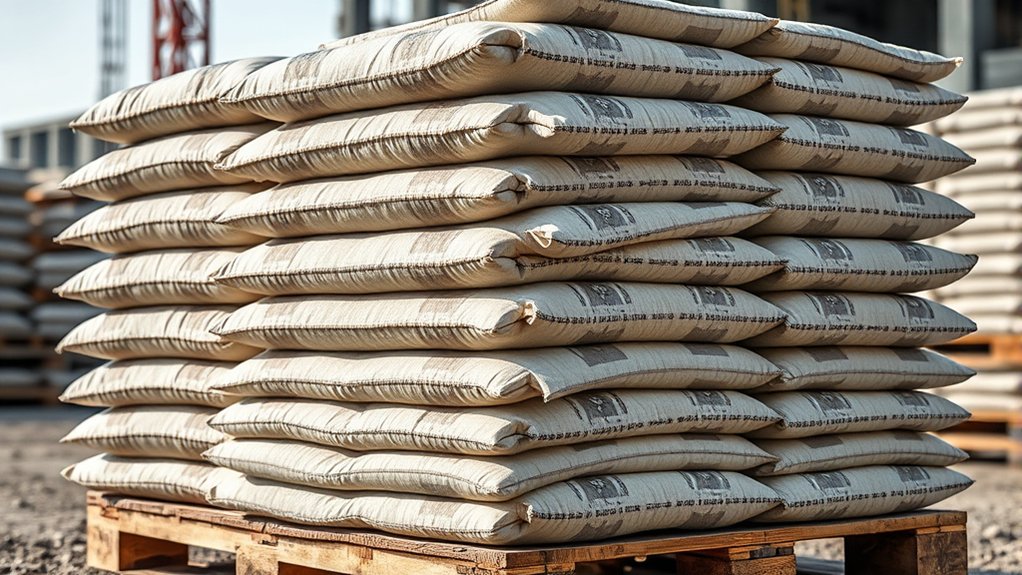
A standard pallet holds between 42 and 80 bags of concrete, depending on bag weight and manufacturer specifications. Typically, a pallet carries about 56 bags if the bags weigh 60 pounds each, while 80-pound bags reduce the count to roughly 42 per pallet.
This bag count aligns with the pallet’s weight capacity and safety handling limits, ensuring efficient transport and storage. Keep in mind that different manufacturers and regional suppliers may vary their pallet configurations slightly.
To maintain accuracy, always verify the exact bag count with your specific supplier before ordering. Understanding these pallet quantities helps you plan logistics effectively, avoiding overloading while optimizing bulk concrete distribution.
The pallet’s design balances weight and volume to streamline handling and delivery. So, it’s a good idea to double-check details based on your source to keep things running smoothly.
Impact of Bag Weight on Pallet Counts
The number of bags on a pallet varies a lot depending on the bag weight, which directly affects how many you can safely stack and transport. Heavier bags, like 80-pound concrete bags, reduce the total count per pallet because of weight limits.
For example, a standard pallet usually holds 42 bags of 80-pound concrete but can fit up to 56 bags of 60-pound concrete.
Pallets are designed to support certain load capacities, so going over those weight limits can cause structural failure and unsafe handling. When dealing with concrete bags, you need to balance the bag weight with pallet capacity to get the best mix of safety and efficiency.
Knowing how bag weight impacts pallet counts helps you avoid overloading pallets. This protects your equipment and people, and keeps you within transportation rules.
It’s all about working smarter and safer when stacking and moving these bags.
How Pallet Weight Limits Affect Bag Quantities

Because pallets have strict weight limits, typically between 3,000 and 3,500 pounds, you need to carefully calculate how many concrete bags to stack. The pallet weight limit dictates the maximum quantity you can safely handle.
For example, if you’re using 80 lb bags of cement, dividing the pallet weight limit by the bag weight gives you the maximum count per pallet.
Ignoring this calculation risks overloading, which can cause instability, damage, or safety hazards during transport. Manufacturers design pallets to support specific weights, taking into account packaging and securing materials.
So, going over these limits compromises compliance and safety.
Why Pallets Are Used for Concrete Bags
You rely on pallets to keep concrete bags organized and secure during transport and storage. They make handling so much easier, especially when using forklifts.
Plus, pallets help minimize damage to the bags along the way.
Because of these benefits, pallets have a proven track record of improving efficiency. When you understand how they help, you can optimize your logistics and keep the product quality high.
It’s a simple solution that makes a big difference.
Pallet Benefits Explained
Although concrete bags can be stacked without pallets, using them makes things a lot easier and safer. Pallets let you stack and move large quantities of concrete bags quickly and securely, which helps keep things running smoothly on any job site.
By lifting the bags off the ground, pallets protect them from moisture and debris, which keeps the concrete in good shape. They also make loading and unloading faster, especially when using forklifts or other handling equipment. This means less time and effort spent by workers.
Standard pallets are designed to hold specific weight limits, so they ensure safe handling based on the weight of the bags and the total load.
All in all, pallets boost your workflow by protecting the bags, speeding up material movement, and making handling safer and more reliable with mechanical equipment.
Historical Pallet Use
The use of pallets for handling concrete bags traces back to World War II, when logistics innovations demanded faster, safer material movement. Pallets changed the game for transporting and storing concrete bags by making the process more efficient and protective.
You’ll find pallets essential because they elevate concrete bags above moisture and debris, which helps prevent damage during storage and handling. Plus, they make stacking easier, so you can maximize space in warehouses and transport vehicles.
They also support standardized loads, typically holding 42 to 80 bags depending on size and weight. This really helps streamline inventory management and keeps everything organized.
Comparing Bag Counts by Weight: 40 Lb to 80 Lb
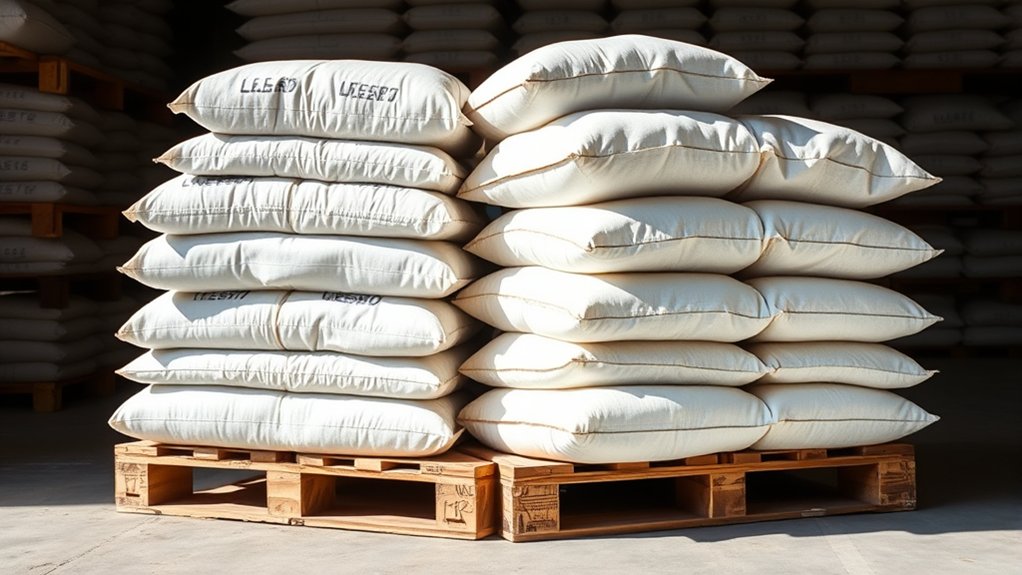
When comparing bag counts on pallets, understanding how weight impacts quantity is essential for efficient handling and transport.
A standard pallet holds 80 bags of 40 lb concrete, totaling roughly 3,200 pounds.
If you opt for 50 lb bags, the pallet usually contains about 64 bags, maintaining a similar total weight.
For heavier 80 lb bags, expect around 42 bags per pallet, with a total weight near 3,360 pounds.
As bag weight increases, the number of bags per pallet decreases due to weight and space constraints.
This directly affects how you manage pallets during loading, unloading, and transportation.
Knowing these differences helps you plan logistics, ensuring safety and efficiency when dealing with concrete pallets of varying bag weights.
It’s all about balancing the weight and the number of bags so your job goes smoothly.
How to Calculate Total Concrete Volume From Bags
Calculating the total concrete volume from bags starts with converting your project dimensions into cubic feet. First, multiply the length, width, and depth (in feet) to get the total volume.
Calculating concrete volume begins by multiplying your project’s length, width, and depth in feet to find total cubic feet.
Next, use the bag yield, usually around 0.45 cubic feet for a 60 lb bag, to determine how many bags you need.
Finally, consider the pallet weight to understand how many bags fit per pallet. This helps with planning and logistics.
- Calculate total volume (ft³) = length × width × depth
- Divide total volume by bag yield (ft³ per bag) for bag count
- Factor in pallet weight to estimate bags per pallet and manage logistics
Always add 10% to your bag count for waste. This method ensures you get a precise concrete volume estimation from bags.
Estimating How Many Pallets You Need for Your Project
Since your project’s total concrete volume dictates your supply needs, estimating the number of pallets required hinges on knowing how many bags fit per pallet and the yield per bag.
Typically, pallets hold 54 to 60 bags, but this can vary depending on bag weight and manufacturer.
To calculate pallets needed, divide your total concrete volume in cubic yards by the yield per pallet, factoring in bags per pallet.
Always confirm bag counts per pallet with your supplier to avoid discrepancies.
It’s also a good idea to add a 10-15% safety margin to cover waste or miscalculations.
This way, you’ll order enough pallets to meet your concrete volume requirements efficiently without overordering or facing shortages on site.
Key Factors Affecting Concrete Bag Counts per Pallet
You need to think about the weight of each bag because it directly affects how many bags you can fit on a pallet without going over the load limits.
Usually, a pallet can hold somewhere between 3,000 and 3,500 pounds, so you have to stack the bags with that in mind.
Also, the way manufacturers package their bags plays a role — different sizes and stacking methods can change how many bags end up on a pallet.
Bag Weight Impact
Although pallet dimensions remain constant, the weight of each concrete bag directly affects how many bags you can stack safely. Bag weight plays a critical role in determining pallet load capacity and the total number of concrete bags per pallet. You must understand these impacts to optimize storage and transport.
Consider these key points:
- Lighter bags (e.g., 60-pound) allow about 80 bags per pallet.
- Heavier bags (e.g., 80-pound) reduce count to around 42 bags per pallet.
- Increased bag weight lowers total pallet quantity, affecting bulk handling and logistics.
Accurate knowledge of bag weight is essential for estimating pallet load sizes, ensuring safe stacking, and maintaining structural integrity during storage and transit. It’s all about balancing weight and quantity to keep things safe and efficient.
Pallet Load Limits
When calculating how many concrete bags fit on a pallet, you must consider the pallet’s load limits carefully. Pallet load limits typically range from 3,000 to 3,500 pounds, setting the maximum weight capacity for safe handling.
The number of bags per pallet depends directly on each bag’s weight. Lighter bags allow for more per pallet, while heavier ones reduce the count.
Exceeding the weight capacity compromises stability, increasing the risk of damage and accidents during transport. Pallets are engineered to support specific maximum weights, so understanding these limits is vital to avoid overloading.
Properly managing the pallet load limits ensures safe lifting, transportation, and compliance with safety standards.
This directly influences how many bags per pallet you can load without jeopardizing safety or efficiency. So, it’s really important to know these limits before stacking up your concrete bags. That way, you keep everything safe and running smoothly.
Manufacturer Packaging Standards
Because manufacturers must balance weight, stability, and space optimization, they package concrete bags in standardized pallet quantities, such as 80 bags for 40 lb and 42 bags for 80 lb bags. These manufacturer packaging standards directly affect the bags per pallet you’ll encounter, depending on concrete bag sizes.
You should consider three key factors:
- Bag Weight: Heavier bags reduce the total count per pallet to maintain safe handling.
- Pallet Configuration: Dimensions and stacking patterns are designed for maximum stability and efficient space use.
- Manufacturer Variations: Packaging standards may differ by region or product, so always verify with your supplier.
Understanding these standards guarantees you accurately plan logistics, storage, and project requirements based on manufacturer packaging standards and bags per pallet. It really helps avoid surprises when ordering or storing concrete bags.
Tips for Storing and Handling Pallets of Concrete Bags
To maintain the integrity of concrete bags, store pallets in a dry, covered area and keep them elevated on racks or pallets to prevent moisture exposure from the ground. Proper pallet storage prevents moisture absorption that can weaken concrete bags.
Store concrete pallets dry, covered, and elevated to prevent moisture damage and maintain bag integrity.
Stack pallets evenly and securely to avoid shifting or toppling during storage and transport. Keep the height of stacked pallets moderate to prevent crushing the bags at the bottom.
Rotate pallets regularly, using older stock first to minimize long-term degradation.
When handling pallets, ensure they remain stable and undamaged to maintain product quality.
Following these technical storage and handling tips will extend the lifespan of your concrete bags and ensure consistent performance when mixing concrete. Proper pallet storage is essential for maintaining concrete bag strength and usability.
Frequently asked questions
Can I Mix Different Bag Weights on One Pallet?
Yes, you can mix different bag weights on one pallet, but you need to be cautious. Mixing 60 lb and 80 lb bags affects the total pallet weight and stability. This could potentially exceed load limits.
You should check with your supplier to see if it’s allowed and follow any specific stacking or handling instructions they provide.
Also, keep in mind that mixing weights makes it harder to estimate the total concrete yield. It may also impact safe transport and storage.
How Long Does Concrete in Bags Stay Usable?
Concrete in bags stays usable for about 6 months to a year if you store it properly. That means keeping it dry, sealed, and away from moisture. The better you protect it, the longer it keeps its strength and workability.
Once you open a bag, expect the concrete to harden within a few months if you don’t use it. So, it’s always a good idea to check the manufacturer’s date and storage instructions before buying.
Make sure to keep the bags covered and airtight to get the most out of their shelf life. This way, you can count on reliable performance for your projects.
Are There Eco-Friendly Alternatives to Traditional Concrete Bags?
Yes, you can choose eco-friendly alternatives to traditional concrete bags. Many manufacturers now offer biodegradable or compostable bags that reduce plastic waste.
You can also opt for pre-mixed concrete delivered in bulk containers, which helps minimize packaging.
Plus, using concrete blends with recycled aggregates, fly ash, or slag cement lowers the environmental impact. These options let you maintain performance while supporting sustainable practices.
In the end, they help reduce your project’s carbon footprint without compromising quality. It’s a win-win situation!
What Safety Gear Is Needed When Handling Concrete Bags?
You’ll want to wear waterproof gloves because concrete’s alkalinity can cause burns. Safety goggles protect your eyes from harmful dust and splashes, while a dust mask prevents inhaling fine cement particles that can irritate your lungs. Steel-toed boots shield your feet from heavy bags.
Statistically, skin exposure causes over 60% of concrete-related injuries, so long sleeves and pants are essential to minimize contact and guarantee safety. It’s really about protecting yourself from all angles when handling concrete bags.
Staying covered up and using the right gear goes a long way in keeping you safe.
How to Dispose of Leftover Concrete Bags Properly?
To dispose of leftover concrete bags properly, store them in a dry, shaded area to prevent moisture damage.
If the bags are unopened, check if your supplier accepts returns.
If not, you can recycle them through local construction waste programs or take them to designated disposal facilities.
Never burn or bury the bags because that harms the environment and might break regulations.
Another good idea is to donate unused bags to community projects or local charities.
This way, you reduce waste responsibly and help out others at the same time.
Final Thought
When it comes to concrete bags on a pallet, knowing the weight and pallet limits is key. After all, “measure twice, cut once.” You’ll avoid costly errors by understanding how bag weight affects counts and volume.
Use this knowledge to estimate pallets needed precisely, ensuring efficient handling and storage. With the right calculations, you’ll keep your project on track. This saves time and materials while maximizing productivity.
More Quantities & Weights Guides
- How Many Concrete Blocks on a Pallet
- How Many Cubic Feet in a Bag of Concrete
- How Many Cubic Feet in a Yard of Concrete
- How Many Yards of Concrete in a Truck
See all Quantities & Weights guides · All concrete resources
Need Concrete in Greater Cleveland?Tri County Concrete delivers ready mix from plants in North Royalton and Twinsburg, Ohio. Request a quote or call 440-582-1100.