How Much Concrete Do I Need – The Real Answer
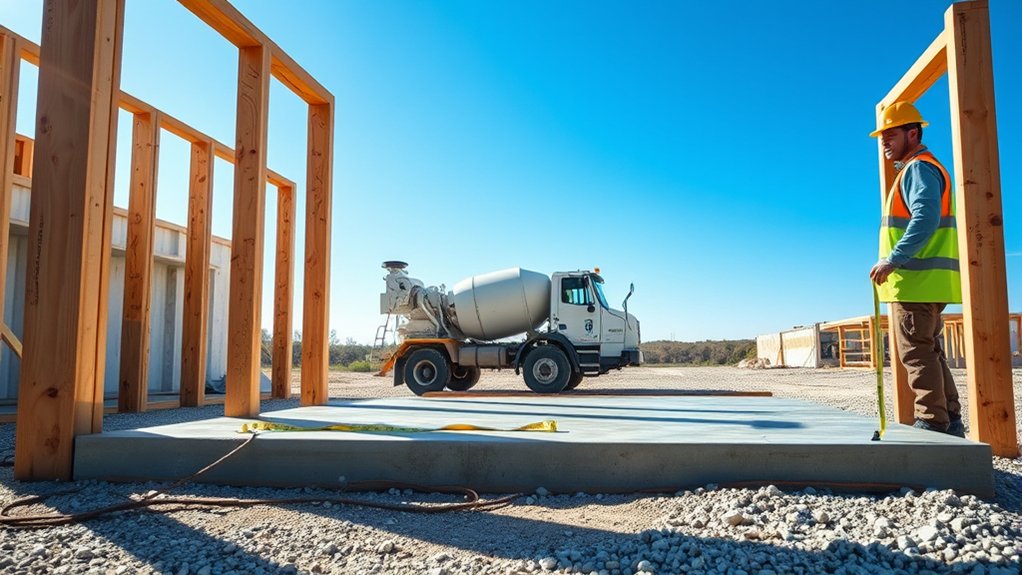
You need to calculate the exact concrete volume by multiplying your project’s length, width, and depth. Then, divide that number by 27 to convert cubic feet to cubic yards. Make sure you use consistent units throughout the process.
It’s a good idea to add about 10% extra for waste, spillage, and site conditions. This helps avoid any shortages on the job. Also, adjust mix ratios carefully to ensure the concrete has the right strength and durability.
Accurately estimating quantities prevents costly errors and delays. Understanding the full process will help you optimize materials and manage your project efficiently. Taking the time to get it right upfront really pays off in the long run.
Quick Formula to Calculate Concrete Volume

To quickly estimate how much concrete you need, multiply the length, width, and depth of your project in feet, then divide the product by 27 to convert cubic feet to cubic yards.
Multiply length, width, and depth in feet, then divide by 27 to get concrete volume in cubic yards.
This quick formula, expressed as Volume (cubic yards) = (Length × Width × Depth) ÷ 27, provides an efficient way to calculate concrete volume with minimal effort.
For example, a slab measuring 10 feet long, 5 feet wide, and 0.5 feet deep requires approximately 0.93 cubic yards of concrete.
Make sure your measurements use feet and include the full depth, such as slab thickness or foundation depth, to maintain accuracy.
This quick formula helps you estimate the quantity of concrete bags or trucks needed before conducting more detailed calculations or placing orders.
It really streamlines project planning and saves you time.
Converting Project Dimensions Into Concrete Volume
Once you have a basic understanding of estimating concrete volume using length, width, and depth, the next step involves accurately converting your project’s dimensions into precise volume measurements.
Start by measuring all dimensions in consistent units, such as feet or meters. Calculate concrete volume by multiplying length × width × depth.
For irregular shapes, break the project into smaller, regular sections. Compute each volume individually, then add them up to get the total concrete volume.
Make sure to carefully verify unit consistency and convert as needed. For example, use the conversion factor 1 cubic yard = 27 cubic feet to guarantee accuracy.
This methodical approach helps prevent errors when ordering. It also ensures you buy the right amount of concrete, avoiding waste or shortage.
Key Factors That Influence Concrete Volume Estimates

Although calculating concrete volume might seem straightforward, several key factors can profoundly influence your estimates. You must consider project dimensions: length, width, and depth, expressed in cubic yards or feet for accurate calculations.
Calculating concrete volume requires precise measurement of project dimensions for accurate and reliable estimates.
Material properties like aggregate size, slump, and air entrainment impact volume due to changes in compaction and void spaces.
Don’t overlook waste from uneven ground or formwork gaps. Adding 5 to 10% ensures you have sufficient concrete.
The water-cement ratio also affects volume since higher water content increases fresh concrete’s bulk.
To achieve accurate calculations, understand unit weights and adjust for environmental or structural requirements.
Factoring these variables systematically will help you avoid shortages or excess, optimizing both material use and project cost efficiency.
Understanding Concrete Mix Ratios and Material Quantities
You need to get a good grasp of how cement-to-aggregate ratios impact the concrete’s strength and how much volume you’ll need. It’s pretty important because these ratios set the foundation for the mix’s performance.
Then, there’s the water-cement relationship — this one directly affects how durable your concrete will be. Getting the right balance here is key to making sure everything holds up over time.
Also, don’t forget about the size of the aggregates. This influences how easy the mix is to work with and changes the total amount of materials you’ll use.
Cement To Aggregate Ratios
Because the cement-to-aggregate ratio directly affects concrete strength and workability, understanding and accurately measuring these proportions is essential for any project. Typically, cement-to-aggregate ratios range from 1:2 to 1:3 by volume, depending on your required strength and application.
Coarse aggregate usually makes up about 60-75% of the total concrete volume, with cement and fine aggregate filling the remainder.
Keeping the right cement-to-aggregate ratios helps ensure consistent mix quality. It also prevents material waste or shortages, which can be a real headache on site.
When you calculate quantities, precise measurement of cement and aggregate is critical to achieving your target strength and durability.
Water Cement Relationship
When designing concrete mixes, understanding the water-cement ratio is essential since it directly influences both strength and durability. Typically ranging from 0.45 to 0.60, this ratio defines the pounds of water per 100 pounds of cement.
For example, a standard 4000 PSI concrete uses a water-cement ratio of about 0.57. If you reduce water content, you increase strength but reduce workability. This often means you’ll need water-reducing admixtures.
On the other hand, adding more water improves fluidity but weakens the final concrete. Precise control over the water-cement ratio guarantees you calculate exact water and cement quantities for your project volume, optimizing concrete performance.
Mastering this relationship is critical for producing durable, strong concrete tailored to your structural requirements. It’s a key factor you don’t want to overlook.
Aggregate Size Impact
Understanding how aggregate size impacts concrete mix ratios is essential for accurately determining material quantities and optimizing mix performance. Larger aggregate sizes, like 3 inches, demand up to 82% coarse aggregate by volume, while smaller 1-inch sizes need about 69%.
Increasing fines in sand reduces coarse aggregate requirements, altering mix ratios and water-cement balance, which affects strength. You must adjust calculations based on aggregate size and sand fineness modulus (about 2.6) for precise material estimation.
| Aggregate Size | Coarse Aggregate % | Effect on Mix |
|---|---|---|
| 3 inch | 82% | Higher coarse content |
| 1 inch | 69% | Lower coarse content |
| Finer sand | 76% (with fines) | Reduced coarse aggregate % |
Aggregate size directly influences mix design and concrete quality. So, keeping these variations in mind helps you get the best results.
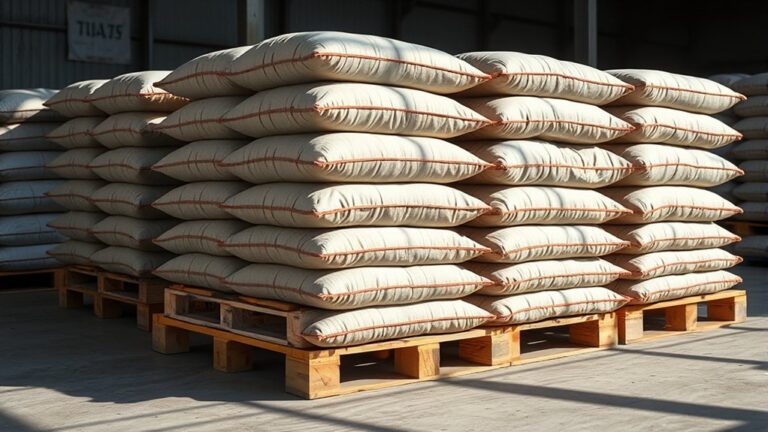
Calculating How Many Cement Bags You Need
You’ll start by estimating the exact amount of cement you need based on your project’s concrete volume and the mix ratio you’ve chosen.
It’s really important to stick with consistent units—like cubic yards or cubic meters—so your calculations stay accurate.
And don’t forget to add an extra 10% to cover any waste or spillage.
That way, you’ll make sure you buy enough cement bags without running short.
Estimating Cement Quantity
Although calculating cement quantity may seem straightforward, it requires precise measurement of your project’s total concrete volume and an understanding of the mix ratio to determine how much cement is needed.
Start by calculating the concrete volume based on your project size, expressed in cubic yards or meters. Using your concrete mix ratio, for example, 1 part cement to 2 parts sand and 4 parts gravel, derive the cement portion within the total volume.
Convert this volume to weight by multiplying by concrete’s density, which is approximately 145 lbs/ft³.
Then, isolate the cement weight from the total based on the mix proportions.
Finally, divide the cement weight by the standard weight of cement bags, usually 50 kg or 94 lbs.
Don’t forget to include a 10% waste factor to guarantee you order enough cement bags for your project.
Measurement Units Importance
How do measurement units affect the accuracy of your cement bag calculations? Precise use of measurement units, whether cubic yards, cubic feet, or metric meters, ensures you determine the exact concrete volume needed.
Misunderstanding or mixing units leads to inaccurate estimates, causing you to overbuy or underbuy cement bags. You must convert units correctly, such as from pounds to cubic yards or inches to meters, to keep your calculations consistent.
Accurate measurement units allow you to calculate concrete volume precisely, which directly dictates the number of cement bags required. Proper unit selection and conversion also uphold consistent mix ratios, which are critical for concrete strength and durability.
Adjusting For Waste
Why should you always add extra cement bags beyond your initial calculation? Adjusting for waste is critical to make sure you have enough material despite spillage, mixing losses, or site conditions.
Typically, you add 10% more cement to your total volume for standard projects.
For complex or large-scale work, increase this by 5-15%, depending on factors like uneven terrain or over-excavation.
Always round up to whole bags since partial bags aren’t practical.
Consider these when adjusting for waste:
- Spillage during mixing and pouring
- Variable site conditions affecting material loss
- Project complexity influencing waste percentage
- Practicality of whole bag increments
Benefits of Accurate Concrete Measurement
When you measure concrete accurately, you prevent material shortages that can delay your project and compromise structural integrity. Accurate measurement lets you calculate the exact amounts of cement, sand, and gravel you need, so you only buy what’s necessary. This avoids costly over-purchasing and cuts down on waste, which helps reduce expenses.
Plus, getting the volume right means you can stick to the correct mix ratios. That’s key for making sure your structure has the strength and durability you want. Using reliable concrete calculators and measurement techniques makes project planning smoother by optimizing how you allocate resources and manage your time.
Avoid These Common Concrete Volume Estimation Mistakes

Accurate concrete measurement sets a solid foundation, but overlooking common estimation errors can still disrupt your project. When estimating concrete volume for a concrete slab, avoid these frequent mistakes:
- Neglecting waste and ground irregularities can lead to underestimation and delays.
- Using inconsistent or incorrect units, like mixing inches with feet without proper conversion, skews calculations.
- Ignoring mix design factors such as slump or aggregate size variations affects volume requirements.
- Failing to include extra material for spillage, formwork absorption, or settling during pouring can cause shortages.
Keep these points in mind, and your concrete project will run much smoother!
How to Get the Most From Your Concrete Volume Calculator
To maximize the utility of your concrete volume calculator, start by measuring your project’s length, width, and depth in consistent units before entering the data.
Input these dimensions carefully to ensure accurate conversion into cubic yards, which is essential for precise volume estimation.
Carefully input dimensions for accurate cubic yard conversion and precise concrete volume estimation.
Always add about 10% extra volume to account for spillage, uneven ground, and waste during pouring.
Double-check your entries to avoid underestimating concrete needs, preventing costly project delays.
Familiarize yourself with additional calculator features for estimating materials like rebar, formwork, and mortar, optimizing your overall project planning.
By applying these technical steps, you’ll enhance accuracy and efficiency.
This way, you’ll ensure you order the correct concrete quantity and manage resources effectively throughout your project.
It really helps keep everything running smoothly!
Frequently asked questions
What Is the Best Time of Day to Pour Concrete?
The best time of day to pour concrete is early morning or late afternoon when temperatures are cooler, typically between 50°F and 75°F. You’ll want to avoid the midday heat because it speeds up evaporation, which can cause cracks and weak bonds.
Pouring during mild, stable weather conditions is key for proper hydration and strength development.
Also, try to stay away from windy or rainy times since they mess with curing and the surface quality.
Timing your pour like this really helps get the most out of your concrete’s performance. It’s all about giving the concrete the best chance to set up strong and smooth.
How Does Weather Affect Concrete Curing Times?
Think of concrete curing like baking bread: if the oven’s too hot, it bakes too fast and might burn. If it’s too cold, it barely rises.
Similarly, high temperatures speed up curing, which can cause cracks.
On the other hand, cold slows hydration, making curing take longer and weakening the concrete’s strength.
Humidity plays a role too because it affects moisture loss. If it’s too dry, curing can actually stop.
That means you’ll need to adjust curing times and mix designs depending on the weather.
Using protective measures is also important to make sure your concrete gains proper durability no matter what the conditions are.
Can I Use Recycled Concrete in My Mix?
Yes, you can use recycled concrete in your mix, but you’ll need to adjust your proportions carefully. The residual cement paste in recycled aggregates increases water absorption, which affects workability and strength.
Make sure the recycled material is properly crushed, screened, and free of contaminants like wood or asphalt.
Testing is essential to determine the ideal water and cement content. This way, your mix maintains durability and performance while promoting sustainability.
What Safety Gear Is Recommended for Concrete Work?
Think of safety gear as your concrete armor. You’ll need waterproof gloves to shield your skin from alkaline burns, safety goggles to block dust and splashes from your eyes, and a dust mask or respirator to protect your lungs from fine cement particles.
Long-sleeved shirts and pants help prevent skin irritation.
Steel-toed boots safeguard your feet against heavy materials and dropped tools. Wearing this gear really helps minimize injury risks during concrete work.
How Long Should Concrete Cure Before Heavy Use?
You should let concrete cure for at least 28 days before subjecting it to heavy use. Although it gains about 70% of its strength within 7 days, the full curing period ensures maximum load-bearing capacity and durability.
During this time, maintain proper moisture and temperature to prevent cracking and guarantee ideal strength. Using methods like moist curing or plastic covers will help you achieve a reliable, long-lasting concrete surface.
Just keep an eye on it and make sure conditions stay right.
Final Thought
Now that you’ve mastered calculating concrete volume, think of your project as building a solid foundation like a skilled architect. Precise measurements and understanding mix ratios guarantee your structure stands firm, avoiding costly errors.
Just as a navigator charts the exact course, you too can steer your project to success by accurately estimating material needs. With this knowledge, you’re equipped to pour concrete confidently and efficiently.
You’ll save time, money, and resources along the way. It’s all about being prepared and getting those details right from the start.
More Quantities & Weights Guides
- How Much Concrete per Fence Post
- How Much Does a Concrete Block Weigh
- How Much Does a Pallet of Concrete Weigh
- How Much Does a Yard of Concrete Cover
See all Quantities & Weights guides · All concrete resources
Need Concrete in Greater Cleveland?Tri County Concrete delivers ready mix from plants in North Royalton and Twinsburg, Ohio. Request a quote or call 440-582-1100.