How Wide Is A Concrete Truck – Guide
A concrete truck typically measures between 8 and 9 feet (2.4 to 2.7 meters) wide, including mirrors. Width can vary based on truck design, regional regulations, and site requirements.
Standard trucks usually stay within 8.5 feet to comply with legal limits, but specialized or narrower models exist for tight urban access. Wider trucks often need permits and additional safety measures.
Understanding these dimensions helps guarantee efficient delivery and safe maneuvering. Exploring further reveals how width impacts planning and compliance.
Typical Concrete Truck Widths
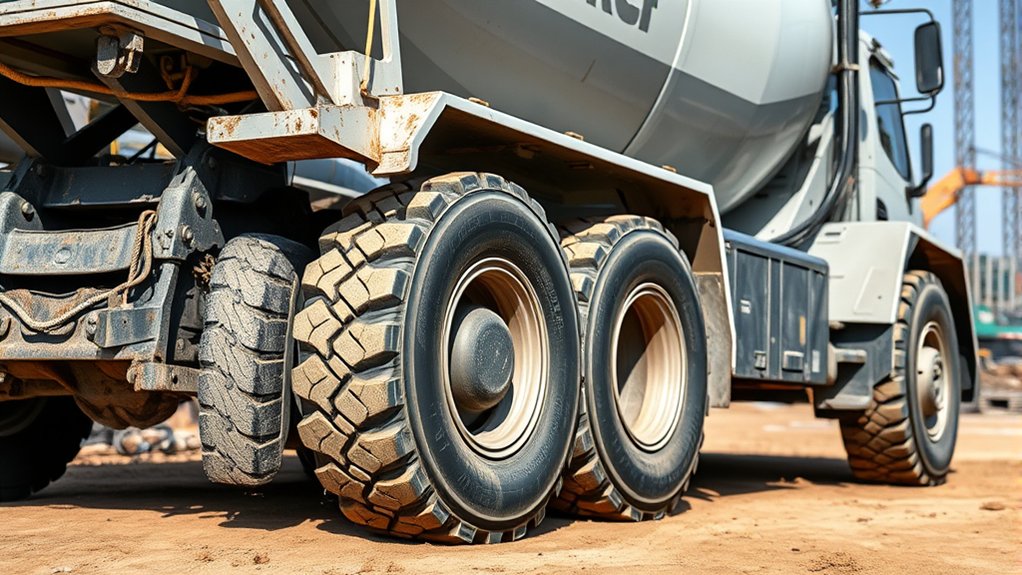
While concrete trucks come in various sizes, you’ll typically find their widths range between 8 and 10 feet (2.4 to 3 meters). The typical concrete truck widths for standard mixer trucks measure around 8.5 feet (2.6 meters), inclusive of mirrors and essential safety equipment.
Concrete trucks usually range from 8 to 10 feet wide, with standard mixers around 8.5 feet including mirrors.
These dimensions are characteristic of most construction machinery used in concrete transport.
However, the width can vary based on the truck’s model, manufacturer, and design modifications. Specialized narrower trucks can measure as little as 7.5 feet (2.3 meters) to navigate confined urban environments.
Understanding these typical concrete truck widths is vital for planning logistics and site access. It helps ensure equipment compatibility and optimizes operational efficiency in construction projects.
How Road Regulations Limit Concrete Truck Widths
Knowing the typical widths of concrete trucks helps you understand why road regulations strictly limit their maximum width. These regulations guarantee safe transit in diverse environments and prevent infrastructure damage. Specifically, you should consider:
Standard concrete trucks usually mustn’t exceed 8.5 feet (2.6 meters) in width under most road regulations. Some jurisdictions allow widths up to 10 feet (3 meters) but require special permits for oversized vehicles.
Urban areas typically enforce stricter width limits than rural areas, reflecting the challenges of narrower roads, bridges, and tunnels.
Adhering to these width limits safeguards traffic flow and infrastructure integrity. You must comply with local road regulations to avoid fines, delays, and transportation hazards when operating or transporting concrete trucks.
Width Differences Between Standard and Specialty Mixer Trucks

How do the widths of standard and specialty concrete mixer trucks differ, and why does it matter? Standard concrete mixer trucks typically measure between 8 to 9 feet wide (2.4 to 2.7 meters). They accommodate a full-sized drum suitable for most construction projects.
Specialty or compact mixer trucks, designed for urban or constrained sites, are narrower, ranging from 7 to 8 feet wide (2.1 to 2.4 meters). This reduced width helps them access tight spaces without compromising the mixing drum’s functionality.
In contrast, some wide mixer trucks exceed 9 feet and often require special transport permits because of their size. Manufacturers customize widths to balance drum capacity with site-specific constraints. This way, they ensure compliance with regulations while optimizing operational efficiency.
Knowing these width differences makes it easier to pick the right concrete mixer truck for your project needs.
How Concrete Truck Width Affects Site Access and Maneuverability
Because concrete truck width directly influences site access, you need to carefully consider vehicle dimensions when planning deliveries. The typical concrete truck width ranges from 8 to 8.5 feet, which can restrict maneuverability in confined spaces. Narrower trucks, around 7 feet wide, are designed for sites with limited access.
You should focus on these three critical aspects:
- Site Access Constraints: Wider trucks require ample clearance, which affects entry through narrow gates or roads.
- Turning Radius: Increased width means larger turning radii, making navigation in tight areas more complicated.
- Delivery Efficiency: Limited site access due to truck width can increase delivery times and add to operational complexity.
Understanding concrete truck width helps ensure safe and efficient movement on-site. This way, you can minimize delays and avoid damage to infrastructure or vehicles.
Key Factors for Choosing the Right Concrete Truck Width
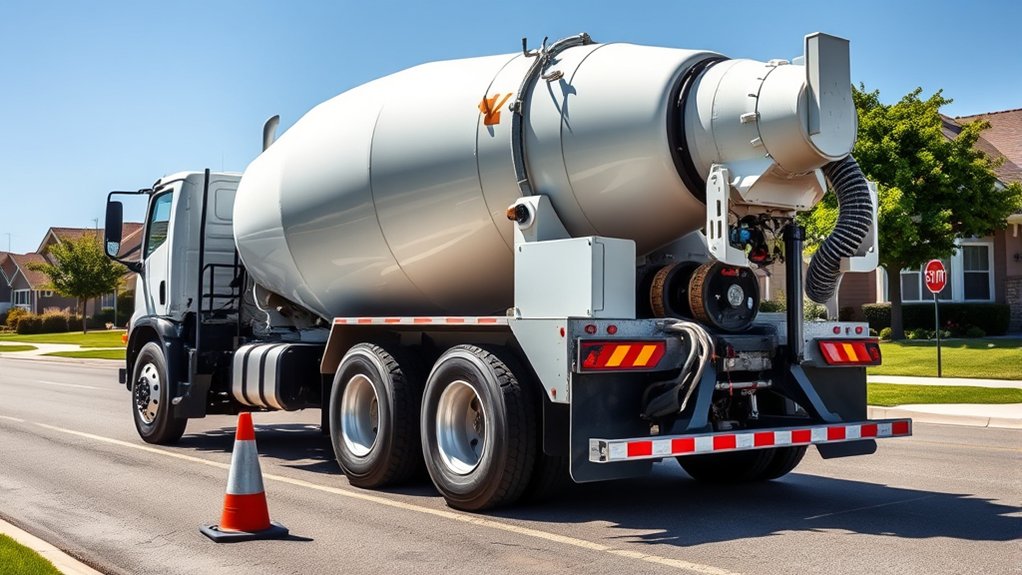
When you’re choosing the right width for a concrete truck, it’s important to take a close look at the site access constraints. You want to make sure the vehicle can comfortably fit within the available space.
Next, think about how easy it will be to maneuver the truck around the roads and work areas. This can make a big difference in how smoothly your operation runs.
And of course, don’t forget to keep an eye on regulatory width limits. Staying within those rules is key to keeping everything safe and compliant.
Site Access Constraints
Although concrete trucks come in various widths, selecting the right size depends a lot on site access constraints like narrow roads, low-clearance bridges, and tight turns. You really need to check the truck width against these limits to avoid access problems and delivery delays.
Think about these key site access factors:
- Road width: Standard trucks are about 8 to 8.5 feet wide. But narrower trucks, around 7.5 feet, work better in tight urban spots.
- Bridge clearance: Low-clearance structures can restrict taller or wider vehicles, so that affects which truck you choose.
- Turning radius: When turns are tight, narrower trucks make it easier to maneuver safely without causing damage or blocking the way.
Vehicle Maneuverability Needs
Considering vehicle maneuverability is essential when choosing the right concrete truck width, as it directly impacts your ability to navigate site constraints safely and efficiently. The standard width ranges from 8 to 10 feet, with narrower trucks around 8 feet preferred for tight urban environments and restricted access routes.
While wider trucks exceeding 10 feet provide increased capacity, they often compromise maneuverability in confined spaces. You need to evaluate not only the truck’s width but also its turning radius and clearance requirements around obstacles.
Selecting the appropriate width demands balancing site accessibility, operational safety, and load capacity. Prioritizing vehicle agility ensures you maintain control and avoid delays or accidents, which helps optimize performance on varied construction sites.
Regulatory Width Limits
Vehicle maneuverability is closely tied to regulatory width limits that concrete trucks must adhere to on public roads. These limits typically range from 8 to 8.5 feet (2.44 to 2.6 meters), ensuring safe transit without special permits.
When selecting the right concrete truck width, consider these key factors:
First, the maximum allowable width for highway transport is usually capped at 8.5 feet to avoid additional permits.
Then, there are road infrastructure constraints, including bridge clearances and lane widths that influence permissible dimensions.
Also, local traffic laws may impose stricter limits or require escort vehicles for wider trucks.
Manufacturers design concrete trucks within these parameters to maintain compliance and facilitate maneuverability across jurisdictions. This ensures efficient and lawful operation wherever the trucks travel.
How Truck Width Influences Transportation and Delivery Costs
When you select a concrete truck, its width plays a crucial role in transportation and delivery costs. Truck width influences route accessibility, as wider trucks, typically 8 to 9 feet, may require special permits and adherence to local regulations. This often increases transportation expenses due to additional safety measures and potential escort vehicle requirements.
Truck width affects route access and costs, with wider trucks needing permits and extra safety measures.
On the other hand, narrower trucks improve maneuverability in tight areas, but they might limit capacity or equipment options. That can impact delivery efficiency.
So, balancing truck width with site and route conditions helps you optimize logistical expenses.
In the end, carefully evaluating truck width in relation to delivery demands and regulatory constraints ensures cost-effective transportation while keeping operations running smoothly. It’s all about finding the right fit for your specific needs.
Planning Site Access for Concrete Trucks
You need to take a close look at the roadway dimensions to make sure the concrete truck can get in and out of the site smoothly.
It’s important to measure the access routes and spot any obstacles that might get in the way.
If you don’t consider these details, it could lead to delivery delays and slow down the whole operation.
Assessing Roadway Dimensions
Although concrete trucks typically measure between 8 and 8.5 feet in width, including mirrors and safety features, planning site access means you need to guarantee at least 10 feet of clearance for safe maneuvering.
Evaluating roadway dimensions is critical to prevent delivery delays or damage.
When you’re checking site access, keep a few key things in mind:
- Measure the exact truck width and make sure roadway dimensions exceed 10 feet to handle turns and safety margins.
- Confirm entrances and narrow roadways are wider than 12 feet; if not, you might need specialized compact mixer trucks.
- Verify overhead clearance is at least 14 feet so trucks don’t hit power lines or tree branches.
Getting roadway dimensions right helps ensure smooth, safe concrete truck access and delivery success.
Navigating Site Constraints
Since site constraints can markedly impact concrete truck access, precise planning is essential to navigate narrow or restricted spaces effectively. You must measure all access routes carefully, considering the typical concrete truck width of 8 to 9 feet, plus any extra equipment or obstacles.
In areas with narrow roads or tight urban sites, you should opt for smaller, specialized mixer trucks designed for such conditions. Also, check if your concrete truck model features foldable or retractable side mirrors and chutes, as these can reduce overall width during transport.
Knowing your truck’s exact width helps you anticipate and avoid access issues, which can save you from costly delays. By addressing these site constraints ahead of time, you’ll ensure efficient, safe concrete delivery and keep your project running smoothly.
Comparing Concrete Truck Widths by Region
When comparing concrete truck widths across regions, you’ll notice that variations primarily stem from differing road regulations and infrastructure standards. Understanding these regional differences is essential for logistics and equipment planning.
Regional road rules and infrastructure shape concrete truck widths, crucial for effective logistics and planning.
In the United States, concrete truck widths typically range from 8 to 8.5 feet (2.44 to 2.59 meters), adhering to federal and state regulations.
European concrete trucks maintain similar widths, generally between 2.4 and 2.6 meters, but specific countries enforce unique regional regulations affecting truck dimensions.
Asian markets, particularly Japan and China, favor narrower trucks, around 2.4 to 2.5 meters, to navigate tighter urban roads. This reflects distinct infrastructure constraints.
These variations in concrete truck widths emphasize how regional regulations directly impact vehicle design and operational efficiency worldwide. It’s interesting to see how rules shape the way trucks are built and used in different parts of the world.
Safety Considerations Related to Concrete Truck Width
When you’re operating a concrete truck, it’s important to follow road safety regulations that set minimum clearance requirements. This helps prevent collisions and keeps everyone safe.
You’ll often run into challenges with site access, especially if the truck is wider. Narrow roads and tight spaces mean you really have to plan carefully around the truck’s width.
Making sure you stick to these standards isn’t just about safety—it’s also about avoiding any legal issues that could slow down your work.
Road Safety Regulations
Although concrete trucks vary in size, road safety regulations strictly limit their width to guarantee safe operation on public roads. These width regulations help prevent accidents and assure smooth traffic flow.
As a driver or operator, you must understand the following key points:
- Maximum width limits typically cap at 2.55 meters (8 feet 4 inches), but some regions allow up to 3 meters for specific equipment.
- Trucks exceeding standard widths require special permits, escort vehicles, and must display proper signage and lighting to alert other road users.
- Adherence to width regulations is essential to avoid infrastructure damage, traffic violations, and safety hazards.
Site Access Challenges
Because concrete trucks typically measure between 8 and 10 feet in width, you need to carefully assess site access constraints to prevent operational hazards. In construction, narrow or restricted site access routes demand thorough planning. Overly wide trucks risk collisions with obstacles or infrastructure, especially in confined spaces.
You should verify that access points accommodate the truck’s width. It’s also a good idea to consider using smaller mixers for tight urban environments.
| Challenge | Solution |
|---|---|
| Narrow alleyways | Use specialized smaller trucks |
| Limited clearance | Measure and confirm access |
| Uneven or congested terrain | Plan for maneuverability |
Prioritizing these factors helps ensure safe, efficient concrete delivery while reducing risks to operators and workers on site. Taking the time to plan ahead really pays off.
Future Trends in Concrete Truck Width and Design Optimization
As urban construction sites demand greater maneuverability, concrete truck manufacturers are optimizing width through innovative chassis and drum designs that reduce overall size by up to 10%. You’ll find that design optimization focuses on maintaining drum capacity while minimizing truck width to navigate tight spaces efficiently.
Key future trends include:
Key future trends focus on narrower, compliant, and modular concrete trucks for enhanced urban construction efficiency.
- Utilization of lightweight materials and compact engineering to develop narrower trucks without sacrificing drum capacity or performance.
- Compliance with evolving regulatory standards and zoning laws, driving manufacturers to create models suitable for congested urban environments.
- Integration of modular components enabling adjustable widths tailored to specific project needs, enhancing operational versatility.
Frequently asked questions
How Does Concrete Truck Width Impact Loading Times?
Concrete truck width directly impacts your loading times by influencing maneuverability within confined spaces. If your truck is wider, you’ll face challenges accessing tight site entry points, which can slow loading and cause delays.
On the other hand, narrower trucks let you position the mixer more efficiently, making loading and unloading smoother.
Can Concrete Truck Width Affect Mixing Quality?
No, the width of a concrete truck doesn’t directly affect mixing quality. You’ll find that mixing efficiency depends primarily on the drum’s design, rotation speed, and engine power.
However, if a truck is excessively wide or narrow, stability issues could arise. This might compromise operational safety and indirectly impact mixing.
Standard-width trucks optimize both mixing performance and site accessibility. They ensure consistent concrete quality without width-related mixing concerns.
Are There Special Permits for Oversized Concrete Trucks?
Yes, you need special permits for oversized concrete trucks. These permits regulate your vehicle’s width, height, and weight to ensure compliance with transportation laws. You’ll submit detailed dimensions and load information, and may have to pay fees.
Also, certain routes, travel times, and escort vehicle requirements might apply. Always verify local and state regulations before transport to avoid penalties and ensure safety during transit. It’s better to be prepared than face unexpected issues on the road.
How Do Weather Conditions Influence Truck Width Performance?
Weather conditions directly impact your concrete truck’s effective width performance by influencing maneuverability and stability. Snow, ice, and rain reduce traction, so you’ll need wider clearance to prevent slipping or skidding on narrow roads.
Wind affects balance and steering, which means you have to manage the truck’s width more precisely to stay safe. In extreme weather, you might need specialized trucks with enhanced stability.
Or you may have to adjust your driving techniques to keep things under control.
Either way, the goal is to ensure safe navigation while maintaining operational efficiency, even when conditions aren’t ideal. It’s all about adapting to what the weather throws at you.
What Maintenance Challenges Relate to Wider Concrete Trucks?
Like Sisyphus with his boulder, you face ongoing challenges maintaining wider concrete trucks. You’ll encounter increased suspension and steering wear due to uneven load distribution, requiring frequent inspections.
Tires and axles endure accelerated wear, so you’ll need to replace them regularly to avoid failures. Structural fatigue risks rise, especially on rough terrain. That means you have to keep a close eye on things and reinforce parts when needed.
All these factors combine to make maintenance more complex and costly. This is especially true for specialized components like wider drums and chassis. It’s definitely a balancing act to keep everything running smoothly.
Final Thought
When selecting a concrete truck, you must weigh width carefully, as it directly impacts site access, maneuverability, and compliance with road regulations. Understanding the differences between standard and specialty mixers guarantees you won’t be caught between a rock and a hard place during project execution.
By staying informed on regional variations and safety standards, you’ll optimize efficiency and safety. This also prepares you to adapt to future trends in concrete truck design with confidence and precision.
More Quantities & Weights Guides
- How Many Bags of Concrete Do I Need
- How Many Bags of Concrete in a Yard
- How Many Bags of Concrete on a Pallet
- How Many Concrete Blocks on a Pallet
See all Quantities & Weights guides · All concrete resources
Need Concrete in Greater Cleveland?Tri County Concrete delivers ready mix from plants in North Royalton and Twinsburg, Ohio. Request a quote or call 440-582-1100.