What Is Concrete – Here’s the Answer
Concrete is a strong, durable composite you make by mixing cement, water, and aggregates like sand or gravel. When water contacts cement, a chemical process called hydration begins, hardening the mix over time.
Quality ingredients, proper proportions, and curing methods guarantee it gains strength and resists cracking. Reinforcement like steel helps handle stress and shrinkage.
Understanding these factors is key if you want long-lasting concrete suited for your project’s conditions. It’s all about getting the mix and care just right.
What Concrete Is Made Of: And Why It Matters
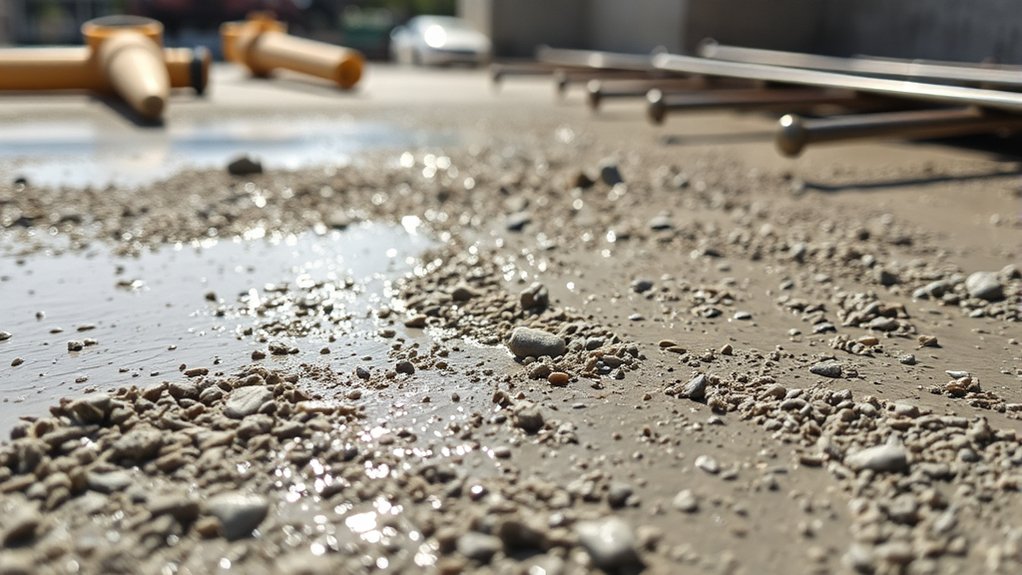
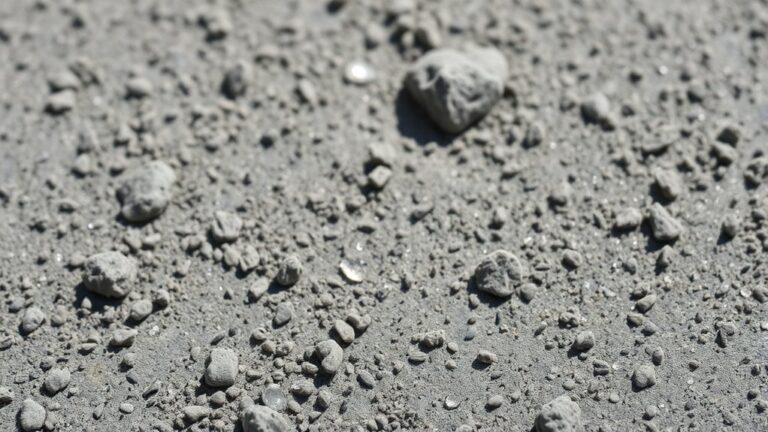
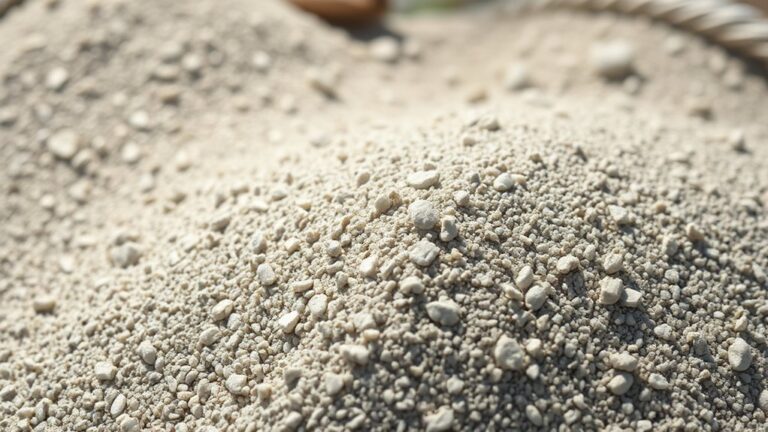
Concrete consists mainly of cement, water, and aggregates such as sand, gravel, or crushed stone. Sometimes, admixtures are added to improve performance.
When you mix these components, the cement acts as a binder and starts a chemical reaction called hydration. This reaction causes the concrete to harden and gain strength.
The quality and proportions of each ingredient directly affect the concrete’s strength, durability, and workability. Understanding concrete’s composition helps you choose the right materials and mix design.
That way, you can make sure it holds up against environmental stresses like freeze-thaw cycles, salt exposure, and heavy loads.
Controlling the mixture’s components precisely is key to getting the best performance for specific construction needs.
How Concrete Hardens And Why It Matters
Although the hardening process begins as soon as water contacts cement, the full strength of the mixture develops over weeks through hydration, a chemical reaction that forms strong crystalline bonds. You need to understand that hydration governs concrete’s strength gain and durability.
Factors like temperature, water-cement ratio, and mix composition influence the hydration rate and, consequently, the hardening speed.
The initial set typically occurs within hours, but concrete achieves its design strength only after several weeks of proper curing. Maintaining adequate moisture during curing guarantees complete hydration.
This prevents premature drying, which can weaken the final structure.
Why Site Preparation Is Key To Strong Concrete
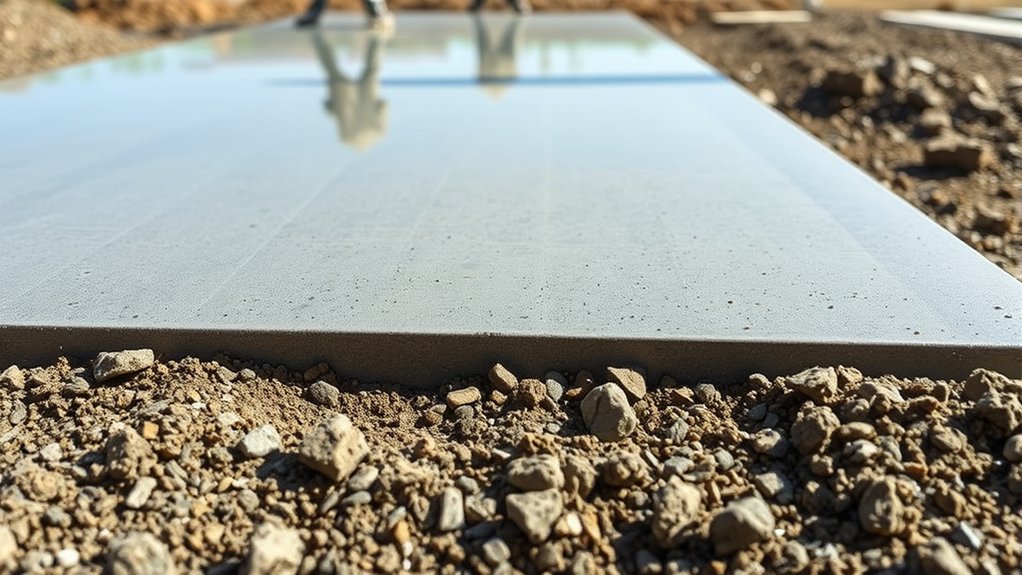
Three critical steps in site preparation directly impact the strength and durability of your concrete slab: soil evaluation, compaction, and leveling.
First, examining the soil helps you identify soft or loose areas that could cause uneven settling and tension cracks.
Next, proper compaction creates a stable, dense base, preventing future structural issues.
Finally, leveling ensures an even surface, which supports uniform load distribution.
Skipping or rushing site preparation risks instability, leading to cracks and costly repairs that delay your project.
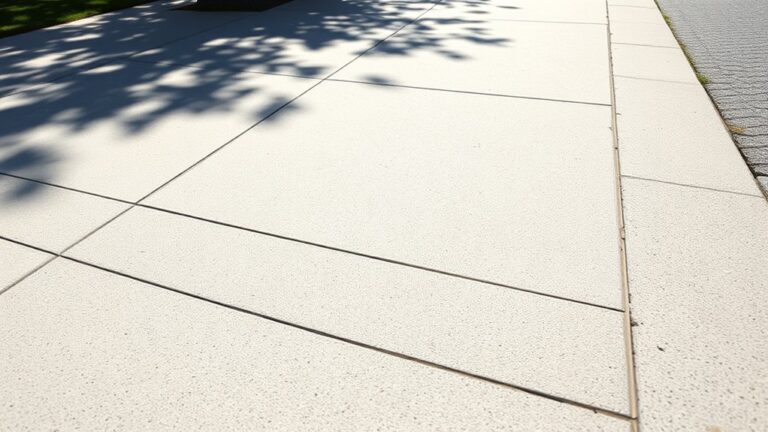
By investing in thorough site preparation, you establish a solid foundation that enhances concrete’s longevity and maintains its structural integrity for decades.
Why Concrete Cracks And How Reinforcement Helps
You’ll notice that concrete tends to crack mainly because it shrinks as it cures, faces structural stresses, and goes through temperature changes. These factors put a lot of strain on the material.
That’s where reinforcement comes in. When you use steel mesh or bars, they help counteract the tensile forces that usually cause those cracks.
Basically, the reinforcement spreads out the loads more evenly and gives the concrete extra tensile strength.
Common Concrete Cracking Causes
When concrete cures, it shrinks as water evaporates and reduces volume, which often leads to cracking. Cracks also form under structural load stresses when the concrete can’t withstand applied forces. Temperature fluctuations cause concrete to expand and contract repeatedly, creating cracks over time.
Moreover, poor mixing or improper placement techniques introduce weaknesses, which develop into cracks as the material settles and cures. These common causes highlight how cracks are inevitable without proper control measures.
Understanding these factors is essential for identifying vulnerabilities in concrete structures. By knowing these causes, you can implement strategies to minimize crack formation. This helps ensure durability and performance throughout the concrete’s service life.
Taking the right steps early on makes all the difference in maintaining strong concrete structures.
Role Of Reinforcement
Why does concrete crack under tension, and how can reinforcement prevent this? Concrete inherently lacks tensile strength, so when tension stresses go beyond what it can handle, cracks start to form.
Reinforcement, usually steel mesh or rebar, helps spread these tensile forces evenly, reducing those stress spots that cause cracks.
By putting reinforcement inside the concrete, you make it more ductile. That means it can bend a little without cracking when it’s under load. But here’s the thing: the reinforcement has to be placed just right. If it’s not, it won’t do much to control cracks or make the concrete last longer.
Reinforced concrete doesn’t just handle structural stresses better, it also stands up to environmental factors that would speed up deterioration. So, reinforcement is key to making concrete last longer by fighting tension cracks and keeping the structure solid over time.
Preventing Cracks Effectively
Understanding how reinforcement controls cracks leads directly to methods that prevent them effectively. Concrete cracks mainly due to shrinkage during curing, which you can minimize by incorporating proper reinforcement.
Steel reinforcement, such as mesh or bars, distributes tensile stresses evenly, preventing crack initiation and propagation by providing the tensile strength concrete lacks.
To enhance this effect, ensure the concrete mix design includes adequate cement content and air entrainment, reducing shrinkage potential.
Moreover, correct placement of reinforcement and meticulous curing techniques improve the bond between concrete and steel, further mitigating cracking risks.
How To Choose The Best Concrete Mix
You’ll want to match your concrete mix’s strength to the load it has to bear. Usually, aiming for at least 4,000 psi works well for exterior slabs.
Reinforcement is really important too—it helps control cracking and boosts the overall strength of the structure.
Plus, adjusting the mix with air entrainment and picking the right aggregates makes sure your concrete stays durable no matter the climate.
Mix Strength Considerations
Although selecting the right concrete mix might seem straightforward, choosing the appropriate strength requires careful consideration of your project’s load demands, environmental exposure, and durability needs. Mix strength considerations primarily hinge on compressive strength (psi), cement content, and additives like air entrainment for freeze-thaw resistance.
For exterior slabs, a 4,000 psi mix is typical, while demanding applications may require a six-bag mix exceeding 6,000 psi. Properly proportioned mixes combined with quality workmanship ensure the concrete attains its intended performance.
| Application | Compressive Strength (psi) | Key Consideration |
|---|---|---|
| Residential slabs | 3,000 – 4,000 | Standard durability |
| Exterior slabs | 4,000+ | Weather and load resistant |
| Heavy-duty pavements | 5,000 – 6,000+ | High strength requirement |
| Cold climates | 4,000+ with air entrainment | Freeze-thaw durability |
Reinforcement Importance
Since concrete is inherently strong in compression but weak in tension, reinforcing it with steel mesh or rebar is essential to enhance its tensile strength and minimize cracking. You should select reinforcement based on the structural demands and environmental conditions. Proper reinforcement distributes tensile loads evenly, reducing stress concentrations that cause fractures.
For exterior slabs in cold climates, combining reinforcement with a six-bag mix rated at 4,000 psi improves resistance to freeze-thaw cycles. Increasing cement content beyond 6,000 psi further boosts compressive strength and durability.
Moreover, incorporating air entrainment creates microscopic air pockets that alleviate internal pressure from ice expansion.
Selecting the right reinforcement and mix composition ensures your concrete maintains integrity, resists cracking, and endures environmental stresses over time. It’s all about matching materials to the conditions your structure will face. That way, your concrete stands strong for years to come.
Climate Adaptation Techniques
When choosing the best concrete mix for your project, consider how climate factors like temperature and moisture impact curing and durability. Employ climate adaptation techniques by selecting mixes with air entrainment to improve freeze-thaw resistance in cold environments.
Opt for higher cement content, such as a six-bag mix rated at 4,000 psi, to enhance strength amid variable weather.
Incorporate water reducers to maintain workability without adding excess water, which helps minimize cracking risks. Adjust mix proportions based on local moisture and temperature fluctuations to guarantee optimal hydration and strength gain.
Furthermore, choose admixtures tailored to environmental conditions, extending concrete lifespan in extreme climates.
How To Pour And Finish Concrete Correctly
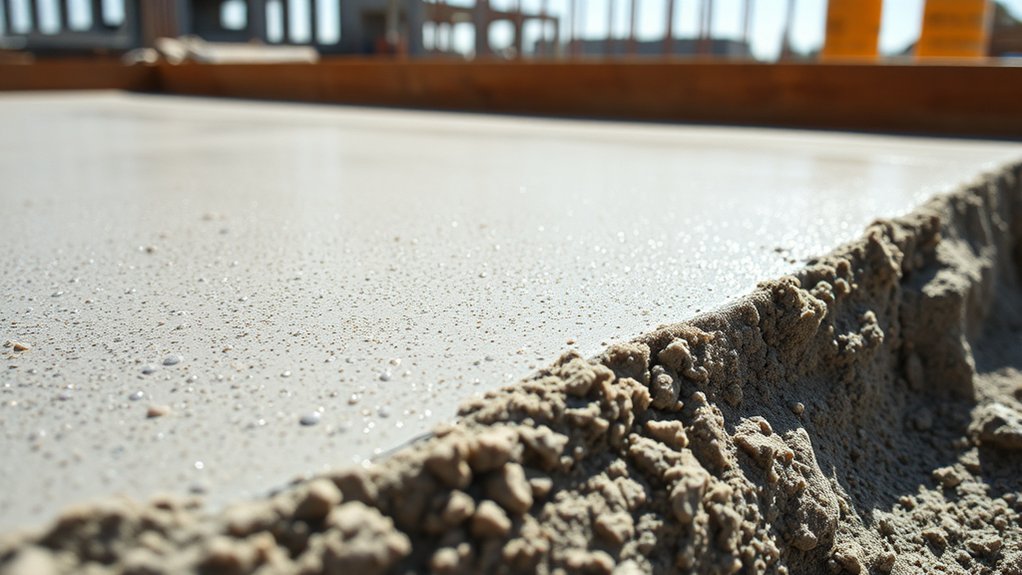
If you want your concrete to achieve maximum strength and durability, you need to pour it in layers and use vibration to eliminate air pockets effectively. When working on a concrete slab, precise pouring and finishing are critical. Follow these key steps:
Pour concrete in controlled layers to avoid segregation. Use a vibrator to compact each layer fully, removing trapped air.
Pour concrete in layers and vibrate each to eliminate air pockets and prevent segregation.
Perform screeding immediately after pouring to level the surface.
Trowel carefully without overworking to prevent surface weakness. Time finishing steps to avoid laitance and guarantee a strong top layer.
Taking these steps will help ensure your concrete lasts longer and performs better.
How Proper Curing Boosts Concrete Strength And Durability
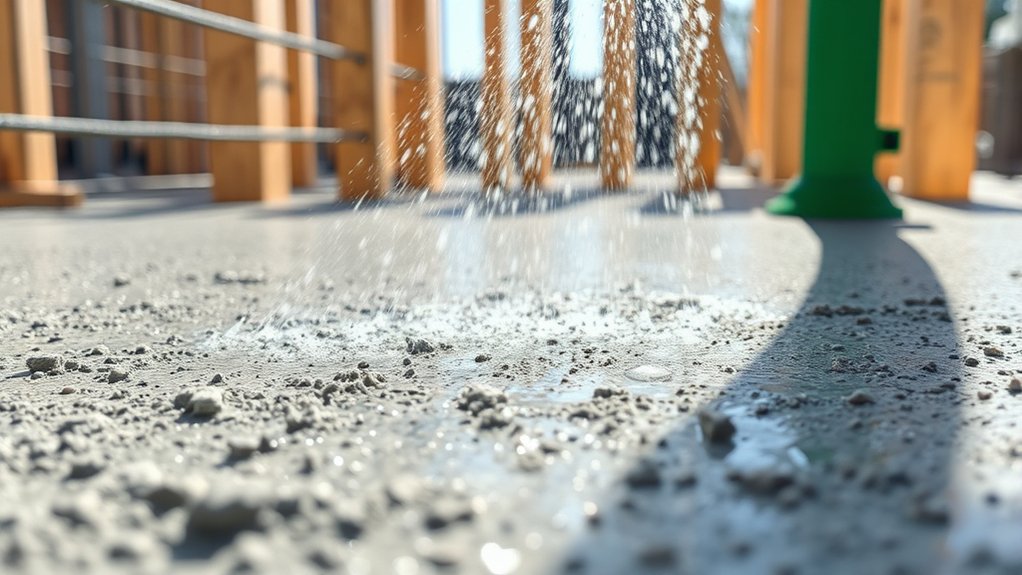
Although pouring and finishing set the foundation, curing plays a crucial role in maximizing concrete’s strength and durability. Proper curing maintains moisture, enabling continuous hydration that boosts compressive strength and long-term durability. Insufficient curing causes surface cracks and weakens the concrete’s resistance to environmental stress.
You should cure concrete for at least 7 days using methods like moist coverings or spray-on agents to prevent water evaporation and guarantee ideal hydration.
| Curing Method | Benefit |
|---|---|
| Moist coverings | Maintains surface moisture |
| Spray-on agents | Reduces water loss |
| 7+ days duration | Maximizes compressive strength |
| Proper moisture | Enhances durability |
Common Causes Of Concrete Cracks And How To Avoid Them
Because concrete undergoes shrinkage during curing, cracks often develop if moisture levels aren’t properly maintained. You can prevent these cracks by controlling the curing environment and using the right techniques.
Common causes of concrete cracks include inadequate moisture retention leading to shrinkage cracks, structural load stress and temperature changes causing tension cracks, and poor mixing or placement creating weak points prone to cracking.
Other causes are insufficient reinforcement like missing rebar or steel mesh, and rapid surface drying causing surface cracks due to evaporation.
To avoid cracks, make sure moisture is consistent during curing. Also, apply adequate reinforcement and control temperature variations.
Using skilled workmanship during mixing and placement is important too. When you address these factors, you reduce crack formation and improve concrete integrity.
How To Make Your Concrete Last For Decades
When you want your concrete to last for decades, start with proper site preparation. This includes thorough soil compaction to prevent tension cracks.
Next, use appropriate reinforcement like steel mesh or rebar to resist tensile stresses that cause cracking over time.
Incorporate steel mesh or rebar reinforcement to effectively combat tensile stresses and prevent cracking.
Make sure the concrete mix maintains ideal ratios, especially controlling the water content. This helps enhance strength and minimize surface fissures.
After pouring, apply consistent curing methods by keeping the concrete moist for at least seven days. This step really boosts durability.
Avoid workmanship errors during finishing and follow correct installation practices carefully. These factors have a big impact on long-term performance.
Frequently asked questions
What Are the Environmental Impacts of Concrete Production?
You face significant environmental concerns with concrete production, mainly because it releases a lot of carbon dioxide from limestone calcination and energy-intensive processes.
Extracting raw materials can harm habitats and deplete natural resources. Plus, cement manufacturing uses a huge amount of energy, which adds to greenhouse gas emissions and air pollution.
But there are ways to reduce these impacts. For example, using supplementary cementitious materials like fly ash and slag can help.
Also, new innovations like carbon capture and alternative binders are making concrete production more sustainable.
How Is Concrete Recycled or Disposed of Responsibly?
When concrete reaches its twilight, you can breathe new life into it using recycling methods like crushing it into recycled concrete aggregate (RCA). You’ll transport it to specialized facilities where advanced equipment separates debris, ensuring efficient reuse in fresh construction.
If the concrete’s compromised, follow local disposal rules carefully to avoid environmental harm. This responsible approach conserves resources and minimizes landfill impact.
Making your concrete’s afterlife both practical and eco-conscious is easier than you might think.
Can Concrete Be Colored or Textured for Decorative Purposes?
Yes, you can achieve color customization in concrete using integral pigments, stains, or dyes. These methods allow you to tailor the hue precisely to your design needs.
Moreover, you can apply texturing techniques like stamping or brushing to enhance surface aesthetics.
Proper surface preparation and sealing help maintain the decorative finish’s durability.
This approach lets you create visually striking, flexible designs that mimic natural materials while ensuring long-lasting performance. It’s a great way to add personality and style to your concrete surfaces.
What Innovations Are Improving Concrete Sustainability?
You’re seeing concrete sustainability improve through green additives like fly ash and slag, which replace traditional cement, cutting CO2 emissions. You can also use recycled aggregates to conserve resources and reduce waste.
Innovations in low-carbon binders, such as geopolymers, further lower greenhouse gases. Plus, admixtures enhance durability, extending concrete’s life.
Carbon capture technology during production reduces its carbon footprint.
These advancements make your concrete choices much greener. It’s pretty exciting to see how these changes are shaping a more sustainable future for construction.
How Does Concrete Compare to Other Building Materials in Cost?
You’ll find that concrete generally costs 30-40% less per cubic yard than steel or wood, making it a strong contender in cost comparison.
While its initial material cost is low, adding reinforcement and finishing can increase expenses.
However, concrete’s durability means you’ll spend less on maintenance over time compared to materials prone to corrosion or decay.
This balance gives you a cost-effective, long-lasting building solution with minimal upkeep.
Final Thought
Now that you know concrete’s composition and curing process, you’re better equipped to guarantee its strength and durability. Did you know that properly cured concrete can reach up to 90% of its strength within seven days?
By preparing your site carefully, choosing the right mix, reinforcing correctly, and curing diligently, you’ll prevent cracks and extend your concrete’s lifespan considerably. It can potentially last decades with minimal maintenance.
Master these steps to optimize your concrete’s performance.
More Concrete Basics Guides
Buying Sand, Gravel or Ready Mix?Portage Aggregate & Supply carries triple-washed sand and gravel, and Tri County Concrete delivers ready mix across Greater Cleveland. Request a quote or call 440-582-1100.