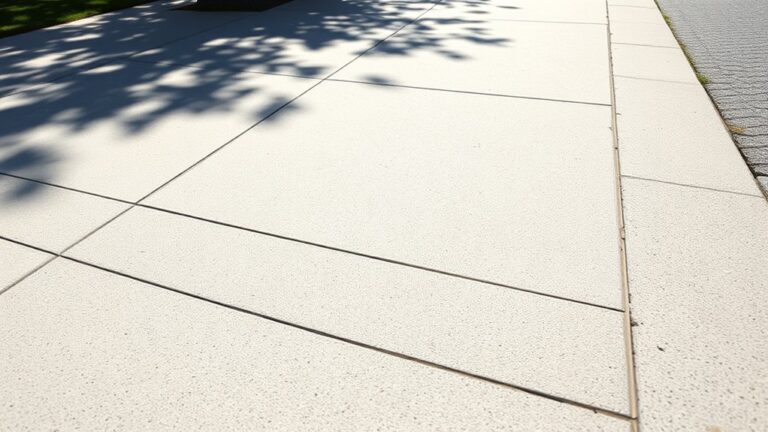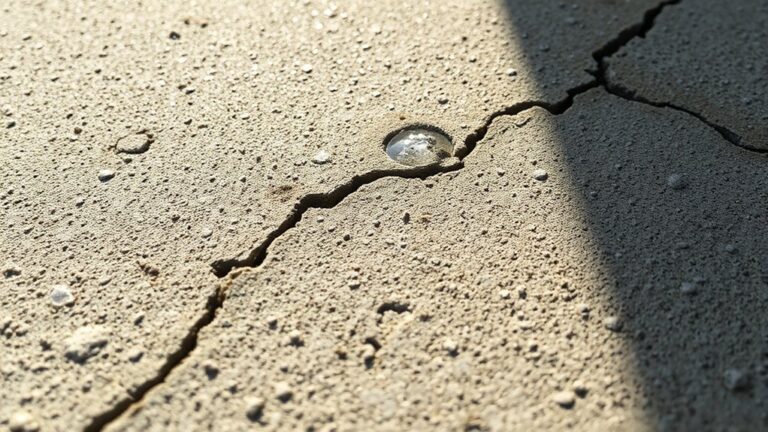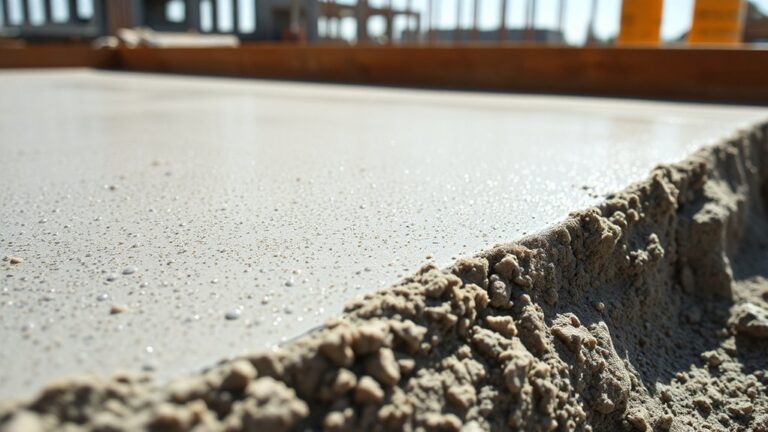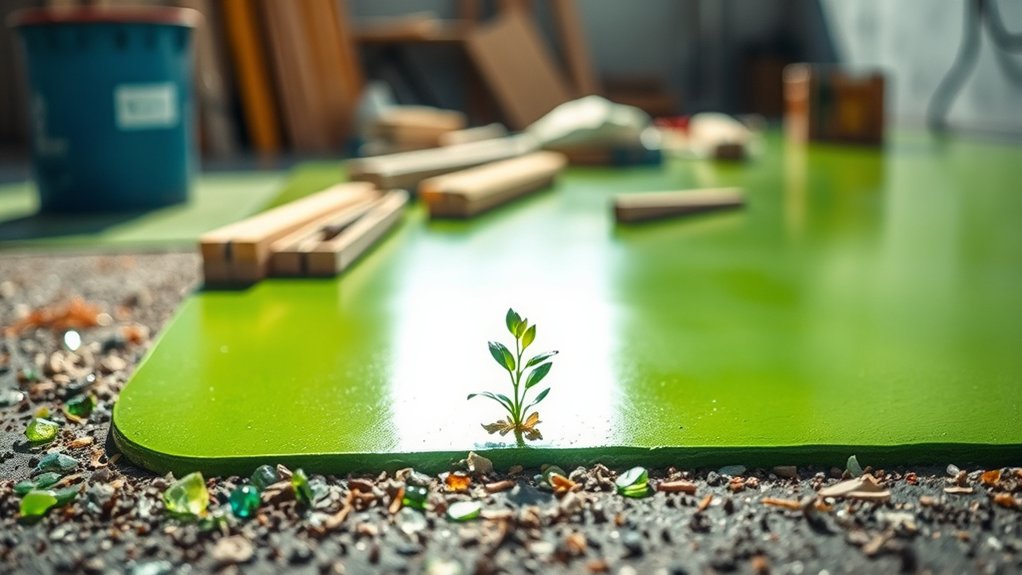
What Is Green Concrete – Simple Breakdown
Green concrete replaces much of the traditional Portland cement with recycled materials like fly ash and slag, cutting carbon emissions by up to 70%. It conserves resources by using industrial by-products and reduces thermal cracking through lower heat release during curing.
This mix improves durability, resists environmental damage, and suits infrastructure and sustainable building projects. Though it faces challenges in strength development and material consistency, ongoing innovations aim to enhance its reliability and eco-efficiency for future construction needs.
How Green Concrete Differs From Traditional Concrete
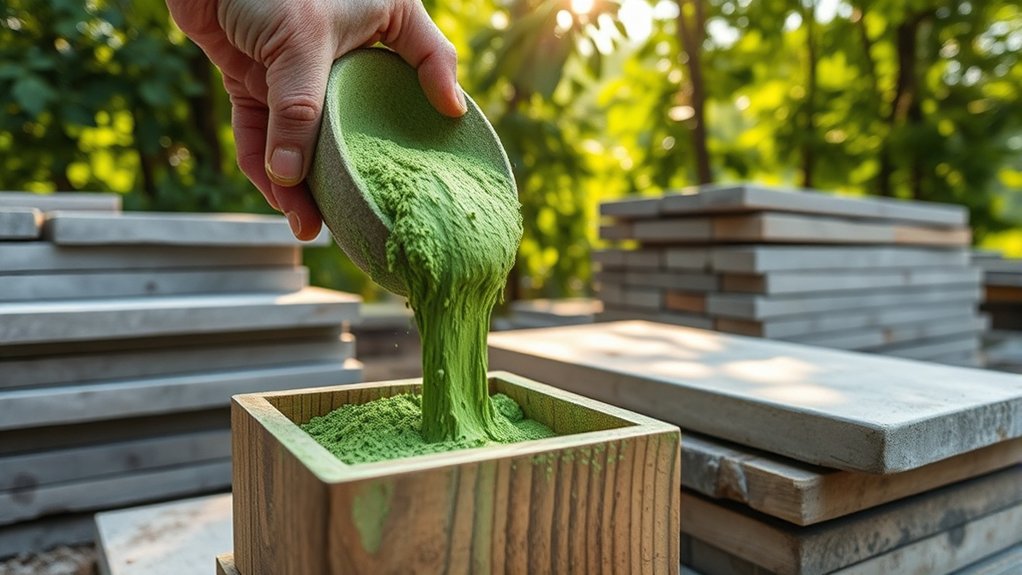
While traditional concrete relies heavily on Portland cement, green concrete substitutes a significant portion of it with recycled materials such as fly ash, slag, and recycled aggregates. This substitution drastically reduces carbon emissions, often by up to 70% compared to traditional concrete, making green concrete a more environmentally responsible choice.
You’ll notice green concrete also incorporates industrial by-products, which minimizes reliance on virgin raw materials.
Furthermore, green concrete exhibits a lower heat of hydration, decreasing the risk of thermal cracking during curing. Its enhanced durability and resistance to environmental factors extend structural lifespan, offering long-term sustainability benefits.
Materials That Make Green Concrete Sustainable
Because green concrete relies on a carefully selected combination of recycled and industrial by-products, it achieves sustainability without compromising performance. You’ll find recycled materials such as fly ash, slag, and recycled aggregates integral to its formulation, reducing reliance on virgin resources.
Supplementary cementitious materials (SCMs) partially replace traditional Portland cement, enhancing durability while lowering carbon emissions. Industrial by-products like fly ash from coal combustion and blast furnace slag from steel production serve as efficient SCMs, contributing to the concrete’s strength and longevity.
By incorporating these components, you conserve natural resources and minimize landfill waste. This precise blend not only supports sustainable building practices but also improves resistance to environmental stressors.
It shows that green concrete’s material selection is both environmentally responsible and technically robust.
How Green Concrete Cuts Carbon Emissions
The use of recycled materials like fly ash and slag in green concrete doesn’t just conserve resources. It directly reduces carbon emissions by replacing a significant portion of traditional Portland cement. Portland cement production involves high-temperature calcination that emits large amounts of CO₂.
So, substituting it with these supplementary cementitious materials cuts embodied carbon by up to 70%. Green concrete’s chemical curing process also generates less heat, which further minimizes greenhouse gas release.
By integrating these material and process innovations, green concrete substantially lowers the carbon footprint associated with concrete production. When you choose green concrete in sustainable construction, you actively reduce carbon emissions across the project lifecycle.
This contributes to more environmentally responsible building practices without compromising structural performance.
Durability and Sustainability Properties of Green Concrete
Although green concrete prioritizes reducing carbon emissions, it also excels in durability and sustainability. You’ll find that its enhanced structural integrity comes from the inclusion of recycled materials, which boost long-term strength.
Green concrete not only cuts carbon emissions but also strengthens structures with recycled materials for lasting durability.
Its optimized permeability helps minimize water ingress, protecting the concrete from moisture-related damage.
Plus, green concrete resists corrosion, chemical attacks, and freeze-thaw cycles better than traditional mixes. It’s pretty impressive how it stands up to harsh environmental conditions.
Key durability and sustainability features include:
- Resistance to environmental degradation such as corrosion and chemical attack
- Reduced permeability that limits moisture penetration
- Incorporation of recycled materials that improve strength
- Lower heat of curing, which decreases the risk of cracking
- Extended service life, meaning less frequent maintenance needed
Environmental and Economic Benefits of Green Concrete
You’ll notice that green concrete significantly cuts carbon emissions because it replaces traditional cement with industrial by-products. This change helps reduce the carbon footprint of your projects.
Plus, it conserves natural resources by cutting down on the need for virgin materials and encouraging waste recycling.
On top of that, making green concrete uses less energy, which means you save money in the long run. So, it’s a win-win situation, benefiting both the environment and your budget.
Carbon Emission Reduction
How can green concrete drastically cut carbon emissions while benefiting both the environment and your project budget? By replacing traditional Portland cement with recycled materials like fly ash and slag, green concrete reduces carbon dioxide emissions by up to 70%. This shift lowers the embodied carbon in your build, directly impacting environmental compliance and sustainability goals.
Think about it—using industrial by-products means less reliance on high-emission cement. Plus, there’s lower carbon dioxide output during production phases, which is great news for the planet.
There’s also enhanced potential for LEED and other green certifications. Not to mention, decreased transportation and energy demands thanks to the recycled content. All of this leads to significant mitigation of the construction sector’s greenhouse gas emissions.
Adopting green concrete is a smart move to reduce your project’s carbon footprint while supporting global climate efforts. It’s good for your budget and even better for the environment.
Cost Savings Advantages
Three key factors drive the cost savings of green concrete: reduced material expenses, lower maintenance costs, and minimized transportation fees. By using recycled materials, you cut the cost of virgin aggregates and cement.
Green concrete’s superior durability decreases repair frequency, saving maintenance expenses. Furthermore, sourcing recycled or industrial by-products locally reduces transportation costs, further enhancing savings.
| Factor | Impact | Benefit |
|---|---|---|
| Recycled Materials | Lower raw material costs | Immediate cost savings |
| Durability | Increased lifespan, reduced repairs | Long-term maintenance savings |
| Local Sourcing | Reduced transportation distance | Lower logistics expenses |
| Certification Benefits | Potential for green building credits | Increased property value |
| Lifespan Extension | Delayed replacement or restoration | Deferred capital expenditures |
These elements combine to optimize your project’s economic efficiency without compromising quality.
Resource Conservation Impact
Because green concrete incorporates recycled materials such as fly ash, slag, and recycled aggregates, it considerably reduces the consumption of virgin raw materials. This approach enhances resource conservation by efficiently utilizing industrial by-products and minimizing environmental strain.
When you choose green concrete, you directly benefit from reduced reliance on natural resources through recycled materials. It also leads to lower CO₂ emissions compared to traditional cement production. Plus, it helps decrease landfill waste by reusing industrial by-products.
On top of that, you can enjoy economic savings from reduced material costs and longer durability. And by using green concrete, you’re supporting sustainable development goals through a minimized environmental footprint. It’s a smart choice for both the planet and your project.
Common Applications of Green Concrete in Construction
Green concrete finds extensive application across various construction sectors due to its durability and environmental advantages. In the construction industry, you’ll see green concrete used in infrastructure projects like bridges, roads, and tunnels. Its strength and corrosion resistance enhance longevity in these structures.
It supports sustainable building by integrating recycled aggregates in residential and commercial foundations, floors, and walls. This helps reduce waste and environmental impact. You can also rely on green concrete for precast elements and landscaping features. These uses further promote resource efficiency.
Its robustness against harsh conditions makes it ideal for offshore and industrial structures. Plus, you’ll find green concrete effective in repair and retrofit projects. These projects extend the lifespan of existing structures while minimizing ecological footprints.
All in all, this versatility underlines green concrete’s growing role in advancing sustainable construction practices.
Challenges and Future Innovations in Green Concrete Technology
You’ll run into some challenges, like slower strength development and the variability in supplementary cementitious materials, which can affect how reliable green concrete is.
To tackle these issues, researchers are focusing on creating consistent low-cement mixes and using AI to optimize designs for better curing and overall performance.
On top of that, new technologies are stepping in to broaden the range of recyclable materials used and to develop carbon-negative concretes.
These innovations are paving the way for more sustainable and scalable solutions in the future.
Strength Development Challenges
How does the use of supplementary cementitious materials (SCMs) impact the strength development of concrete? SCMs slow early strength gain in sustainable concrete, which means you often need to extend curing practices. This delay can throw off construction timelines and makes predicting strength a bit trickier.
You have to keep a few things in mind: slower early strength development happens with high SCM content, so longer and optimized curing is necessary. Strength can vary more, which might affect how well you stick to your schedule.
It’s also important to have standardized testing methods for mixes rich in SCMs. Plus, the correlation between lab cylinder strengths and in-situ core strengths needs to be accurate.
Tackling these challenges is key for reliable structural integrity assessments. There’s ongoing work to improve mix designs and curing protocols so strength development becomes more consistent.
When you understand these factors, managing sustainable concrete’s performance in real-world projects gets a lot easier.
Material Quality Variability
While managing strength development in concrete mixes with supplementary cementitious materials demands careful curing and testing, ensuring consistent material quality poses its own set of challenges.
You’ll face quality variability primarily due to fluctuations in recycled materials like fly ash and slag, whose composition often varies between industrial sources. This variability directly impacts material consistency, influencing strength, durability, and setting times.
To mitigate these issues, standardized sourcing and processing protocols are essential. Advances in real-time quality monitoring and improved material testing methods help you detect and control inconsistencies during production.
Looking ahead, innovations aim to produce more uniform, high-quality recycled materials. This will be critical for reliable green concrete performance and broader adoption in the construction industry.
Addressing material quality variability is fundamental to realizing green concrete’s full potential.
Emerging Sustainable Technologies
What breakthroughs will define the next generation of green concrete? You’ll see emerging sustainable technologies addressing current challenges with precision and innovation.
Carbon-negative mixes are engineered to absorb more CO₂ than they emit during curing, markedly reducing environmental impact.
AI and machine learning optimize mix designs, enhancing performance while minimizing resource use.
Geopolymer concrete and bio-based binders expand eco-friendly material options, offering durability without traditional cement.
Furthermore, new curing methods accelerate strength gain in low-cement or recycled concretes.
Renewable energy integration in production processes further slashes carbon footprints.
Key advances include:
- Carbon-negative mixes for net CO₂ absorption
- AI and machine learning-driven mix optimization
- Geopolymer concrete innovations
- Accelerated curing techniques
- Renewable energy-powered production systems
These innovations position green concrete at the forefront of sustainable construction. It’s exciting to see how these technologies will shape the future of building.
Frequently asked questions
How Does Green Concrete Affect the Curing Time Compared to Traditional Concrete?
Green concrete extends curing time compared to traditional concrete because it contains less cement and uses supplementary cementitious materials. You’ll notice slower initial setting and delayed early strength gain, requiring longer curing periods—usually 1 to 3 days more.
The reduced heat during hydration slows strength development.
Can Green Concrete Be Recycled After Demolition?
Yes, you can recycle green concrete after demolition. Its recyclability depends on the mix composition and contaminant levels. When properly separated and assessed, you can crush the demolished material into recycled aggregates.
These aggregates can then be reused in new concrete mixes or as base material for infrastructure projects. This process reduces waste and conserves resources.
But you need to make sure the recycled concrete maintains adequate quality for structural applications.
Is Green Concrete More Expensive to Produce Than Traditional Concrete?
Yes, green concrete generally costs more to produce initially than traditional concrete because of specialized mix designs, recycled materials, and advanced curing processes.
But keep in mind, regional differences in sourcing industrial by-products like fly ash can affect those expenses.
Over time, as the technology gets better and more people start using green concrete, production costs will probably go down.
Plus, you can often make back those upfront costs through sustainability incentives and certifications that green concrete projects usually qualify for.
What Are the Color Variations Available in Green Concrete?
Like the shifting hues of a forest at dawn, green concrete offers subtle color variations mostly in shades of gray, from light to dark. These variations are influenced by recycled materials like fly ash.
You’ll notice slight greenish tints in some mixes, though these are often muted.
If you want specific shades, additives or colorants can tailor the concrete’s color. Just keep in mind, weathering may gradually alter its original appearance over time.
Does Green Concrete Require Special Equipment for Mixing and Pouring?
You don’t usually need special equipment to mix and pour green concrete; standard construction machinery works well. However, you might have to adjust mixing times or water content because of recycled materials.
If the mix has unique additives, specialized tools could be necessary. You should focus on proper mixing techniques to evenly distribute aggregates.
In cases of low workability, using high-shear mixers or extending mixing time will help achieve the desired consistency.
Final Thought
You’re stepping into a future where green concrete isn’t just building material. It’s a catalyst for change. Like a silent guardian, it strengthens structures while shrinking carbon footprints.
By choosing green concrete, you’re weaving sustainability into every project. It balances durability with eco-conscious innovation. Though challenges remain, ongoing advancements promise to refine this technology further.
Embracing green concrete means constructing not just buildings but a resilient, cleaner world for generations to come.
More Concrete Basics Guides
Buying Sand, Gravel or Ready Mix?Portage Aggregate & Supply carries triple-washed sand and gravel, and Tri County Concrete delivers ready mix across Greater Cleveland. Request a quote or call 440-582-1100.